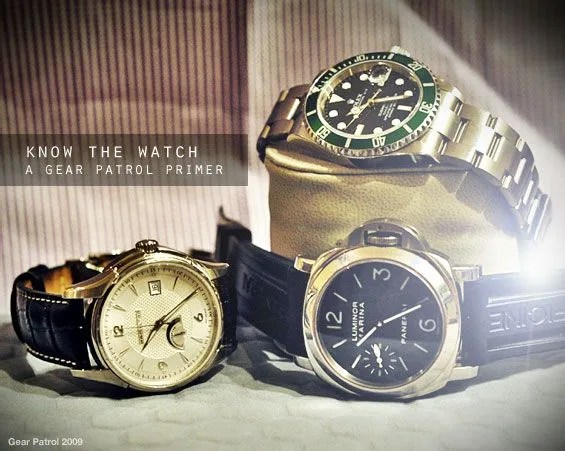
Be a Better Man in 30 Days | Day 24: Upgrade Your Watch Knowledge

By Brian Huang and Gear Patrol Reader Ty Alley:
We at Gear Patrol love watches. There’s no doubt that we have a fascination with timepieces here. While we enjoy talking about and introducing you to all manner of watches, we realize that not everyone understands the terminology involved. Similar to how we introduced you to the various cuts of meat, we’re going to describe the various parts on a watch.
Look at this as basic instruction. Just as if someone were to describe the outside of a car (wheels, bumper, windshield, etc.), we’re going to stick to the outside of a watch. Nothing about the actual “engine” (movement) here, but more on that to come.
Case
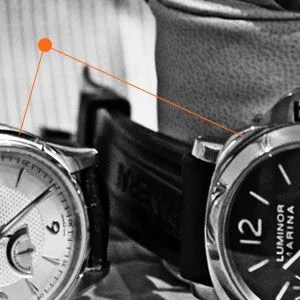
The case is the body of the watch and may be made of stainless steel or titanium. Some unusual examples have been seen with bronze cases, as well as ceramic. Stainless and titanium are the standard.
Crystal
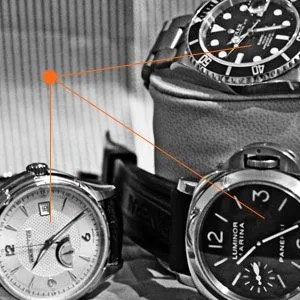
We’re talking about the clear, glass-like disk that allows you to view the dial and hands. Crystals may be made of acrylic, mineral glass, or sapphire. Whereas sapphire is the most scratch-resistant, acrylic is the most prone to scratching but is easily buffed and polished to maintain legibility. The acrylic crystal is extremely resistant to shattering, while sapphire and mineral glass are capable of being shattered. Sapphire is common for most high-end watches.
Dial
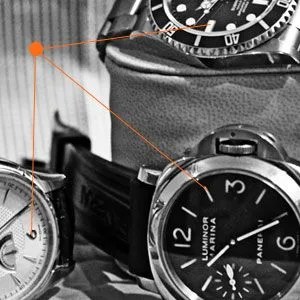
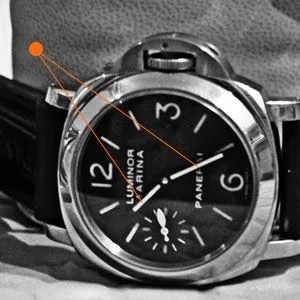
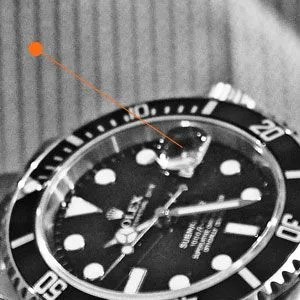
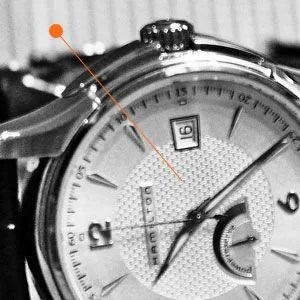
The dial is the “face” of the watch. This is where minute markers, numbers, or other information such as watch brand, depth rating, country of origin, etc. are often printed.
Crown
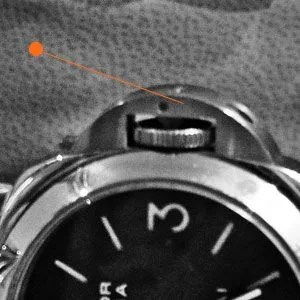
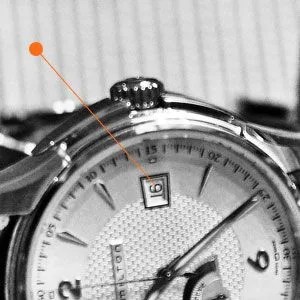
The crown protrudes from the side of the case and is used to set the time, wind the watch, and set the date and day, if the watch is equipped with such features. Most crowns are designed to “screw down” when not in use, while others are designed to “push in” with no final screw-down seating.
Crown Guard
As the name suggests, these extensions protect the crown from damage and are most commonly found on sports watches where physical activity may leave the crown vulnerable to bumps and bruises. Most sports watches feature protruding metal extensions on either side of the crown, while some, such as the Panerai crown guard, wraps around the crown.
Bezel
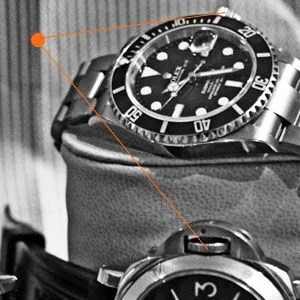
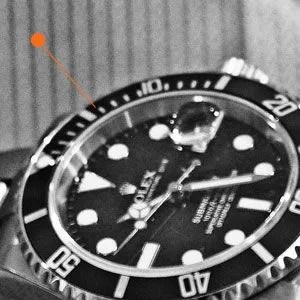
The outer ring that encircles the case or dial of the watch. The bezel may be external, which means it can be turned by rotating it with your hand. Watches may have fixed bezels or rotating bezels (as is commonly found on dive watches).
Lugs
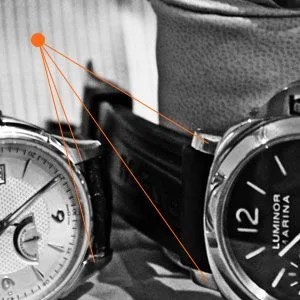
The extensions (or horns) you see on the top and bottom of the watch case. This is where the bracelet or strap is attached.
Caseback
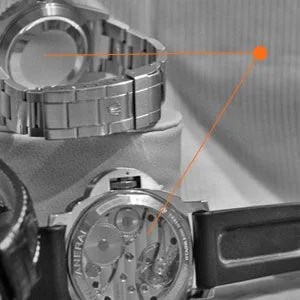
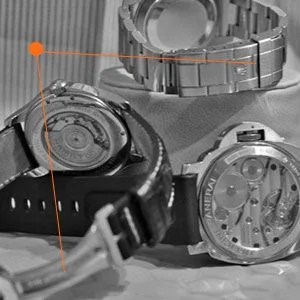
This is the back of the watch which sets against the wrist. Except for monocoque cases (one piece) the case-back is removable to enable access to the internals of the watch. Most casebacks are solid steel or titanium, but on occasion you’ll find an exhibition back, often called a “display back.” A display back has a clear window that allows one to see the internal workings of the watch.
Hour Markers
Sticks, dots, arabic or roman numerals, or various other shapes may be used to indicate the hour. The markers can be painted on (as the name suggests), or applied (glued-on).
Hands
The hands are made of three different components - the hour hand, the minute hand, and the seconds hand. They most often originate from the center of the dial, but you will find some models, like “regulators,” where the hour and seconds hands are on a smaller dial called a sub-dial and only the minute hand originates from the center. You may also see watches where only the seconds hand is on a sub-dial (small seconds). Oris is a brand that commonly uses regulators and small seconds-handed watches.
Date Window
This is a common feature among mechanical watches and is where the date is displayed. The date is adjusted through the crown and, depending on the watch, may instantly change or turn gradually as the time approaches midnight.
Cyclops
This is sometimes found on watches with a date feature and is easily identified as a bubble on the crystal. It can be attached to either the top or the bottom and serves as a magnifier to make the date more legible.
Bracelet
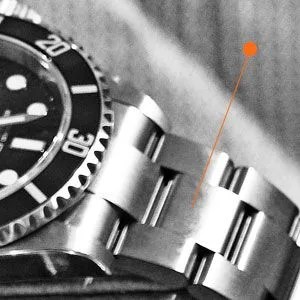
The bracelet is the metal “strap” which holds the watch to your arm and is usually made of stainless steel or titanium.
Strap
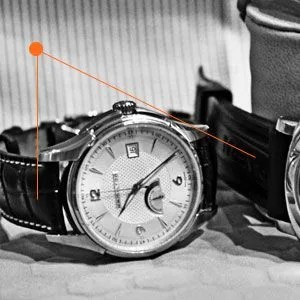
Instead of a bracelet, you’ll find a strap made of various materials, most commonly leather or rubber (common for sports watches). Of course, there are more exotic options such as alligator and ostrich.
Buckle/Clasp
This is the hardware piece that secures the two ends of the strap. The most common types of buckles are the Tang, similar to a belt buckle where the pin slides into a notch on the other side, and the Deployant, which is a folding buckle attached to both sides of the strap and snaps in place. On a bracelet, the buckle is referred to as the clasp.

Ty Alley is a fellow Gear Patrol reader and watch fanatic, as well as the co-moderator of the Watchuseek Dive Watch Forum. Ty is also a diving instructor, dive industry professional, technical mixed gas diver, and all-around diver of 25 years.


(4)
A great base of Watch info! I might suggest explaining the difference between Digital, Mechanical, and Automatic movements, but that may be a slightly more advanced knowledge level. Overall a useful basic primer for people who tell time via their cell phones and are interested in branching out.
Which model is the Hamilton watch featured in this writeup?
Troy, it is the more traditional watch on the left in the lead image with the white face and black leather strap. Hope that helps.
I was actually hoping to figure out which model/style number that specific hamilton is….I've recently taken up an interest in that brand, and I really like the one in the picture!
Troy, that would be the Hamilton Jazzmaster Power Reserve that Eric reviewed last November. It's about $1100 new, though you might be able to find it pre-owned for less.
You can read his review here. That shoud help.
will definitely check out the review - thanks! What is the general consensus on Hamilton?
this was very informative,a lot of folks that use a watch day after day dont have any knowledge of a piece of their every day wearings,myself as well,i got here by trying to find out what the "bezel" was for,i had called it a dial when searching,but anyways i shall continue my search as to what its use is for but with the knowledge of what its name is,thanks