Home / Page 12

An American Single Malt Landed in the Top 20 Whiskeys of 2023

The new kid on the block is hobnobbing with distinguished Scotch on the list.

whiskey bottle and glassWestland Distillery

If you buy from a link, we may earn a commission. Learn more

While we give nods to our own favorite whiskeys each year, we also pay attention to other year-end rankings of the brown stuff. And there’s perhaps no whiskey list that we look forward to more each year than the one from our friends at Whisky Advocate, which began handing out awards to bottles in the ’90s and has published a top-20 list online since 2017.

The team at Whisky Advocate collectively samples hundreds of drams throughout the course of the year and then does the nearly impossible task of twiddling down their favorites to just 20 for the list. Since 2017, that list has been crowded at the top with single malt Scotch and bourbon — which isn’t too surprising given the premier status of those two categories in the whiskey/whisky industry.

Last year’s number one pick was Jack Daniel’s Bonded, which is a bourbon even if it’s not labeled as such. This year’s list looks mostly like you’d expect: single malt Scotches at the number one and two slots and a pair of bourbons sitting in the four and five positions. But the bottle coming in at number three is where things get interesting.

Westland Distillery’s Garryana Edition 8 snags the bronze this year on Whisky Advocate‘s list, marking the publication’s highest ranking yet for an American single malt whiskey. We’ve been banging the drum on ASM’s ascendance all year, and Westland’s ranking here is just the latest evidence that this category is on the verge of exploding in popularity. (It’s also on the verge of officially being classified as a new spirits category by the US Government.)

a bottle of whiskey and a glass
Westland Garryana Edition 8 American single malt ranks as the third-best bottle of the year, according to Whisky Advocate.
Westland Distillery

So what’s the story on Garryana Edition 8? It’s the eighth edition in the Garryana series, which is an ongoing series dedicated to the introduction and exploration of Garryana oak, a species native to the distillery’s home in the Pacific Northwest that had never before been used to age whiskey. For this eighth edition, Westland aged the whiskey in virgin casks made from Garryana before finishing the liquid in former Pedro Ximenez sherry casks and Washington State red wine casks. The result is a complex showcase for the oak’s savory spiciness that’s been rounded out by the fruity wine-tinged finishes.


As for the rest of Whisky Advocate‘s list, Glenglassaugh Sandend, a Highland single malt Scotch, took the top spot for 2023. You can find the full list from 1 – 20 below.

  1. Glenglassaugh Sandend
  2. Highland Park Cask Strength (Batch 4)
  3. Westland Garryana Edition 8
  4. Little Book Chapter 7 “In Retrospect”
  5. Wild Turkey Master’s Keep Voyage
  6. Maker’s Mark Cellar Aged 2023
  7. Dewar’s Double Double 21 year old Mizunara Oak
  8. Glenmorangie A Tale of the Forest
  9. Bardstown Bourbon Collaborative Series: Foursquare
  10. GlenDronach Cask Strength (Batch 12)
  11. Barrell Craft Spirits 6 year old Cask Strength (Batch 035)
  12. Blue Run Trifecta
  13. Hemingway Signature Edition
  14. Glenfiddich 12 year old Amontillado Sherry Cask Finish
  15. Old Elk Port Finished
  16. Green Spot Quails’ Gate
  17. Crown Royal Noble Collection Barley Edition
  18. Teeling Wonders of Wood Second Edition Virgin Portuguese Oak
  19. Fuji Japanese Whisky
  20. Ezra Brooks 99
, ,
Home / Page 12

Today in Gear: Start Your Week Here

Today in Gear is our daily roundup of all the latest product announcements, drops and news from Gear Patrol Studios.

today in gear december 11 2023 pink sonos roam speaker in jacket pocketSonos

Coming this spring: New Apple MacBook Air, iPad Air and iPad Pro. The news hasn’t been officially announced yet but a leak appeared to confirm that Apple will update its popular iPad Pro with an OLED screen and offer the iPad Air in two sizes for the first time. The new MacBook air will allegedly feature a new faster M3 processor. It’s just another case study in the quickly improving field for lightweight, full-service personal computing.

Today we’re taking a look at expandable luggage from an affordable brand, a gold Leica watch, speedy USB-C adapters and more. This is Today in Gear.

Today in Gear is our daily roundup of all the latest product announcements, drops and news from Gear Patrol Studios. Send your most pressing product questions to [email protected].

Plug Your Devices Into Increased Adaptability

satechi usb c to hdmi 2 1 8k cable Satechi

Nowadays, we all want the ability to quickly and seamlessly view content across devices — to throw a YouTube video from a laptop or phone to a television, say. That’s the forte of Satechi’s new line of adapters: A USB-C to HDMI2.1 8K Cable ($50) with high refresh rates for gaming; a USB-C to HDMI 2.1 8K Adapter ($45) for crisper visuals; and a USB-C 2.5-Gigabit Ethernet Adapter ($40) made for quick file transfers and a high-speed streaming boost.

Expand your Luggage Game

a man holding a quince front pocket carry on hard shell suitcase Quince

Quince sells luxury-level goods at better-than-luxury prices. The brand’s new Expandable Luggage ($140+) is simple, stylish and sturdy — just the sort of hard-sided, spinner-wheeled beauties you’d expect from big-name travel brands at less than half the price.

Google Pixel Devices Get Boosted

a lake with mountains in the background using pixel 8 camera Google

Alongside its Gemini AI news, Google dropped a good-news bomb on Pixel owners: Video Boost, exclusive to the Pixel 8 Pro, which uploads video to the cloud, where Google’s computational photography models adjust color, lighting, stabilization and graininess. Extra features like Night Sight for video and a Balance Portrait Light Mode make it a powerful tool.

A Leica Watch Goes for Gold

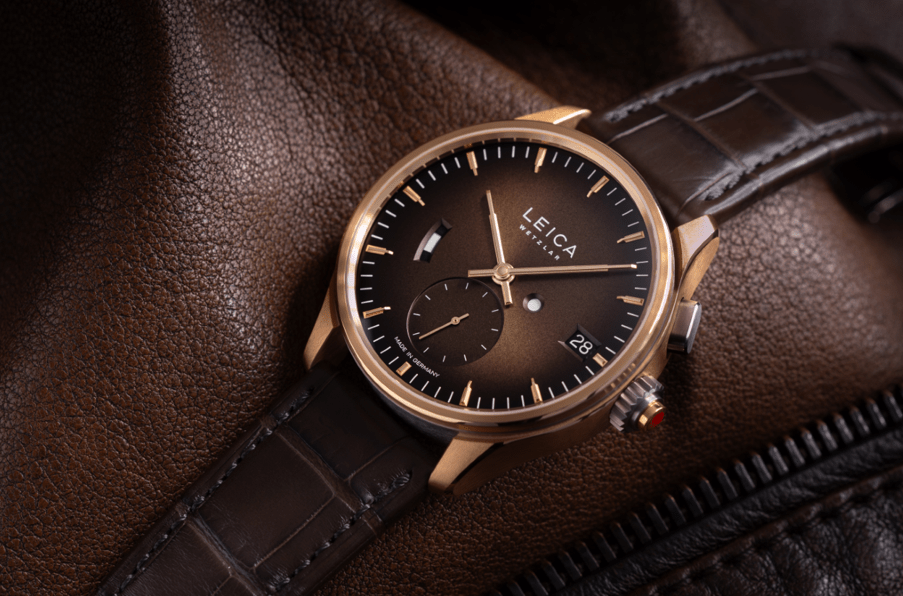
leica zm 1 gold limited edition watch Leica

It stands to reason that fans of Leica would also be watch lovers — making this new gold-and-titanium Leica ZN-1 watch ($28,000) a grail for some. Limited to fifty pieces, it homages the IA Luxus camera, the first Leica made of gold, introduced in 1929. Leica’s home town of Wetzlar on the sunburst dial is an excellent final touch.

Sonos Deals Kick Off (Again)

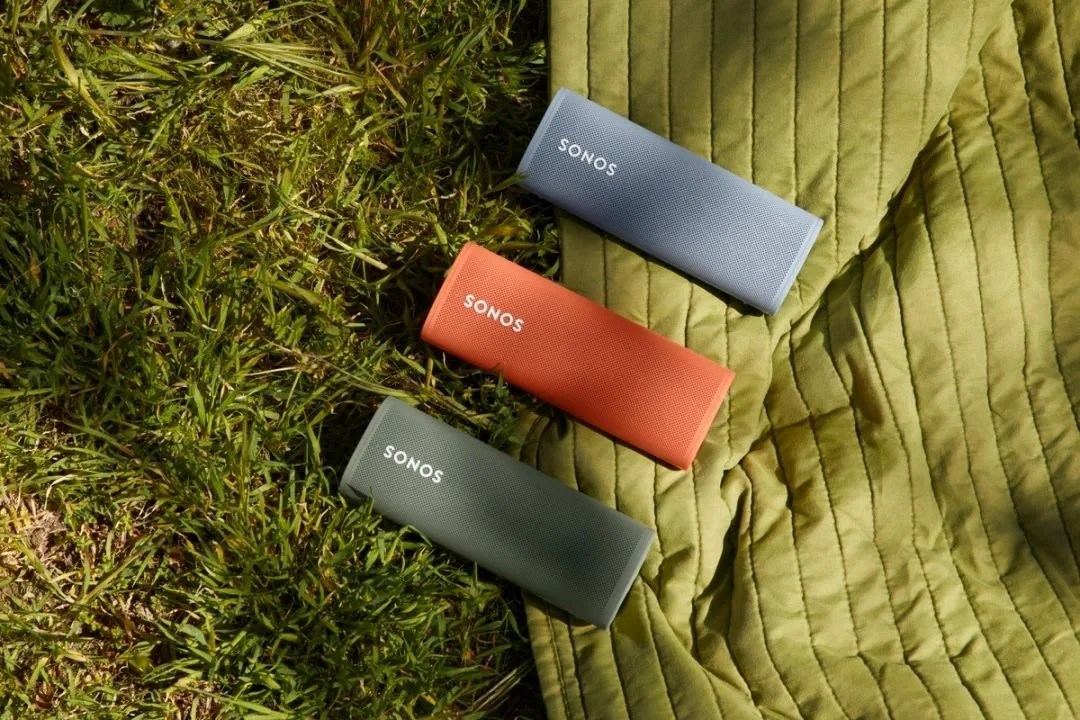
a trio of sonos roam speakers laying on the grassy floor and blanket Sonos

If you missed a shot at a Black Friday deal on audio, here’s a second chance: Sonos has brought back its best deals through December 24. All home theater products, including the excellent Arc and Beam, are 20% off, and the Roam portable speaker ($134+) is on sale through January 6.

,
Home / Page 12

The 5 Fastest-Charging Electric Cars You Can Buy

From luxury rockets to family-friendly SUVs, these are the EVs that soak up electrons with the most vigor.

genesis electrified gv70 parked near a fieldGenesis

Electric vehicle fast-charging speed. It’s potentially one of the most vital statistics to consider when buying an EV — especially if you’re not in a single-family home with a Level 2 EV charger. But unlike 0-60 mph time, it’s not a metric we get much standardized, comparable data about; manufacturers present charging info in a manner most flattering to their cars rather than in a formalized manner.

Luckily, the wise folks at Car and Driver have sought to resolve that with a standardized fast-charging test for each vehicle it reviews. The study ranked vehicles by their average charging rate from 10–90 percent (roughly what most people would be doing on a road trip), which producted some interesting results; for example, while the Lucid Air reached the highest peak charging rate (305 kW), its average charging rate over the total time was only 76 kW. (Car and Driver didn’t rank the vehicles by fastest time as that would depend as much on the battery size and the range as the charging speed.)

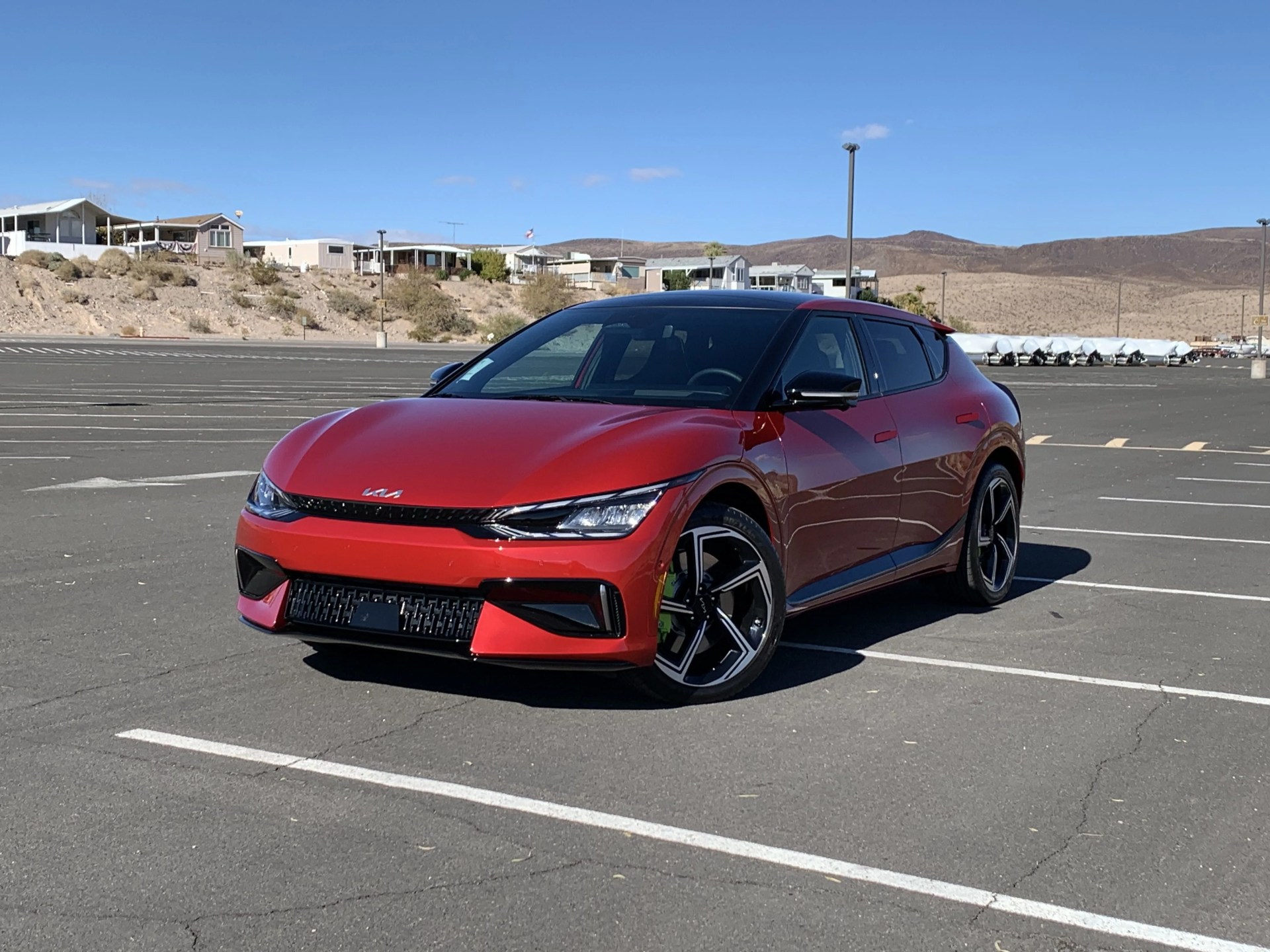
We would caution you to consider the charging rates holistically and in context. The Kia EV6 GT may be faster than the standard models at charging, but it also only offers a range of 206 miles. The Kia EV6 RWD (310 miles) and EV6 AWD (274 miles) will save you time by not needing to be at the fast charger as often.

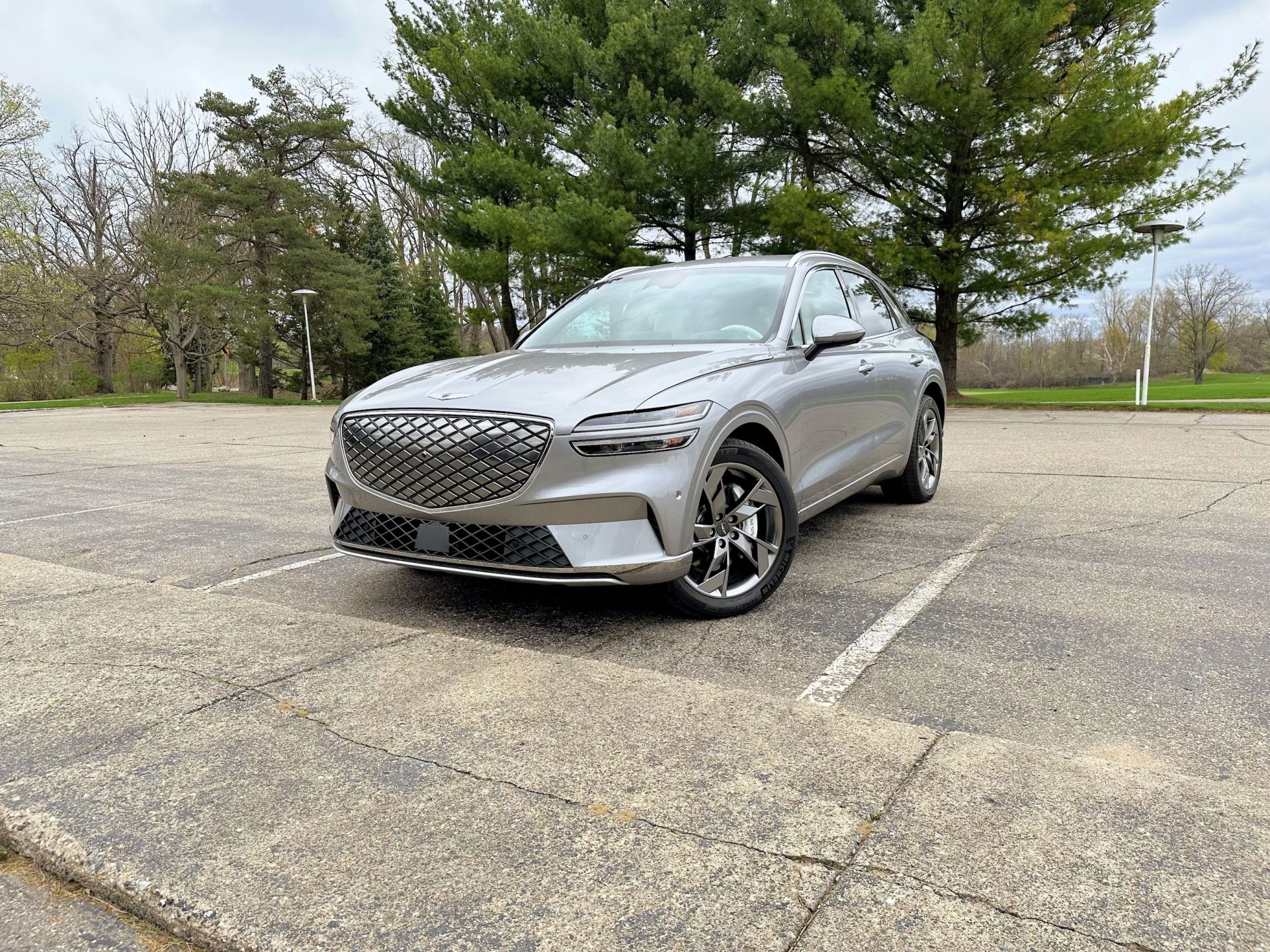
Genesis Electrified GV70

genesis electrified gv70 Tyler Duffy
  • Average Charging Rate: 166 kW
  • Peak Charging Rate: 239 kW
  • Total Charging Time (10-90%): 24 minutes

READ OUR ELECTRIFIED GV70 REVIEW

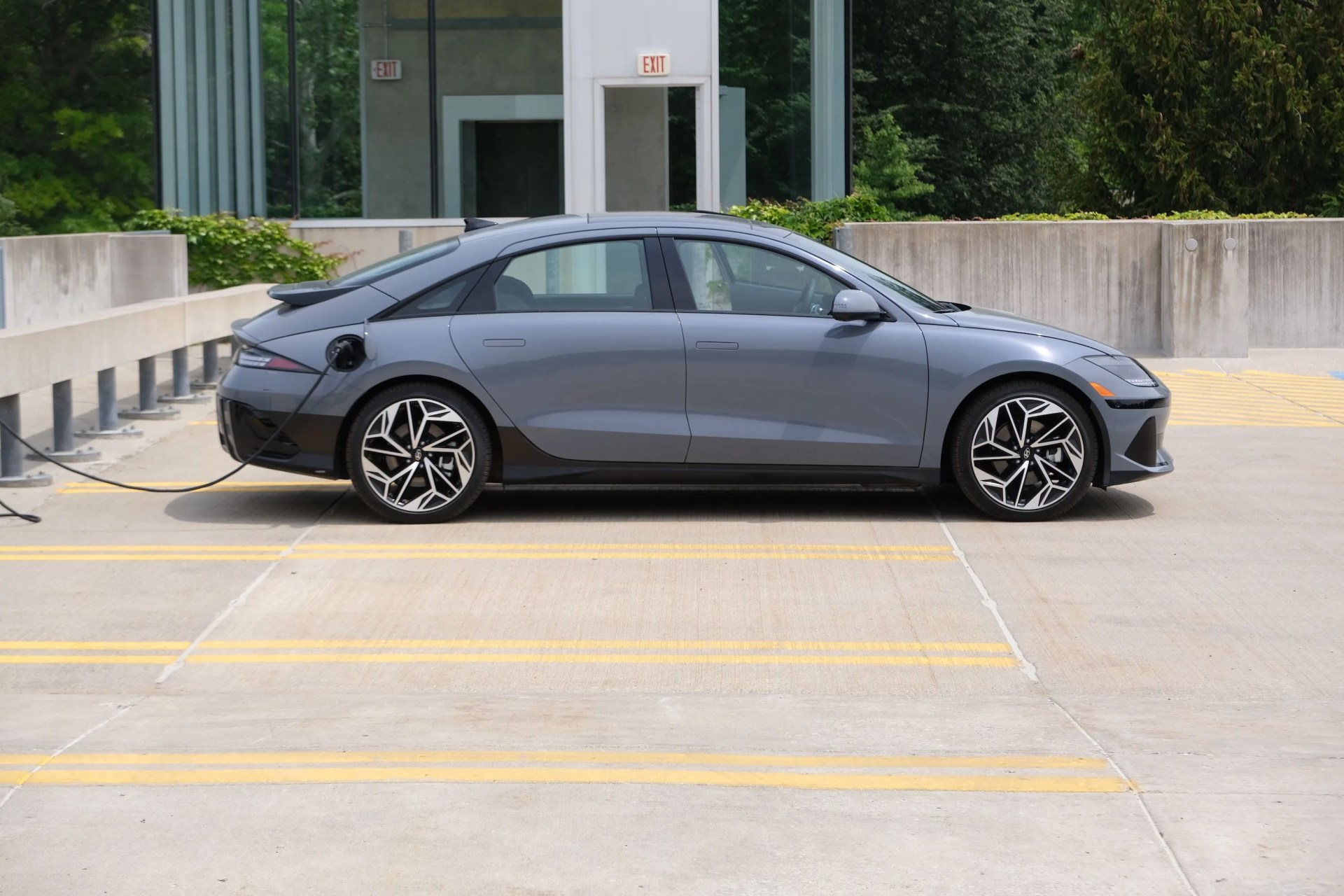
Hyundai Ioniq 6 Long Range SE

hyundai ioniq 6 charging in a parking lot Tyler Duffy
  • Average Charging Rate: 153 kW
  • Peak Charging Rate: 243 kW
  • Total Charging Time (10-90%): 27 minutes

READ OUR IONIQ 6 REVIEW

Hyundai Ioniq 5 AWD

hyundai ioniq 5 Tyler Duffy
  • Average Charging Rate: 152 kW
  • Peak Charging Rate: 235 kW
  • Total Charging Time (10-90%): 26 minutes

READ OUR IONIQ 5 REVIEW

Kia EV6 GT

kia ev6 gt in a parking lot with nevada desert in background Tyler Duffy
  • Average Charging Rate: 152 kW
  • Peak Charging Rate: 232 kW
  • Total Charging Time (10-90%): 26 minutes

READ OUR EV6 GT REVIEW

Kia EV9

2024 kia ev9 Kia
  • Average Charging Rate: 136 kW
  • Peak Charging Rate: 213 kW
  • Total Charging Time (10-90%): 38 minutes

READ ABOUT THE 2024 KIA EV9

More Electric Vehicles We’ve Tested

ford f 150 lightning Will Sabel Courtney
, ,
Home / Page 12

Roomba vs Shark: Which All-in-One Robot Vacuum Cleans Better?

Two all-in-one cleaning robots, one dirty floor. Which model wins?

two robot vacuums heading towards each other cleaning piles of dirtCam Oden

If you buy from a link, we may earn a commission. Learn more

Robot vacuums started meandering around our homes in the late ’90s. Since then, the product category has evolved dramatically — numerous brands now go toe to toe with autonomous machines that not only vacuum but also map your home, mop your floors and empty all on their own. There’s never been a better time to buy a robotic cleaning helper, but which brand should you go for?

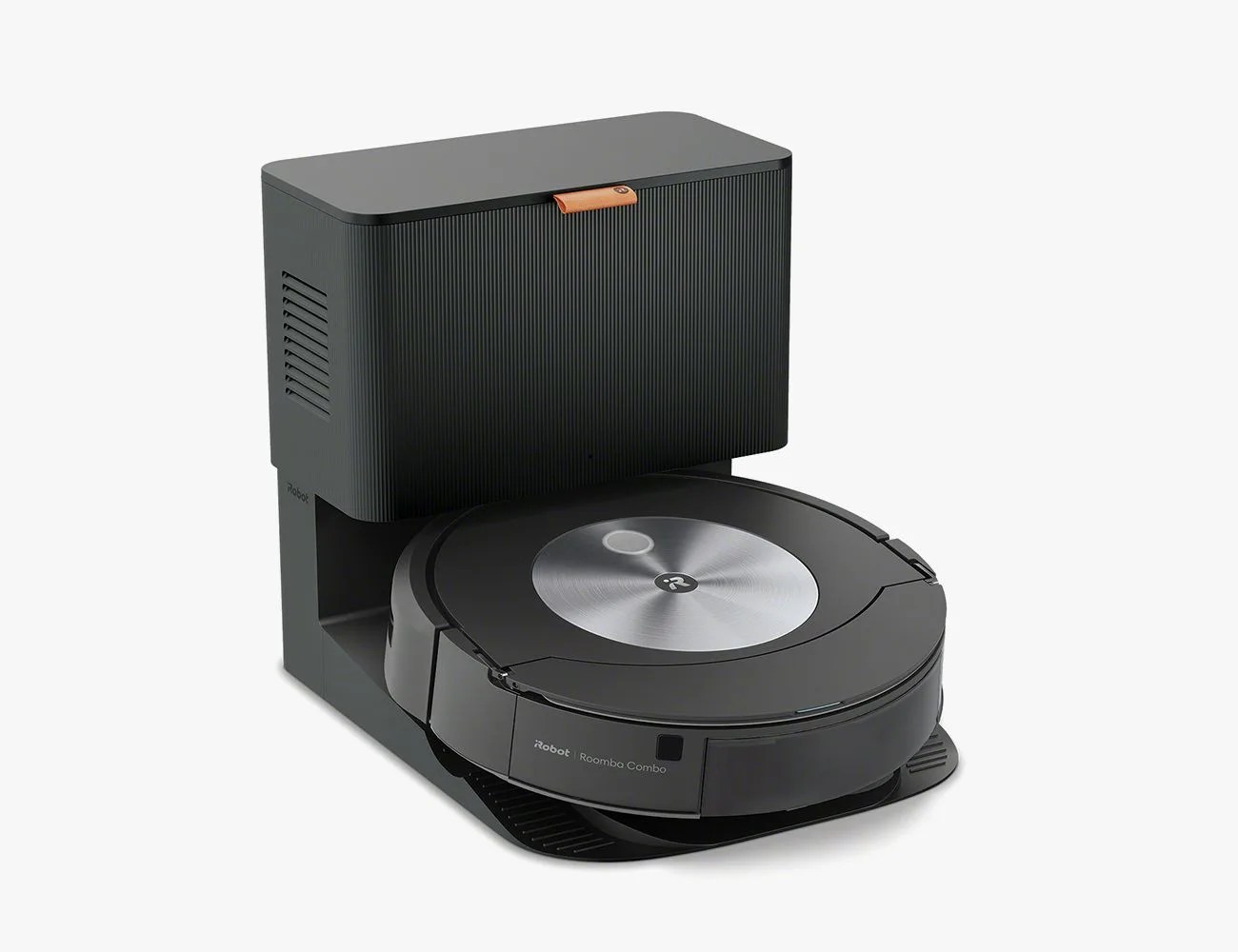
Two of the most popular brands in the space are iRobot’s Roomba, the segment creator and market leader, and Shark, a popular and more budget-friendly alternative. So, to find out which bot offers the most supreme clean, I pitted a top all-in-one model from each brand — the iRobot Roomba Combo j7+ and the Shark Matrix Plus — against each other with a few dirty tasks.

Products in the Guide

  • Roomba Combo j7+ Robot Vacuum and Mop

    Read more
  • Shark Matrix Plus 2-in-1 Self-Empty Robot Vacuum and Mop

    Read more

Roomba Combo j7+ vs Shark Matrix Plus: What We Think

Thanks to its increased smarts and camera, the Roomba is a better robot cleaner than the Shark. It’s more effective at vacuuming, requires less human intervention and — quite critically — won’t drag poop across your floor. The Shark is better at mopping if that’s your main concern, but it requires some work on your part to mop effectively. If you’re already committed to spending $700 or more on a robot vacuum, I say get the Roomba.

To learn more about our testing methodology and how we evaluate products, head here.

Pros

  • Automated mopping feature makes cleaning a hands-off chore
  • Obstacle avoidance works as advertised (no smeared pet accidents)
  • Mostly effective at edge cleaning, especially hair

Cons

  • Not a very thorough mopper
  • Costs $300 more

Pros

  • Excellent at mopping thanks to scrubbing motion
  • Affordable for a self-cleaning two-in-one machine

Cons

  • Edge-cleaning feature is ineffective
  • Mop tank needs to be manually swapped in and out
  • Can not detect rugs or obstacles

Test One: Edge Cleaning

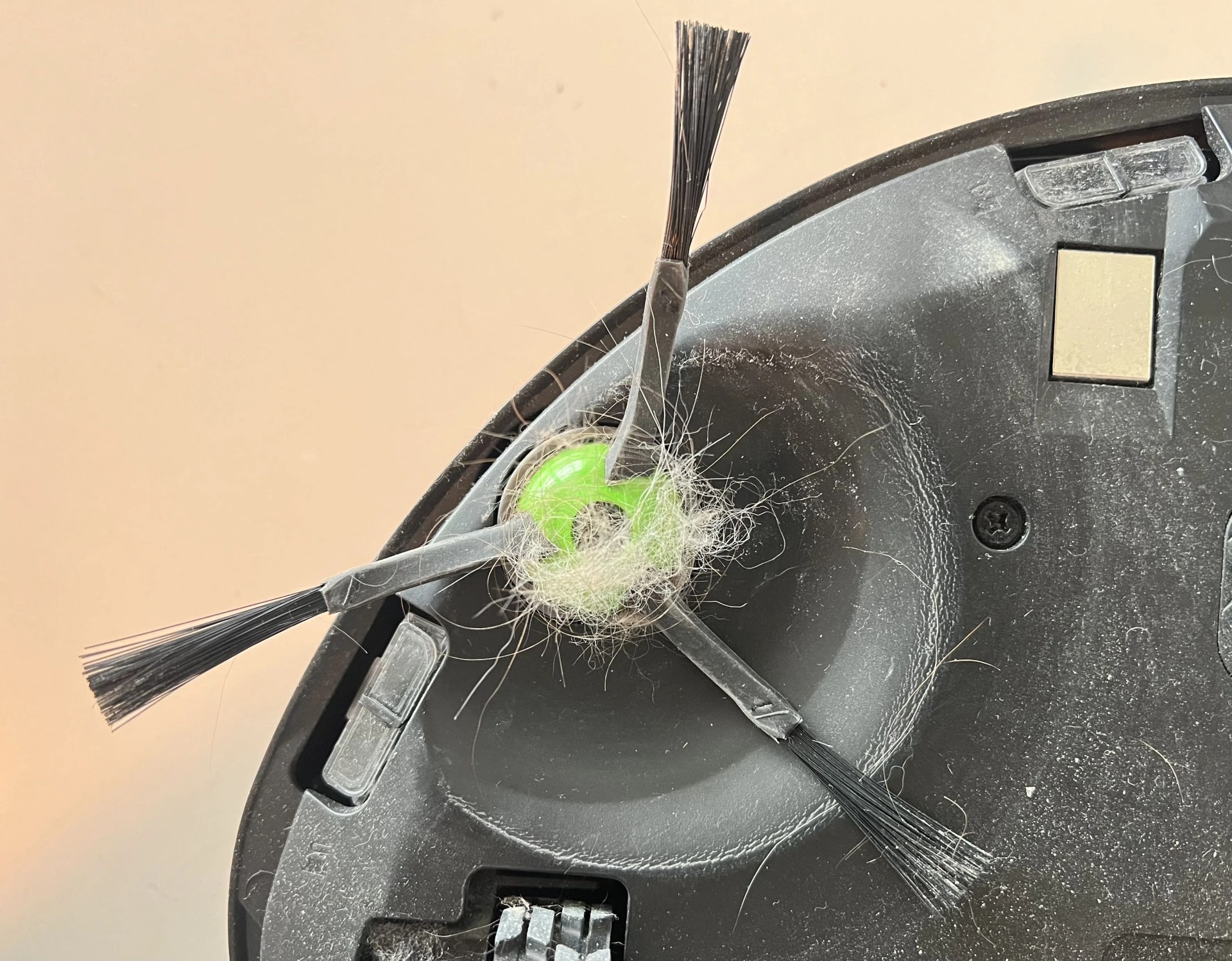
To see how well these bots could clean an edge, I lined up seven small pieces of cat kibble and three large tufts of dog fur against the edge of my kitchen floor under my cabinets. The Roomba went first and gobbled up all three clumps of fur but struggled a bit with the kibble. Because its side brush rotates so fast, it had a tendency to violently fling the kibble across the floor rather than into its bin. Even so, it managed to clean five of the seven pieces while missing two that it had tossed away.

roomba brush
The fast-moving brush of the Roomba makes it more effective at cleaning edges, especially when it comes to nabbing hair.
Johnny Brayson

Upon resetting the test, I had high hopes for the Shark’s edge-cleaning ability. It has a feature called “CleanEdge Detect” that is supposed to detect edges and use a blast of air to clear debris away from the wall. In practice, it wasn’t very effective. The Shark only managed to get two of the three clumps of fur, but worse yet, it didn’t suck up a single piece of kibble. I’m guessing the kibble was too heavy to be moved by the air jet, and the Shark’s slow-moving side brush didn’t budge them either.

Test Two: Mopping

robot vacuum
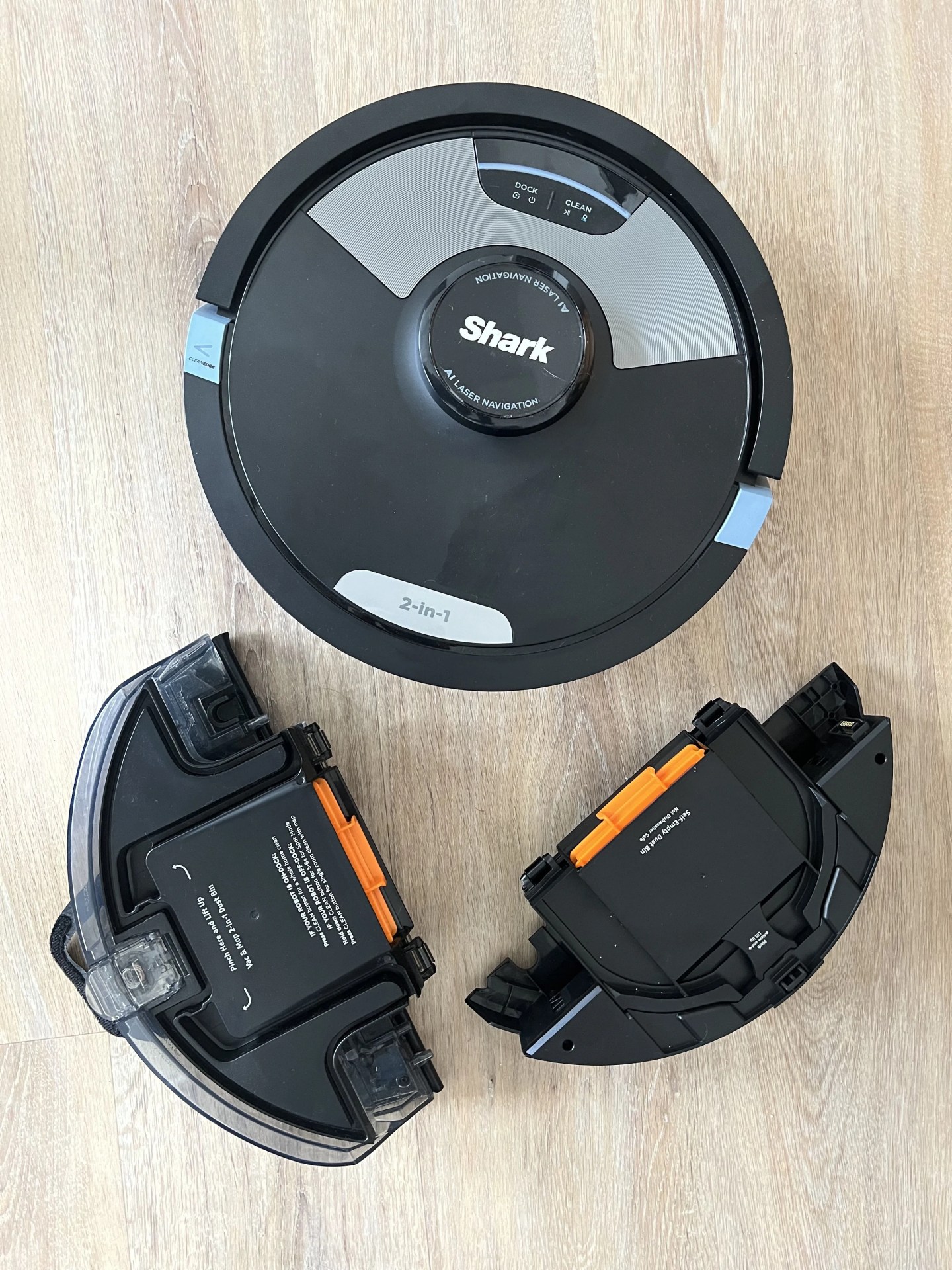
The Shark is far better at mopping, but having to swap in a new bin whenever you want to mop is a hassle.
Johnny Brayson

For this test, I simply let each robot mop my floors at different times. I needed to manually swap in a different dustbin with a built-in floor cleaner tank for the Shark. Its auto-emptying base also won’t empty the mopping bin, only the dry bin, so it needs some attention after mopping. Also, the Shark can’t detect rugs, so if you have one, you’ll need to label it in the map of your home the robot creates the first time you run it, or the bot will drag a wet dirty mop pad across your rug.

The Roomba’s mopping pad is integrated into the robot, and the bot is capable of detecting rugs. When it does so, the mop will automatically retract to the top of the robot, keeping your rug dry while it vacuums. Its auto-emptying base also works after a mopping job since there is just a single dustbin for both mopping and dry vacuuming. Though the Roomba’s mopping feature is more convenient, its performance pales in comparison to the Shark’s. The Roomba drives in a straight line as it mops and it left visible streaks on my floor while failing to use enough liquid to make it look clean. The Shark, meanwhile, mops back and forth in a scrubbing motion. It effectively scrubbed my floor and left it both looking and smelling clean.

Test Three: Obstacle Avoidance

This last test is a little unfair as the Shark does not claim to have an obstacle avoidance feature. But the Roomba does, and since it costs $300 more than the Shark, I wanted to see how much better it actually is. So I set up a minor obstacle course in my kitchen consisting of a backpack, a USB charger and — to simulate a pet accident — part of a slightly smushed, overripe banana … all objects the Roomba’s software is supposed to be able to identify and avoid.

The Roomba tackled the course first and, true to its word, managed to avoid all obstacles. This is due to the fact that it has a camera, which the Shark lacks, and I could see it thinking each time it spotted an obstacle as it would stop, its light would change colors and then it would change course.

The Shark, as expected, failed the test spectacularly, plowing through all three obstacles as if they weren’t there. Good thing I just used a banana.

a stack of gear patrol magazines on a tableBrad Trone

A version of this story first appeared in Gear Patrol Magazine. Learn More.

, ,
Home / Page 12

2023 Dodge Challenger Swinger Review: It’s Time to Go, Old Friend

The Challenger has been a faithful companion for a decade and a half, but it’s time for it to be put out to pasture.

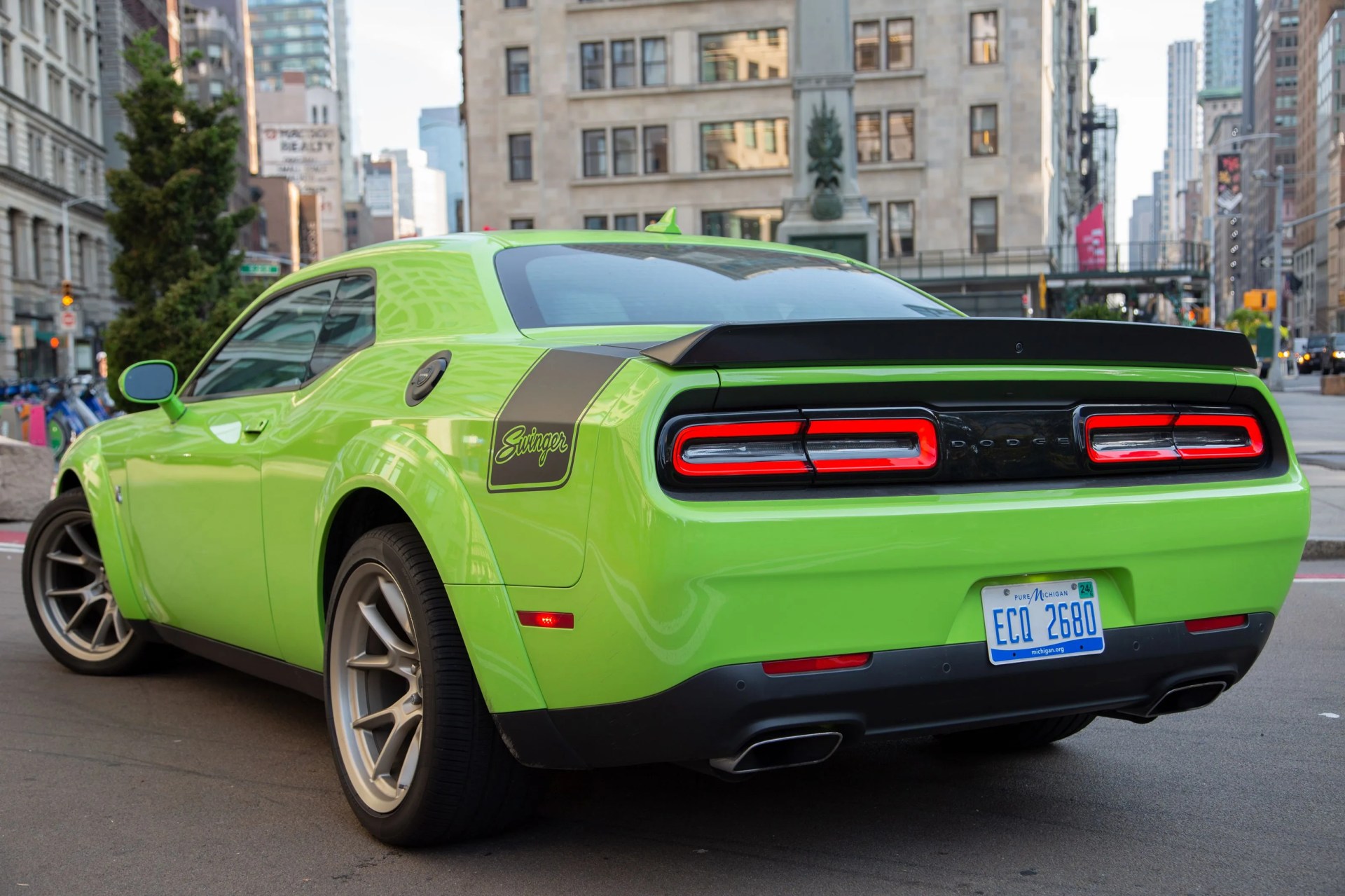
dodge challenger scat pack swingerWill Sabel Courtney

Believe it or not, it’s been 15 years since the Dodge Challenger first hit the street. When the first rolled off the production line in Brampton, Ontario on May 8, 2008, the housing market seemed merely shaky, with the bailouts of Fannie Mae, Freddie Mac, AIG and the other “too big to fail” banking institutions still months away. Hillary Clinton and Barack Obama were battling for the Democratic presidential nomination; Donald Trump had just named Piers Morgan the winner of the first season of Celebrity Apprentice.

Same-sex marriage was only legal in one state (California would become the second after Massachusetts to legalize it on May 15); recreational marijuana wouldn’t become legal in any state for another four years. 2008 was the first year of what would become the Marvel Cinematic Universe (Iron Man had just come out a week earlier) and the first year of the iPhone (the original model debuted in mid-2007). In the years since then, the United States has added 27.8 million people — the equivalent of New York and Arizona combined today.

Yet for everything that has changed in that time, Mopar’s muscle car is largely the same. Sure, it’s seen its share of bolt-ons and upgrades, most notably in the form of a 2015 facelift that brought a fresher look inside and out and a few performance updates, like a more efficient eight-speed automatic in lieu of the old five-speed — but at the heart of it all still lies the same LX platform that dates back to the early Aughts and includes suspension bits and other parts from the Mercedes-Benz E-Class and S-Class developed at the end of the 20th Century.

Time, though, has a way of catching up with all of us, and that’s just as true for the Challenger as it is for anything else. After a decade and a half of soldiering on, this old soldier is set to fade away at the end of 2023 alongside its four-door Charger sibling. Their legacy will live on, in the form of an all-new car arriving next year that blends the Charger’s name and the Challenger’s coupe body style with a once-heretical electric powerplant. (A turbocharged inline-six version is almost sure to arrive soon thereafter, but in either case, the Hemi is dead.)

The 2023 Dodge Challenger Scat Pack Swinger: What We Think

The Challenger is still a charming car in plenty of ways: it’s supremely comfortable on the open road, delightfully quick in a straight line, remarkably eye-catching even after all those years — and has more character in its proverbial pinkie than the average crossover has in its whole body. That said, it’s also rough-riding, bulky, inefficient and less fun to drive than other cars of its price. Its appeal by this point is largely nostalgic — not just for the original Challenger of the Sixties and Seventies, but also for its own glory days at the turn of the Obama era. I’ll be sad to see it go, but it’s time for this hero to ride off into the sunset.

To learn more about our testing methodology and how we evaluate products, head here.

The Challenger looks as good as ever, but it’s still a boat

dodge challenger scat pack swinger Will Sabel Courtney

The Challenger has always had a few strong cards in its hand, even as that hand has grown more veins and wrinkles. One of its most notable traits is its design: the Chally is retro in the best of ways, channeling the spirit of the past without copying it outright.

Those lines that look so good from the outside present usability issues inside, though. Staring out over the hood still feels like conning an aircraft carrier, and parking feels about as easy as mooring a fishing boat. Placing the corners of the car takes a little more thought than your average two-door.

And boat-like sensations still dominate when in motion, at least compared to the more battened-down Ford Mustang and Chevy Camaro. Floor the gas, and the car pitches back like it’s going on plane; tackle a tight turn, and the body rolls more than in most cars with two doors and more than 400 horses. Yet in spite of this, the ride is surprisingly brittle, most likely due largely to the massive rim and thin rubber of the tires. It’s no worse than on many sports cars … but considering the Challenger is meant to be more a muscle car in the traditional sense — less “sports car” and more “ordinary car with crazy power” — it feels like a bit of an unwelcome compromise.

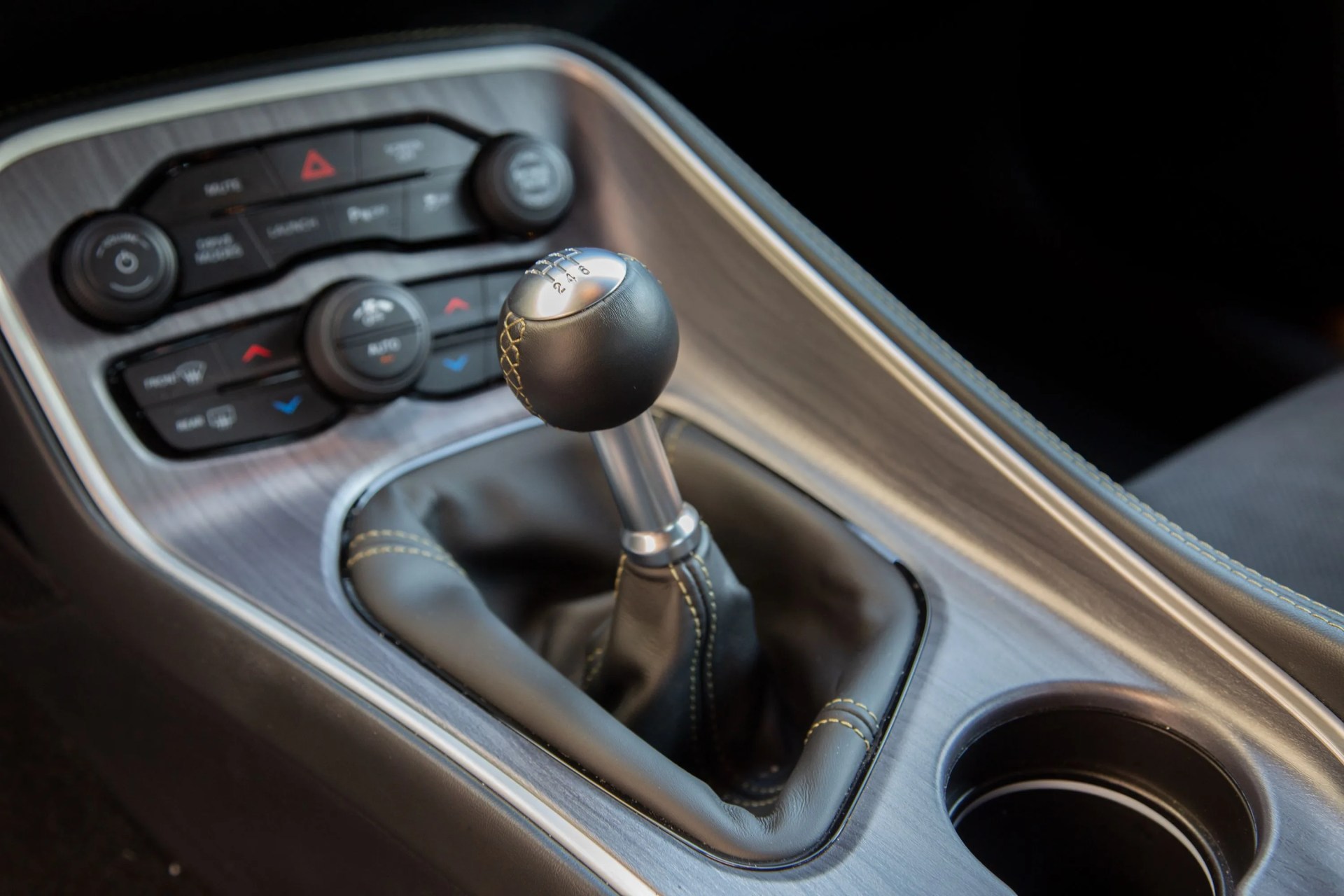
The six-speed manual is fun, but not the best fit

dodge challenger scat pack swinger Will Sabel Courtney

Amazingly, even though the Challenger has been around longer than my entire automotive journalism career, I’ve never driven one with a manual gearbox. Turns out, there’s a good reason why Dodge seems to have generally favored automatic versions in their press fleets: the slushbox is a better fit.

The automatic makes for easier cruising on the highway, where the Challenger is most at home. Not only are there a broader spread of cogs to choose from — it has eight speeds to the manual’s six — but kickdowns are quicker, the excellent ZF box dropping several ratios in the time it takes to wrangle the lever from fifth to fourth. Burnouts — the Chally’s other area of excellence — are easier with the automatic, too, as there’s no risk of shagging the clutch as you try to get the rear wheels spinning.

All that wouldn’t matter much if the stick shift brought extra pleasure to the drive, but there’s there’s little joy in operating this gearbox. The manual’s clutch is heavy and long of travel, as is the shift lever itself. In cars like the Porsche 911, Honda Civic Type R and BMW M2, you look forward to the next chance to row the lever; in the Challenger, you do it begrudgingly.

I’m certainly glad that Dodge has worked to keep the manual alive, and I’m sure that stick shift versions will carry a nice premium on the used market in a few years. But for any buyers who actually plan on using their Challengers as everyday cars, the slushbox is the superior choice.

The Swinger is yet another of the variants that have kept the Challenger alive

dodge challenger scat pack swinger Will Sabel Courtney

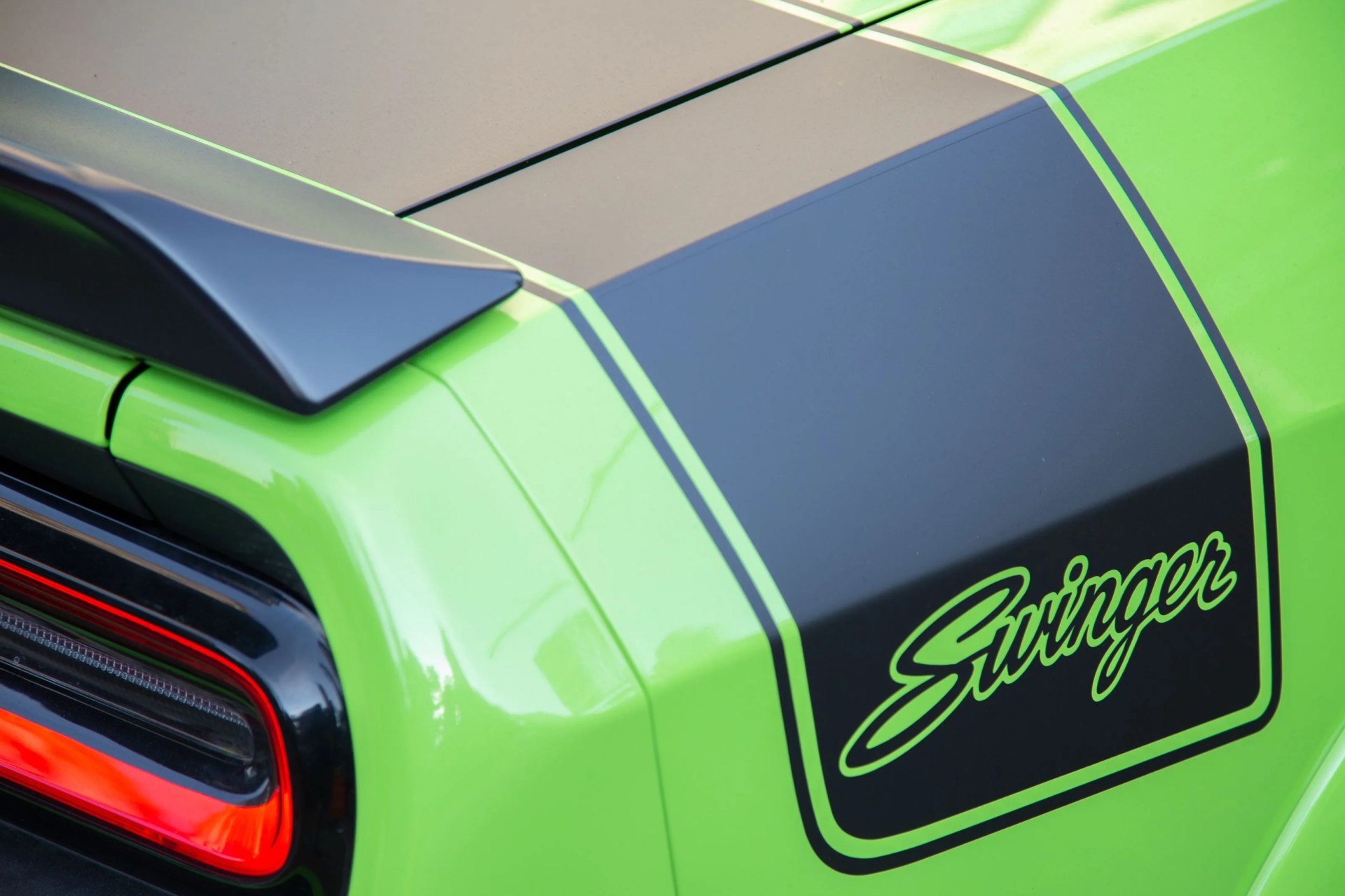
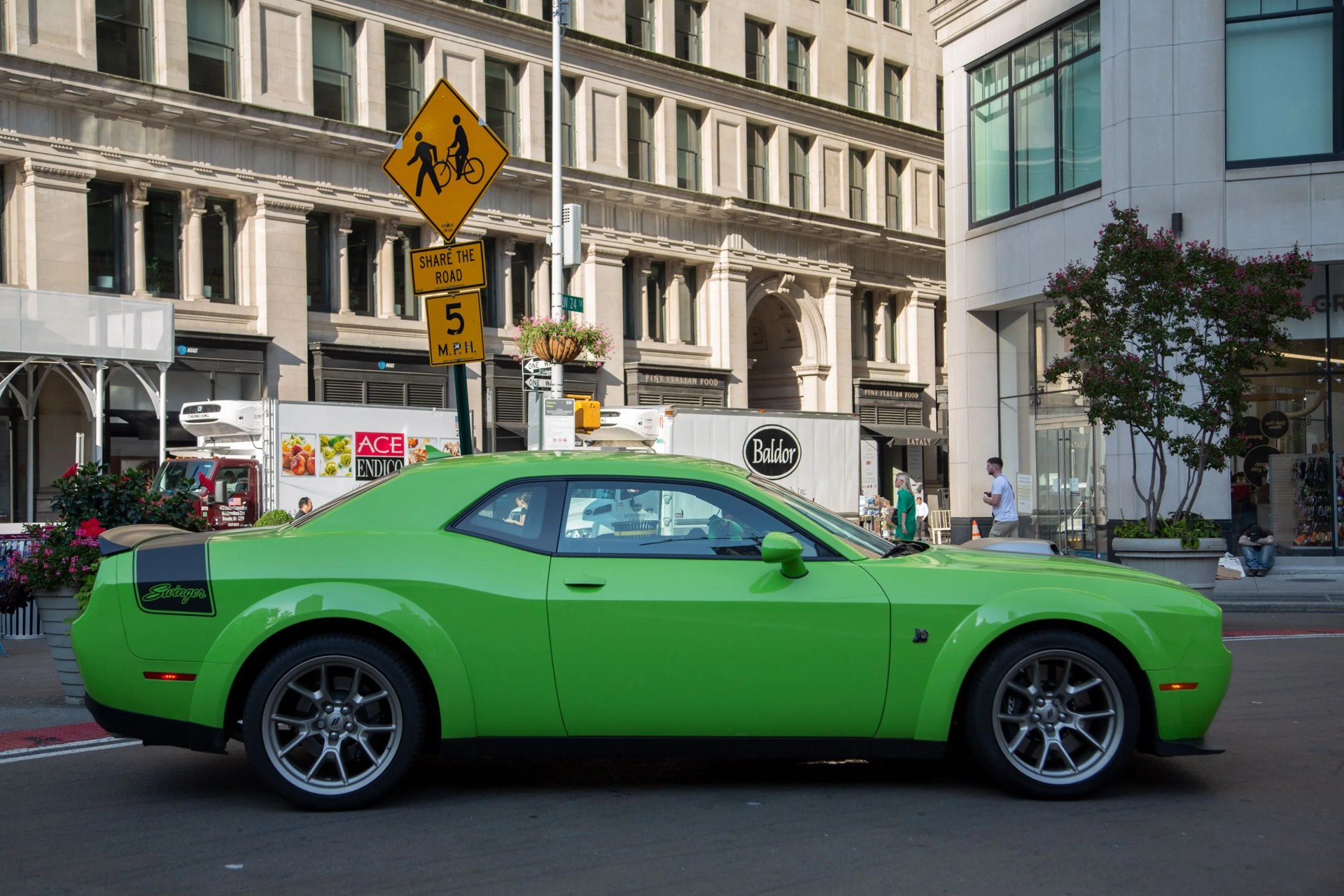
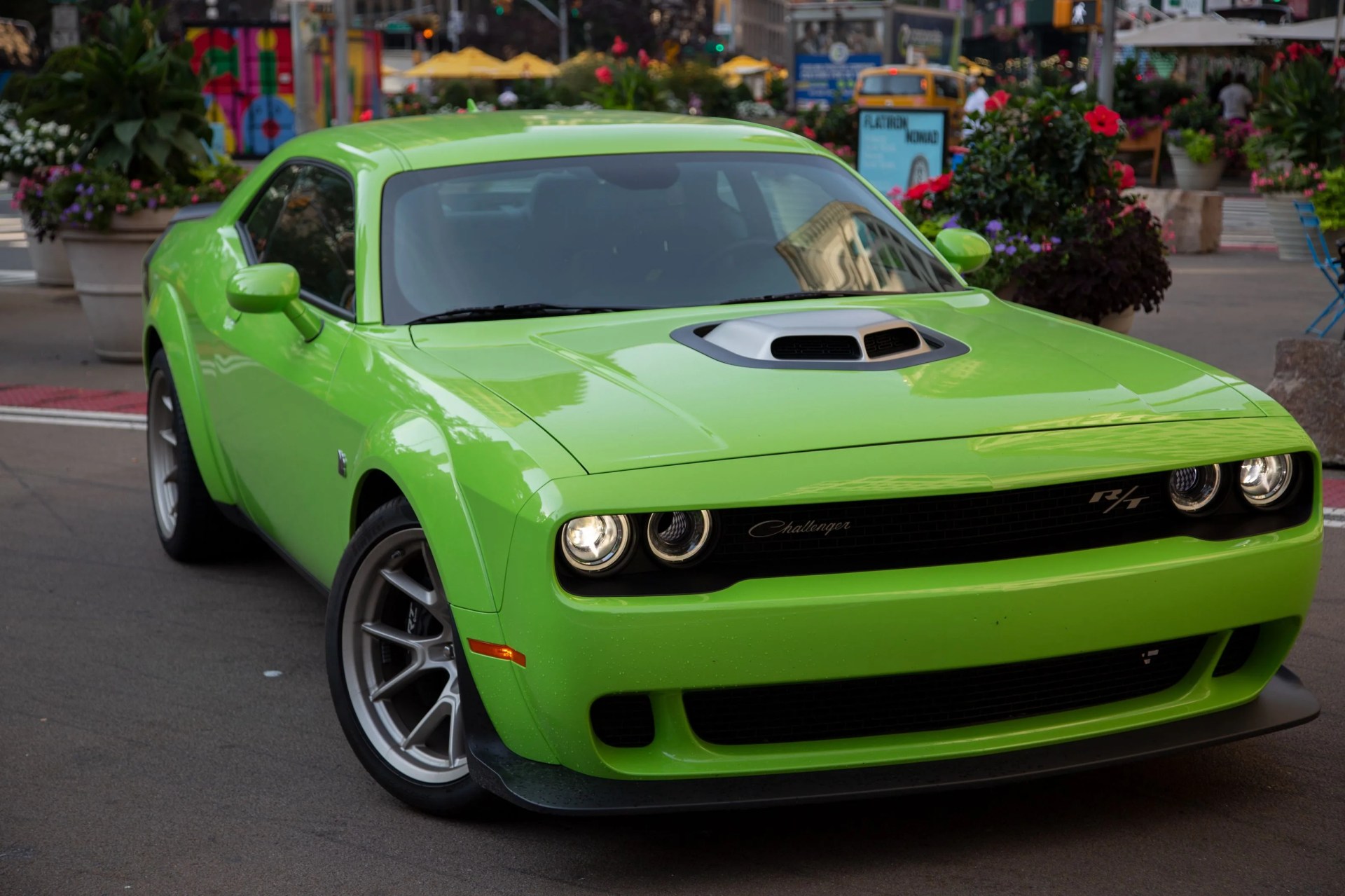
You could fill a book with every trim level, special edition and other variant of the Challenger that Dodge has rolled out over the last decade and a half. To close out the Challenger/Charger production run, Chrysler FCA Stellantis brought out seven final “Last Call” special editions: the Swinger is one of these, with just 1,000 copies rolling off the line in a choice of F8 Green, Sublime Green and White Knuckle paint options. Any of those paints come paired with “Gold School” badging and wheels, a Shaker hood air intake, Nappa/Alcantara seats, green interior trim accents and the Apollo-era stripe and badging on the trunk and rear quarter panels.

The overall look is, in all actuality, rather subtle by Mopar standards; the Sublime (get it, “lime”) green paint works here on a way it wouldn’t on many other cars besides a Lamborghini, and the gold trim bits are shockingly understated. I personally think the graphic on the rear is a little too far — God only knows how many people will shout Austin Powers lines in bad English accents at buyers over the course of ownership — but the package certainly can hold its head up proud amongst the many, many other special Challys to hit the street.

I’ll miss the Challenger, but it’s time for it to retire

dodge challenger scat pack swinger Will Sabel Courtney

Much like the hundreds of thousands of owners of the 730,000 or so Challengers to roll off the line since 2008, I have plenty of fond memories of this muscle car. I’ve taken multiple road trips across the desert with friends in them, laid 75-yard-long patches of rubber and created clouds of tire smoke so thick they poured in through the air vents.

But while pleasant memories may keep the old guard around, carmakers can’t leverage those existing fans forever — and as the automotive world has kept moving ever-forward, the Challenger has slowly but surely lost ground in wooing the next generation. Newer performance cars offer more speed, more performance, more efficiency and more technology; all the special editions and fantastic colorways in the world can’t make up for that.

A bargain price might be able to, but the Challenger can’t win there either. The Swinger rings up the register at $67,785 to start, and can push past $70K with options. If you’re wondering whether that reflects a hefty special edition markup, well, nooope; a similarly optioned non-Swinger R/T Scat Pack Widebody will cost at least $65,525. In a world when $61,510 will net you a Mustang Dark Horse and $69,995 will buy you a mid-engined Corvette, that’s a lot of coin for a 15-year-old coupe.

Especially one that seeks to maintain the classic muscle car mission: providing ordinary Americans with daily drivers that pack a bigger punch than expected. At the end of the day, the Challenger still needs to be a car for ordinary folks to use every day, and in spite of Dodge’s valiant attempts to keep it relevant, it’s passed its prime here in 2023. I’m sad to see it go … but as they say, all good things must come to an end.

2023 Dodge Challenger Scat Pack Swinger

dodge challenger scat pack swinger Will Sabel Courtney

Base Price: $67,785

Powertrain: 6.4-liter V8; six-speed manual or eight-speed automatic; rear-wheel-drive

Horsepower: 485

Torque: 475 lb-ft

EPA Fuel Economy: 14–15 mpg city, 23–24 mpg highway

Seats: Four

More Great All-American V8s

ct5 v blackwing Cadillac
Home / Page 12

How to Get the Best Price on a Yeti Cooler

Called Yeti Rescues, this secondhand shop is like an adoption service for indestructible coolers.

yeti coolerYeti

If you buy from a link, we may earn a commission. Learn more

It’s no big secret that Yeti makes some of the best, most indestructible coolers (and other related gear) on the market. However, even the brand’s most affordable offerings are still pretty expensive. But, there’s some good news: Yeti just launched a program that makes getting one of the brand’s like-new coolers much more approachable and accessible.

Products in the Guide

Called Yeti Rescues, it’s kind of like an adoption service for lightly-used coolers (both hard- and soft-sided), bags, accessories and more. Plus, since the program is run by the brand directly, you can bet your bottom dollar you’re getting a genuine Yeti product that’s in great condition and can stand up to the kinds of punishment you’d expect. And you can get them for much less than you might brand-spanking-new.

How Does Yeti Rescues Work?

According to the brand, it’s a simple three-step process. First, the brand sorts through gear that’s “barely used or lightly bruised.” Next, Yeti renews that gear to like-new condition — presumably cleaning it and buffing out scuff and scrapes, as well as making sure it still performs as intended. Finally, the brand puts it up for sale on the Yeti Renews marketplace with a big discount with the hopes of finding it a new home.

All you have to do to participate is head to the Yeti Renews site and shop like you normally would online.

What Kind of Gear Is Available on Yeti Rescues?

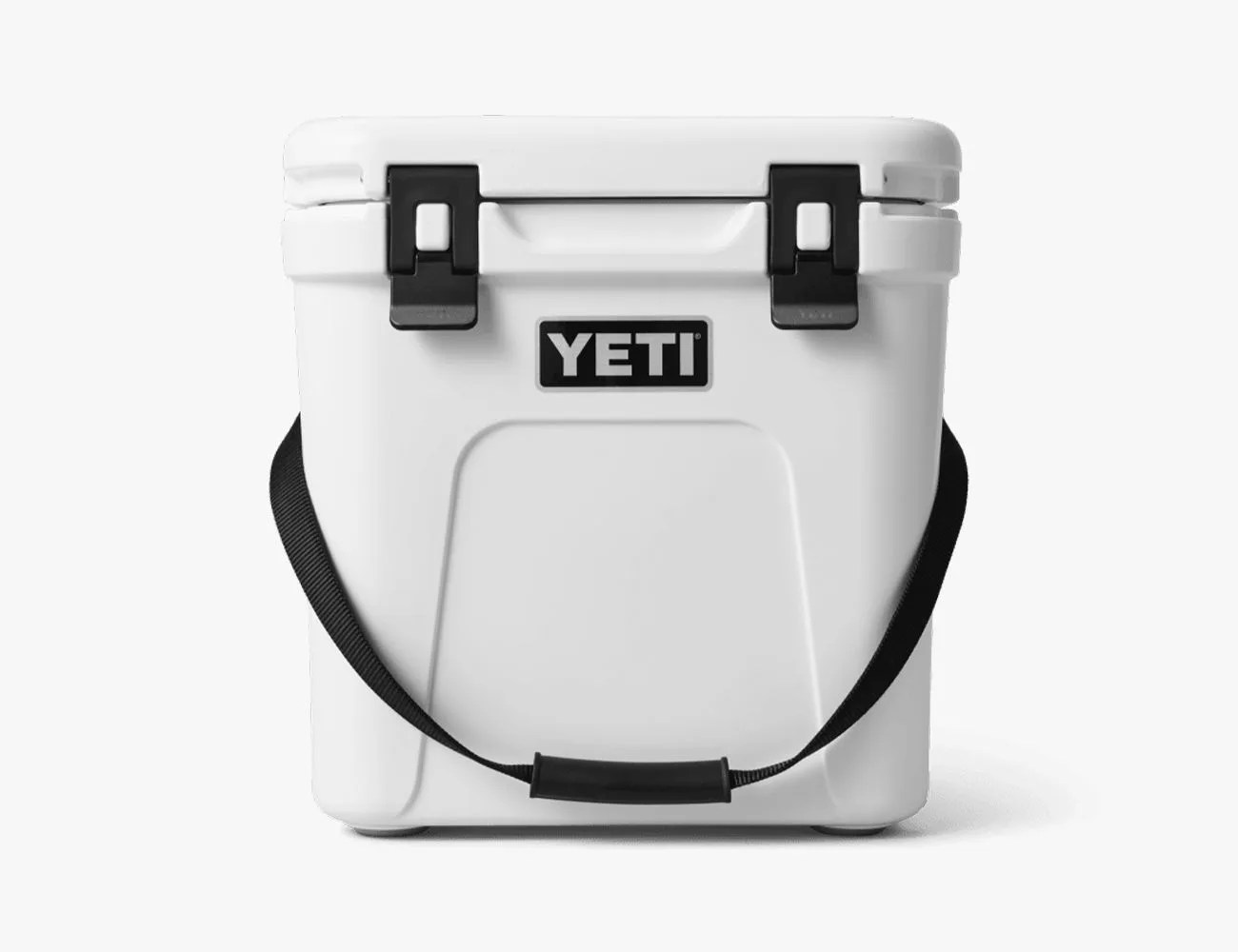
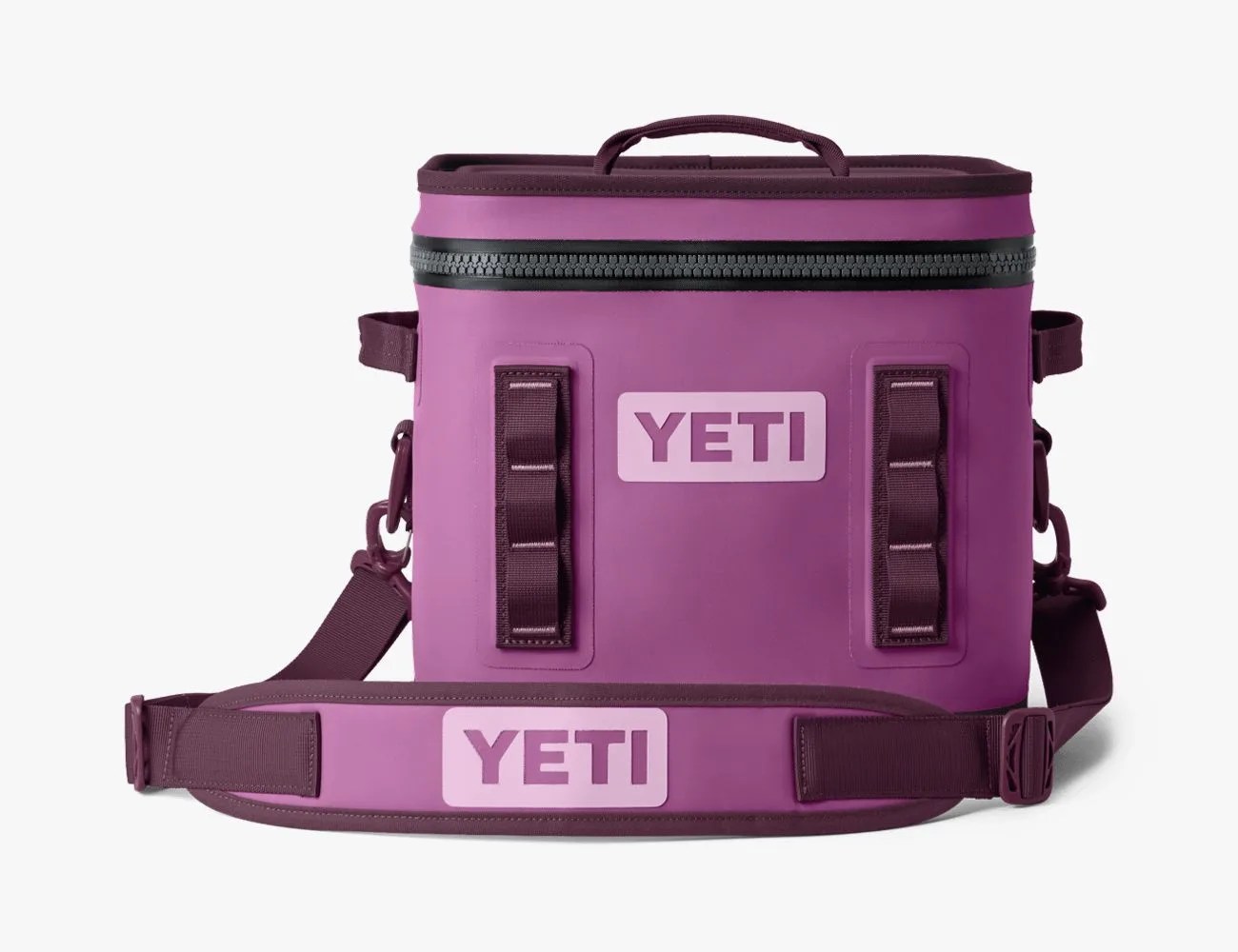
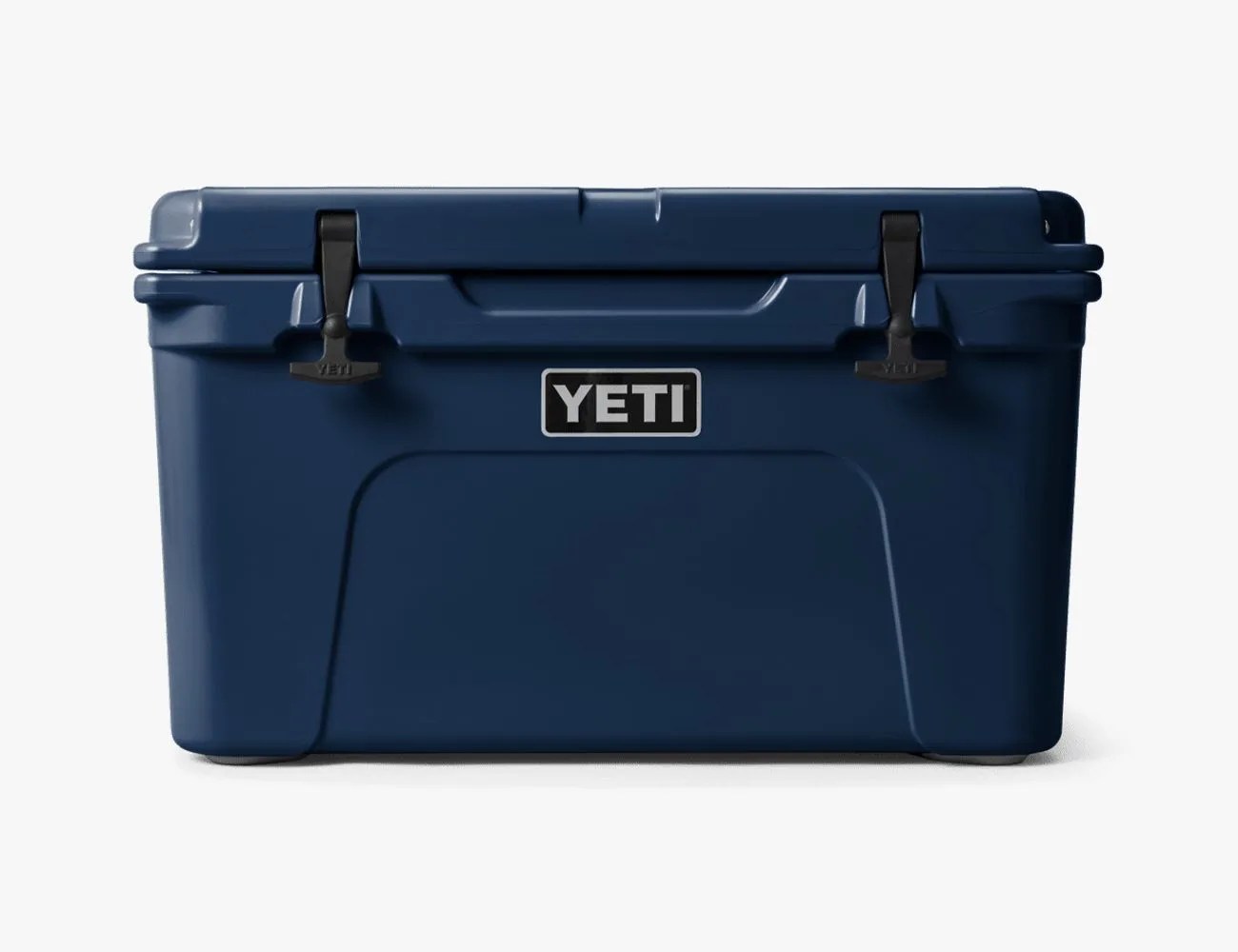
This is the best part of the program. Yeti isn’t simply trying to offload its most obscure, worst-selling products. In fact, it’s quite the opposite. Some of the brand’s absolute best offerings are available for purchase right now, including the Roadie 24, Hopper Flip 12, Tundra 45 and much more.

We’ve picked out a few of our favorites below that are already online and available for purchase. If you’ve ever wanted a Yeti cooler (or other Yeti gear) but just couldn’t reasonably spend the money on one, this might be the perfect middle ground to finally get you outfitted with the cooler of your dreams.

Home / Page 12

Who Makes the Best NATO Strap? We’ve Tested Them All

We tried different NATOs from fan-favorite strap makers to see how different they can really be.

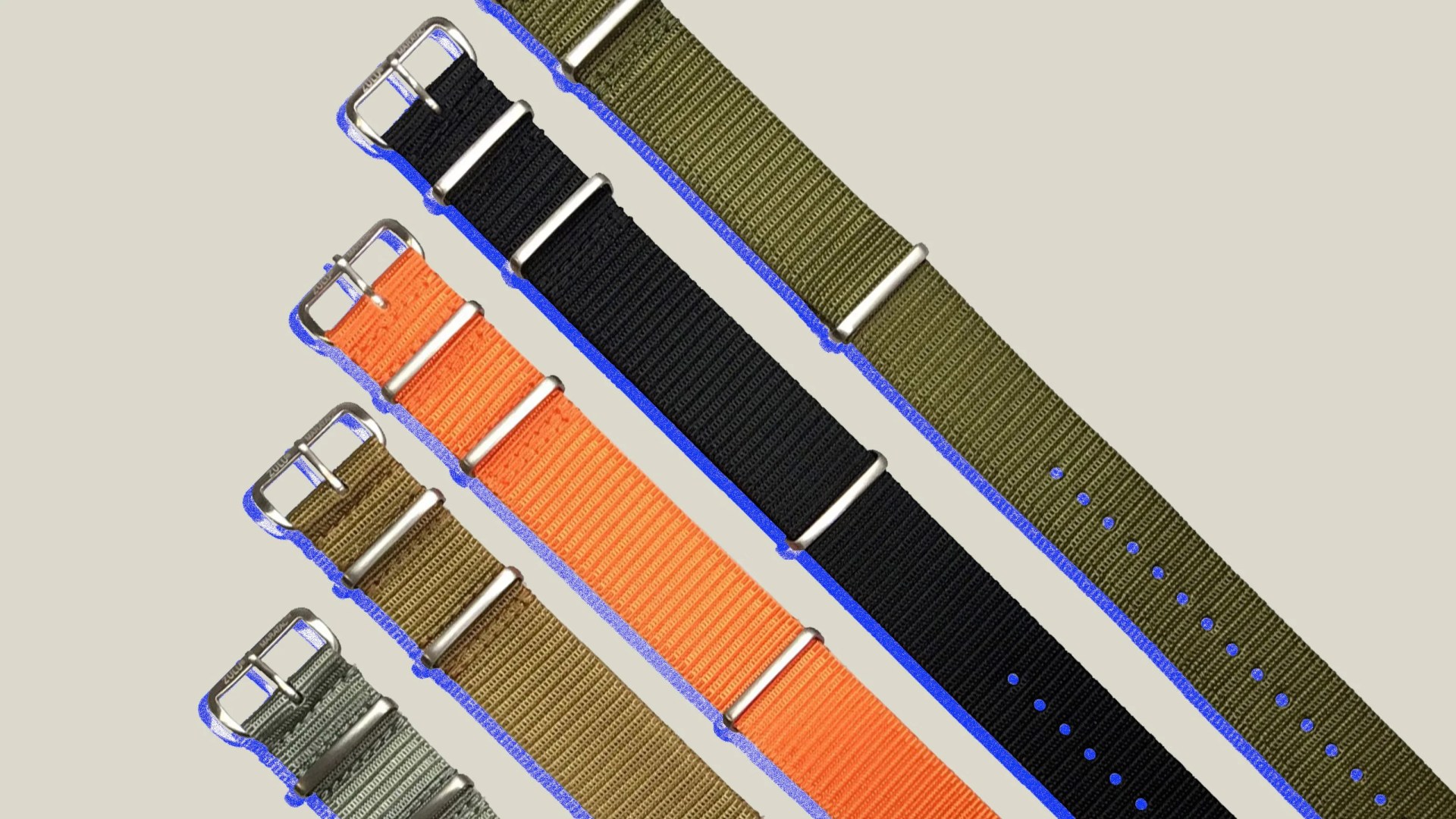
maratac mil nato watch strapsGear Patrol

If you buy from a link, we may earn a commission. Learn more

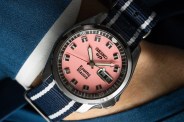
The NATO-style watch strap has become more than a fun watch accessory — it’s practically a necessity if you love watches. And it’s not hard to see why: a NATO is cheap, it’s durable, it’s simple to swap in and out, it’s easy to clean and its military-inspired looks play into the whole tacti-cool trend. The point is, if you wear a watch, consider getting a decent watch band of the NATO variety. Or a handful.

Products in the Guide

Best Overall NATO Strap

Crown & Buckle has made aftermarket leather and NATO straps for years, but the Supreme is their take on the high-end “seatbelt-style” NATO strap. The Supreme’s tight, thick nylon weave delivers on the promise of a seatbelt-like feel and the overall effect is a NATO that is both durable and smooth against the wrist. There are a couple of other seatbelt-style NATOs on this list that feel extremely similar, but the Crown & Buckle Supreme wins out for the quality of its hardware. The keepers have lovely beveled edges and, most importantly, the buckle is thin and lithe while still feeling sturdy.

Best Upgrade NATO Strap

While the Worn & Wound ADPT is the priciest option on this list, it’s also the only one to boast Made-in-the-USA status. The dedication to quality shows through mostly in the nylon portion of the strap, which is thick, dense, hard-wearing and cleanly cut (we particularly love the orange stitching). It’s not the most comfortable out of the box, but it’s also the most likely to soften with wear (and earn those patina points). A sticking point: the buckle on this one feels wobbly, which is out of line with the rest of the strap’s otherwise high-end fit and finish.

Best Budget NATO Strap

The Maratac is one of the cheaper straps on this list but is not lacking in quality — it’s based on the standard G10 design and then improved. The strap’s nylon weave is tight, cleanly cut, and while it’s not exceptionally soft, it’s more comfortable than some other standard-style NATO straps. The hardware, while nothing exceptional, still feels solidly woven into place and features a nice brushed finish. Rest assured, if you don’t want to spring for one of the pricier options on this list, this strap will still make you very happy.

Phoenix G10

The Phoenix G10 is, for all intents and purposes, the classic NATO strap. While the brand didn’t invent the NATO, it’s made them for the British Ministry of Defence to their specs since the 1970s, so the G10 wins out over others just for cred. But wear the G10 and you’ll realize how far the NATO strap has come since the original; the strap is thin, densely woven and a bit rough in texture. It’s not bad, but it’s just that the other straps on this list felt better made and more comfortable. Still, it’s as authentic as you can get, and that’s got to count for something.

rolex
Throw a Rolex Submariner on a NATO because why not?
Photo by Hunter Kelley for Gear Patrol

Hodinkee UTE Nylon

It’s a classic NATO strap, but produced with all the details and factors that true watch enthusiasts get nitpicky about — and watch authority Hodinkee, which sells it, would know. Is this the perfect NATO strap? It just might be, with special attention given to things like quality hardware, thickness and comfort but with the traditional, no-nonsense vibe in four basic color options and 20mm or 22mm sizes. If you want the most versatile and historically accurate look, try the version in gray like the original G10 strap.

B&R Bands Xtreme NATO

Each of B&R Bands’ range of watch strap options is well-executed and easily recommendable. Among the brand’s nylon NATO-type straps — which include “Classic,” “Woven Fabric” and “Seat Belt” — the “Xtreme” is our favorite. A refinement of the seatbelt style, it has a super-dense, durable weave with a smooth texture and details that take it up a notch. You’ll notice the fine weave with subtle edges — they’re slightly different between solid colors and “Bond”-style striped variants — and the hardware is nicely brushed. Thin, tough as a seatbelt and comfortable as hell, they also come in color options that’ll effortlessly elevate the look and feel of a tool watch.

Haveston Invasion A2

A caveat: this is not technically a NATO strap, but rather a single pass-through strap (a true NATO has a second piece of nylon that passes under the watch). Still, it’s a great option, with a soft texture, a properly-finished nylon weave and exceptional hardware (the buckle is especially nice). The second keeper in the strap is also adjustable, a nice touch that few other straps here have. The best part, though, is the design, which adds some regimental stripes, and if you don’t like this specific color scheme there are a few others on offer (Haveston also sells a proper double-pass NATO if the single pass-through is somehow a turn-off).

BluShark AlphaShark

Another seatbelt-like strap. The nylon is thick, smooth and tightly-woven — overall, it’s soft and smooth and comfortable. The keepers and buckle are well-made too, though a bit on the chunkier side. Still, it’s an excellent option, and the massive amount of color options available make this a winner.

What Exactly Is a NATO Strap?

What kind of straps are we talking about, exactly? Watch nerds can debate the definition of a NATO strap and cite its military history. To be legit, must it fit the exact characteristics as specified by the 1973 British Ministry of Defense Standard 66-15? Those were 20mm wide and were only made in the color “Admiralty Grey.” They were sometimes also called “G10” and gave rise to the NATO name as a shortened version of “NSN” (NATO Stock Number) strap.

Of course, NATOs wouldn’t be nearly as fun or popular if we all had to stick to those exact specs. In fact, other forms of fabric straps aren’t necessarily less “authtentic”: they’ve been around in some form or another since well before the NATO was officially born in 1973 — as evidenced by James Bond’s on-screen strap back in 1964 (see below) and Rolex’s military Submariner of the 1950s, for example, was designed to only be wearable on such straps. Thankfully, there are many, many options available today that range from historically accurate to colorful and creative.

One key trait of a NATO (proper) is an additional shorter length of fabric which helps to keep the watch from moving around on the longer length. Some might call straps without this feature by another name like Zulu, “one-piece” or just “single-pass,” but they all at least offer the basic look and feel of a NATO. NATOs also tend to be long enough to fit outside of clothing, meaning that when worn against the skin the end will need to folded back into the keeper in order that it doesn’t flap about inelegantly.

ollech wajs watch
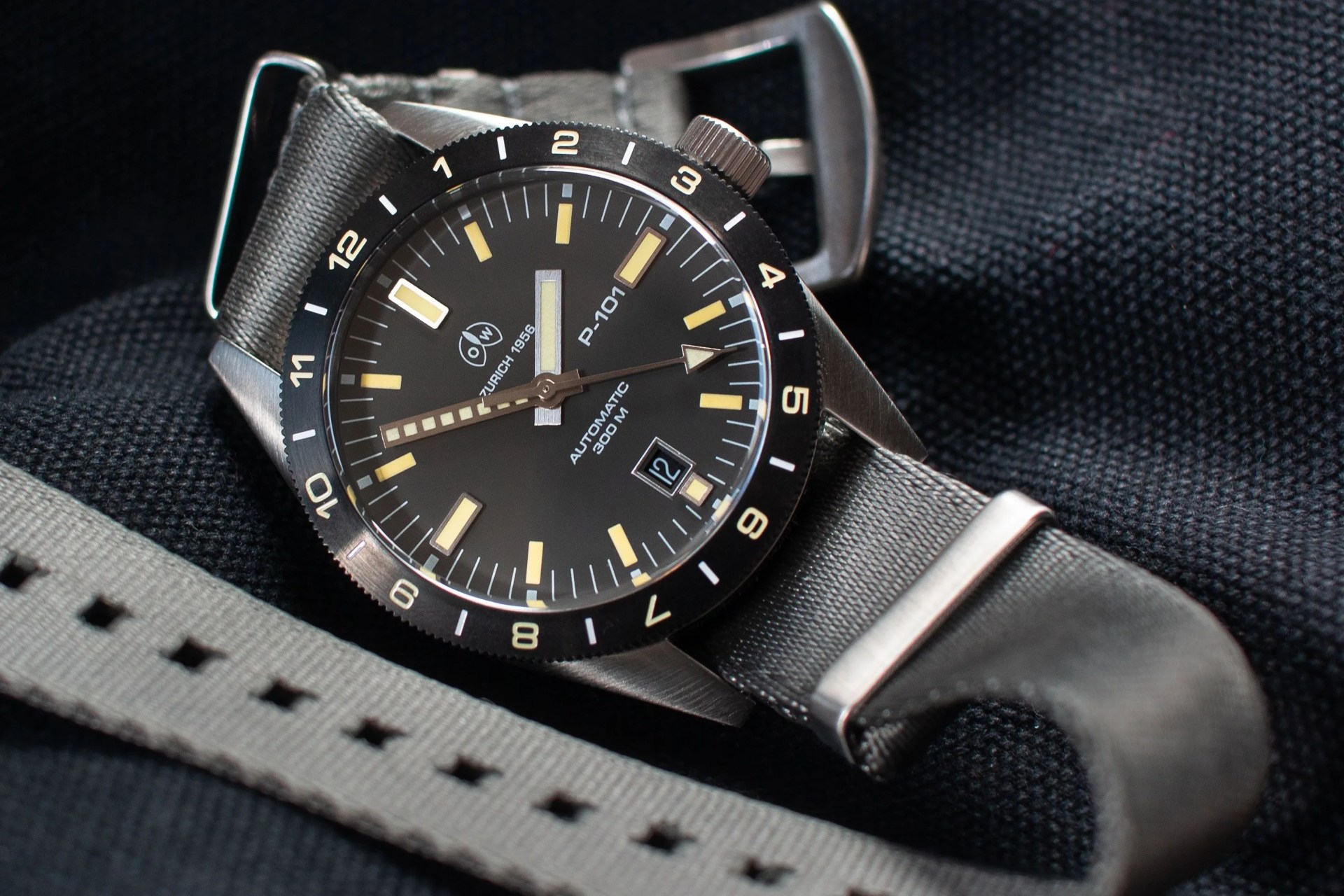
B&R Bands’ Seat Belt NATO on the Ollech & Wajs P-101 watch.
Zen Love

What to Look for in a NATO Watch Strap

You can spend a few bucks on a cheapo NATO. But if you spring for premium, you get an expertly-crafted, comfortable way to keep your fancy (or not-so-fancy) timepiece safely affixed to your wrist. There’s a bevy of aftermarket options from small brands you can find online.

Admittedly the formula remains pretty much the same, and many feel very similar, but look closely and you can see that each is unique when it comes to the small details, while two seemingly identical-looking straps can actually feel very different. As simple as a NATO strap is, there are multiple factors to consider when buying one from its material and design to its thickness, weave and hardware. With the strap style’s rise in popularity, there’s more variety than ever.

NATO straps are generally made of nylon, but you might be surprised at the different possible qualities, textures and looks that are possible with this material. The originals can be relatively stiff, while some premium modern NATOs are built more or less like soft but strong seatbelts — and there’s a range in between. Different weaves can affect the look and texture, as well as adding a sense of detail. Some people like a thick NATO (if you like really thick, try leather) while others prefer less bulk (I’m in the latter camp), and the quality of hardware like the buckle and keepers can vary significantly.

Don’t get too hung up on every one of these details, though: NATO straps are usually cheap enough that you don’t need to overthink every purchase. Moreover, it’s largely down to comfort and preference when choosing a strap, and knowing what you like comes from experience — so shop away.

What to Know About James Bond’s NATO Strap

For a fictional character, James Bond has an outsized influence on watches and style in general. In the 1964 film Goldfinger, the camera lingered on his Rolex Submariner worn on a single pass strap that was actually too small for the watch’s lugs. That’s not considered very style-savvy today, but its striped pattern has become iconic: black with two green center stripes bordered by red. Many strap makers offer options in this style or something similar. It’s often referred to as a “Bond NATO.” The other kind of Bond NATO you’ll see is black with two gray center stripes as worn by the Daniel Craig James Bond. The striped NATO comes in all manner of color combinations however and offers a twist on the military look.

Watches That Look Great on a NATO

And if you’re looking for some watches to pair your NATO straps with, we’ve got you covered, of course:

, , , ,
Home / Page 12

16 Excellent Watches You Can Pick Up from Huckberry

Tool watches, dress watches and exclusive collabs from Seiko, Hamilton, Unimatic and more.

a group of watchesHuckberry

If you buy from a link, we may earn a commission. Learn more

An excellently curated selection of gear, EDC and apparel puts online retailer Huckberry very much on the Gear Patrol wavelength. And that curation includes a surprisingly robust range of watches from some of our favorite brands, including Seiko, Hamilton and G-SHOCK. While tool watches are naturally the most prevalent style you’ll find on the site, with everything from divers and field watches to GMTs and chronographs, you’ll also discover some surprises in the form of classy dress watches and retro digital watches.
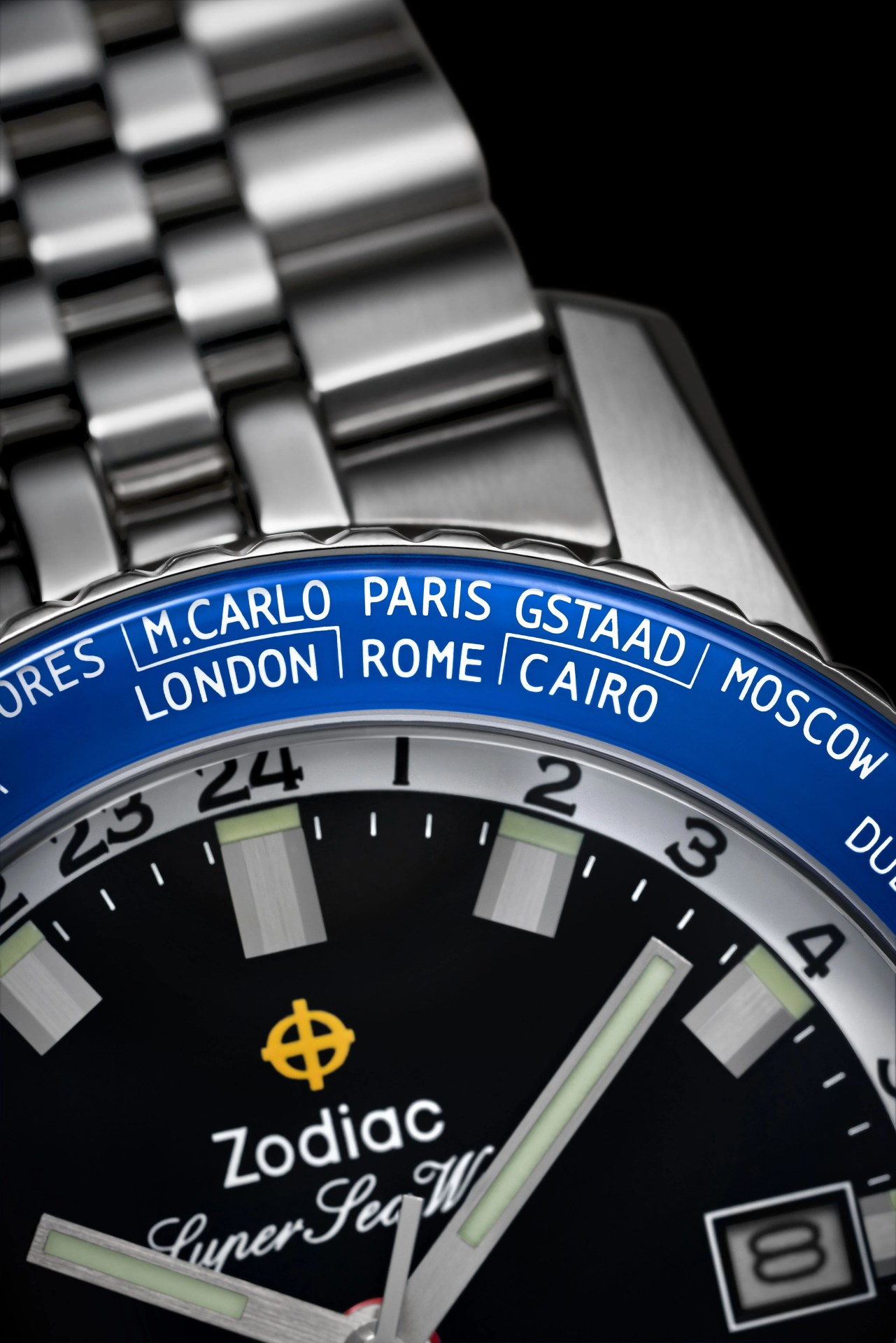
Perhaps best of all, Huckberry frequently collaborates with other brands, meaning some of the watches they sell from names like Unimatic, Zodiac, Timex and more aren’t available anywhere else. It’s worth browsing all the options in the Huckberry Watch Shop, but below you’ll find our favorite picks out of what’s currently offered in the online shop.

Products in the Guide

  • Size: 39mm
  • Movement: Automatic

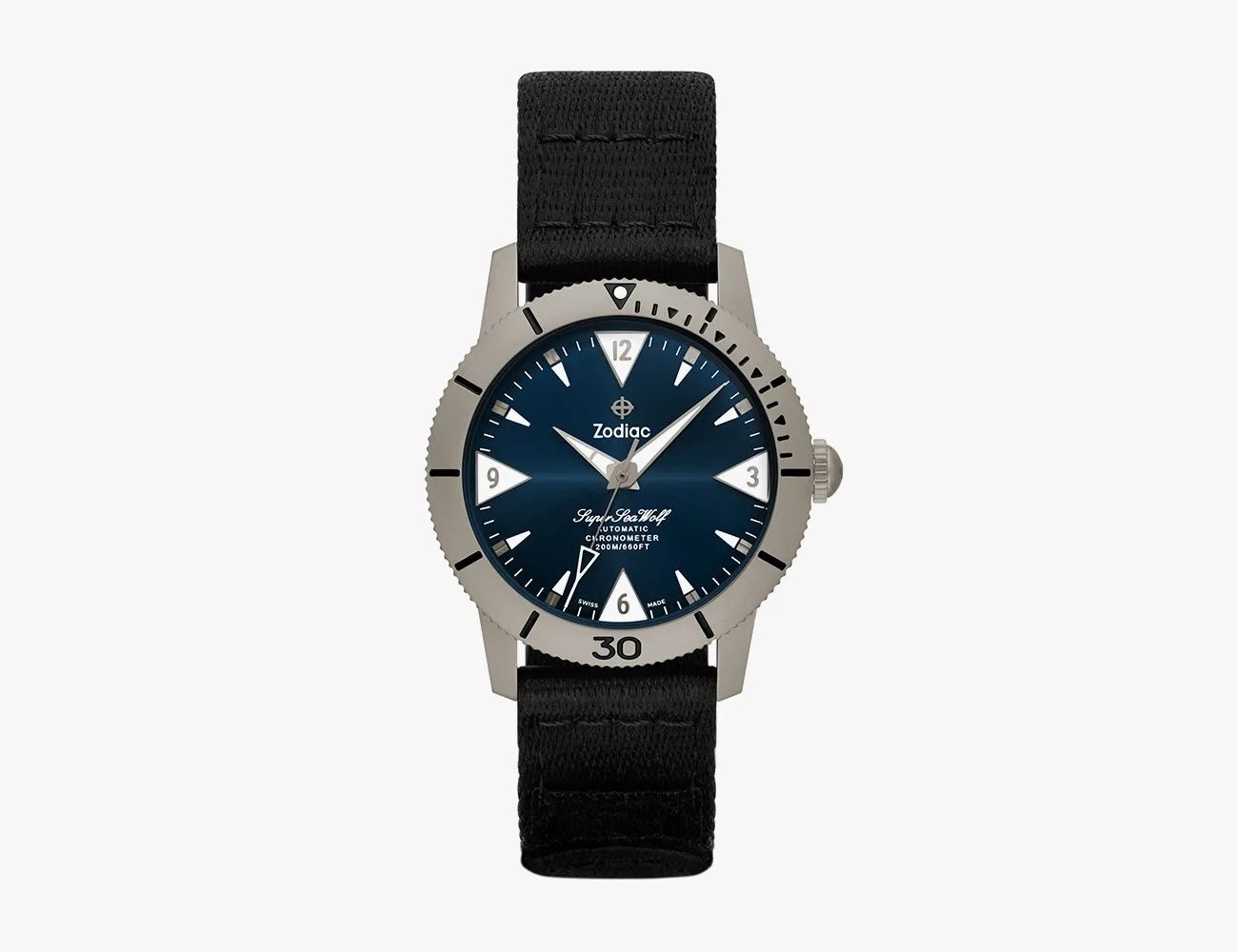
One of the first modern dive watches ever made, now crafted from lightweight titanium for the first time thanks to this limited collab between Huckberry and Zodiac.

  • Size: 45mm
  • Movement: Automatic

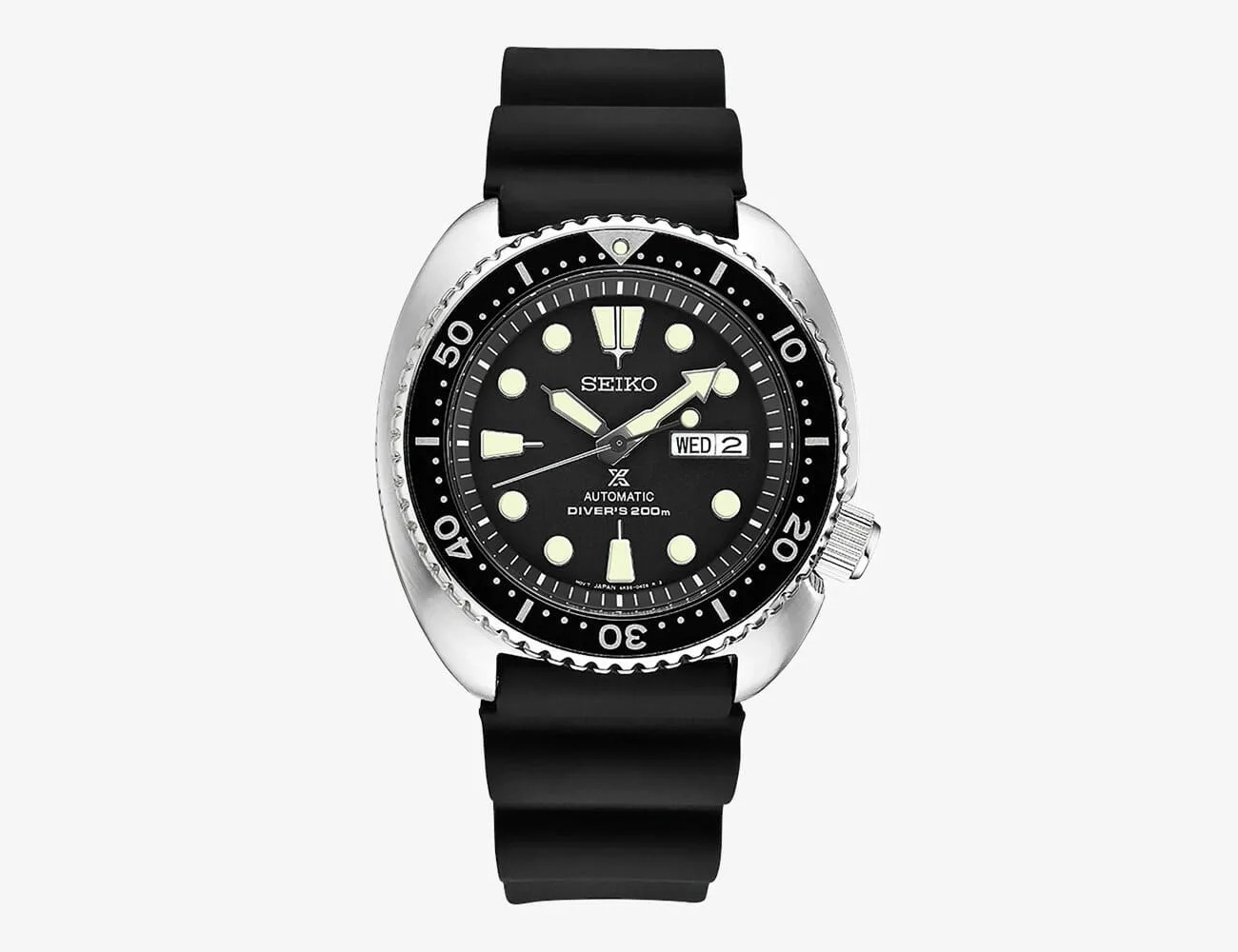
Dive watches don’t get much more classic than the Seiko Turtle, a brand favorite and a rugged companion that will last basically forever.

  • Size: 40mm
  • Movement: Automatic

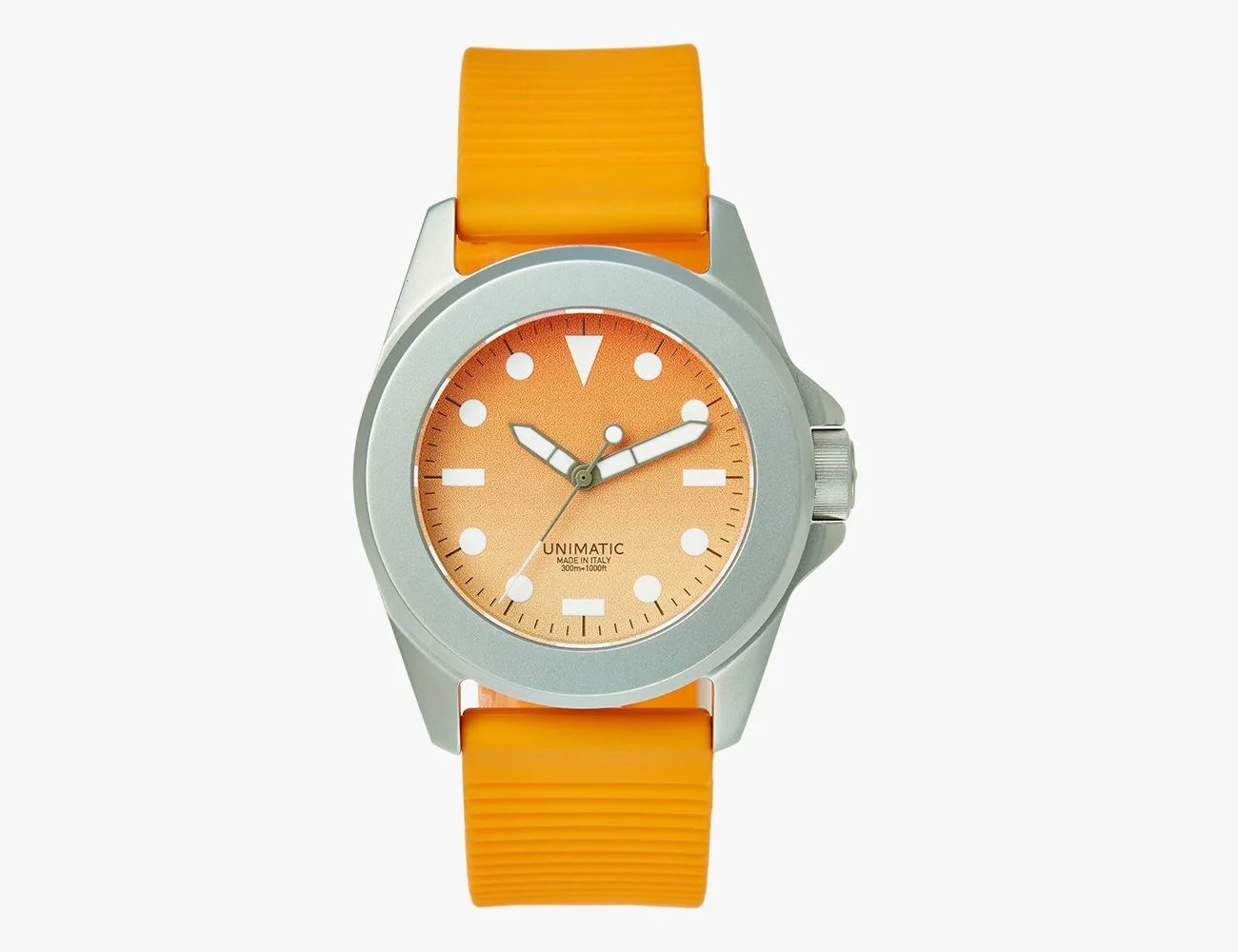
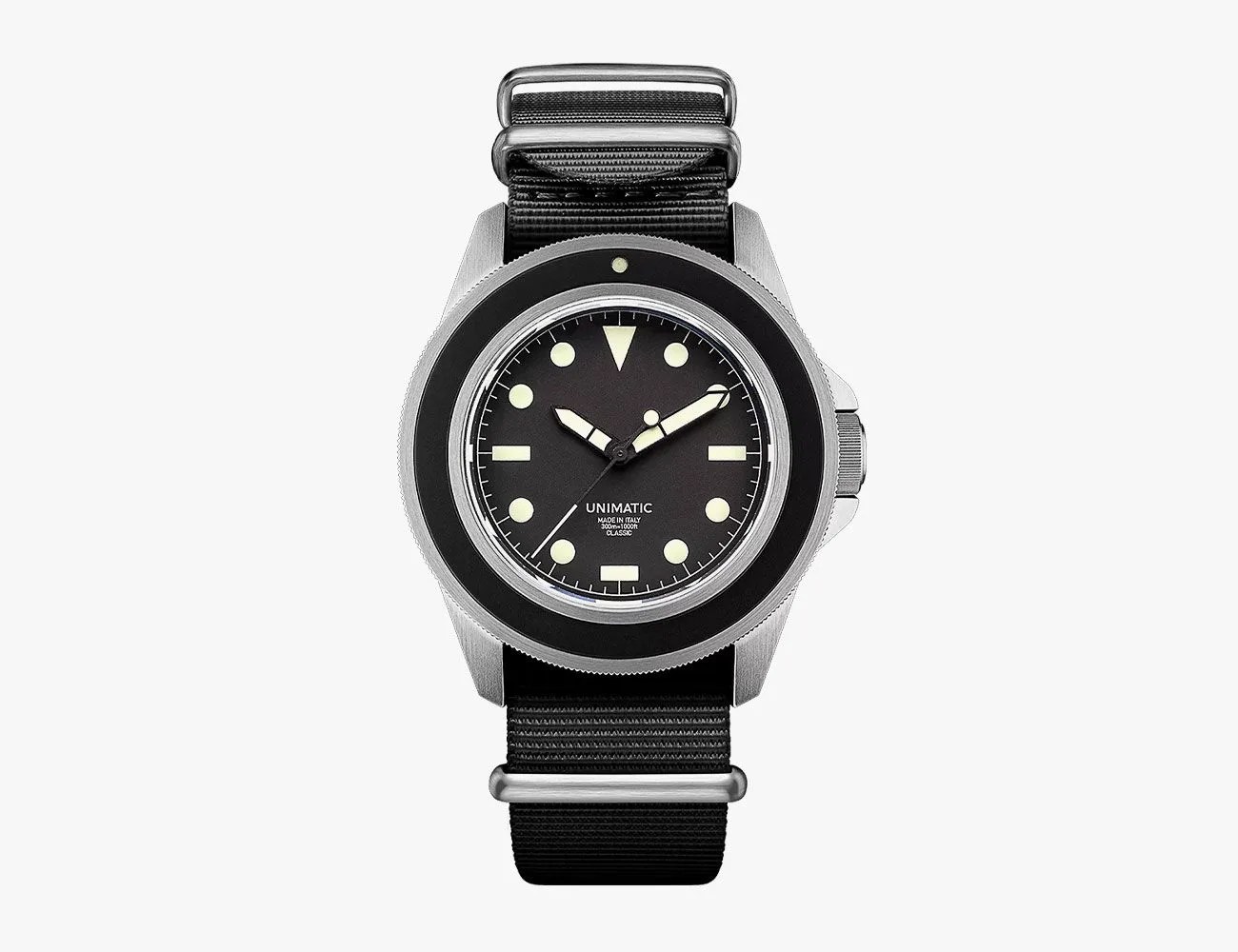
Unimatic collabs with just about everyone, but the Italian brand’s Huckberry joint effort is one of our favorites thanks to its bold use of nature-inspired color.

  • Size: 40mm
  • Movement: Automatic chronograph

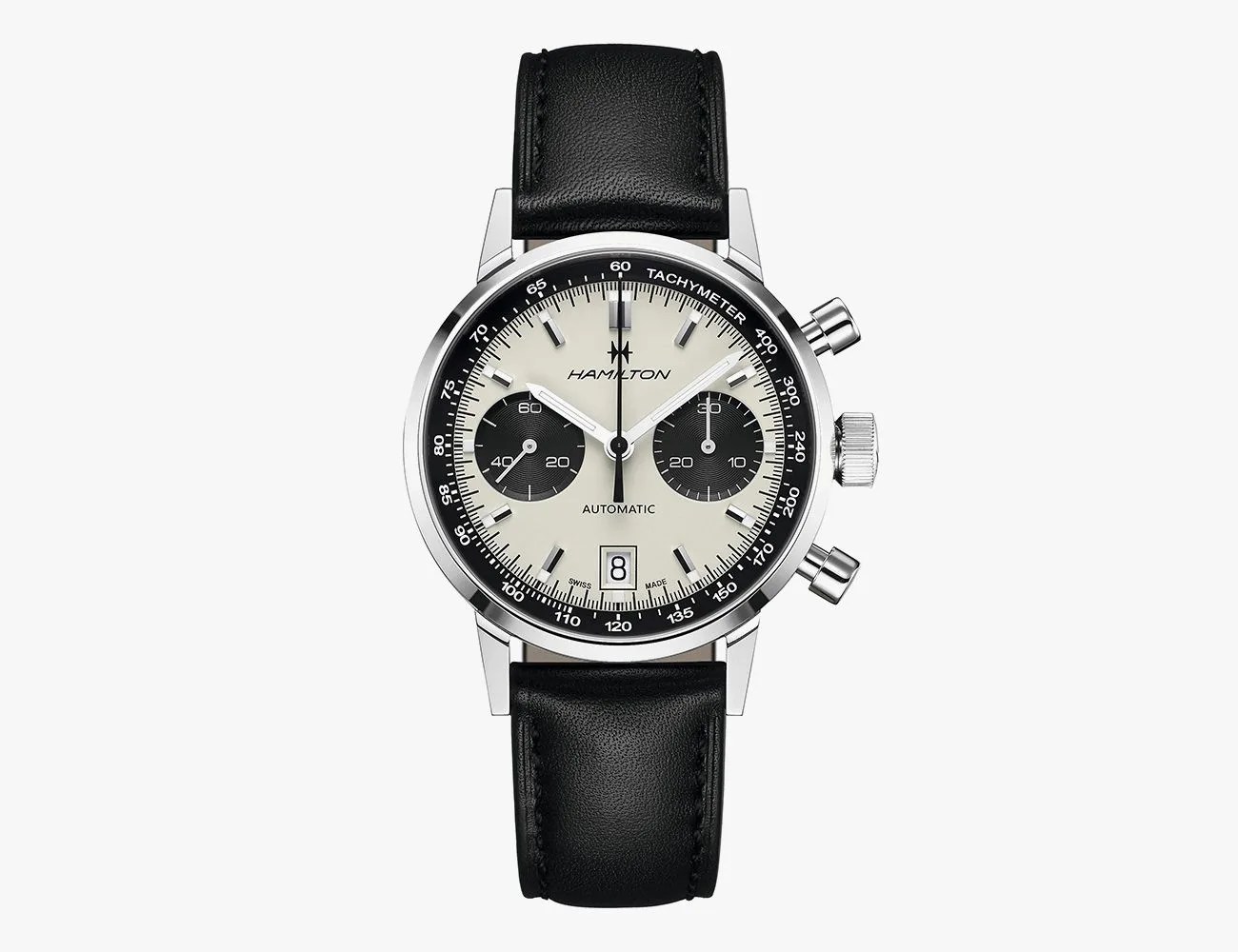
Hamilton’s modern-day reissue of its 1960s panda chronograph is one of the best-made — and best-looking — watches available at its price point.

  • Size: 41mm
  • Movement: Automatic

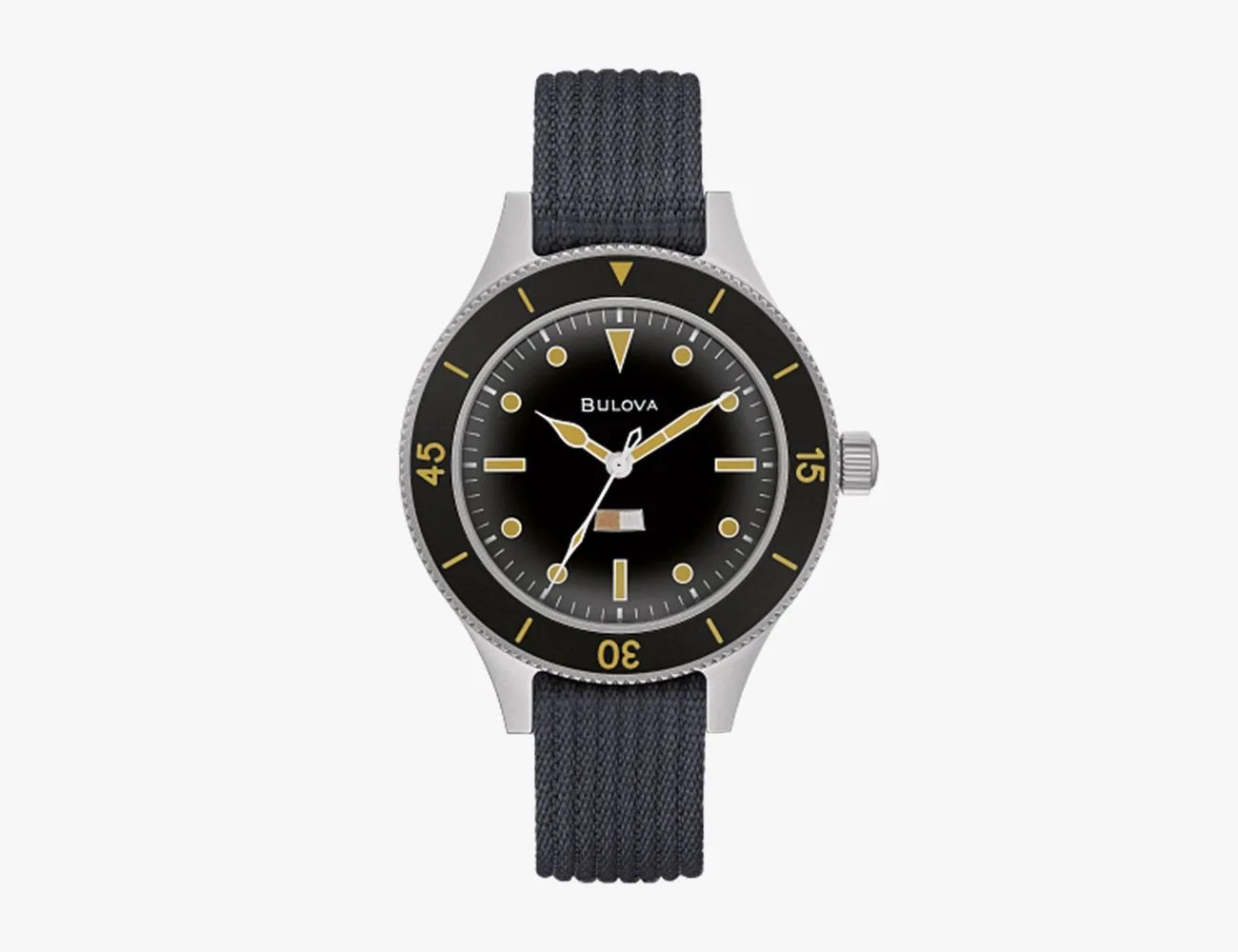
Own a bit of history (and exude some serious Blancpain vibes) with this modern recreation of the prototype dive watch Bulova made for the US Navy in 1957.

  • Size: 42.5mm
  • Movement: Automatic GMT

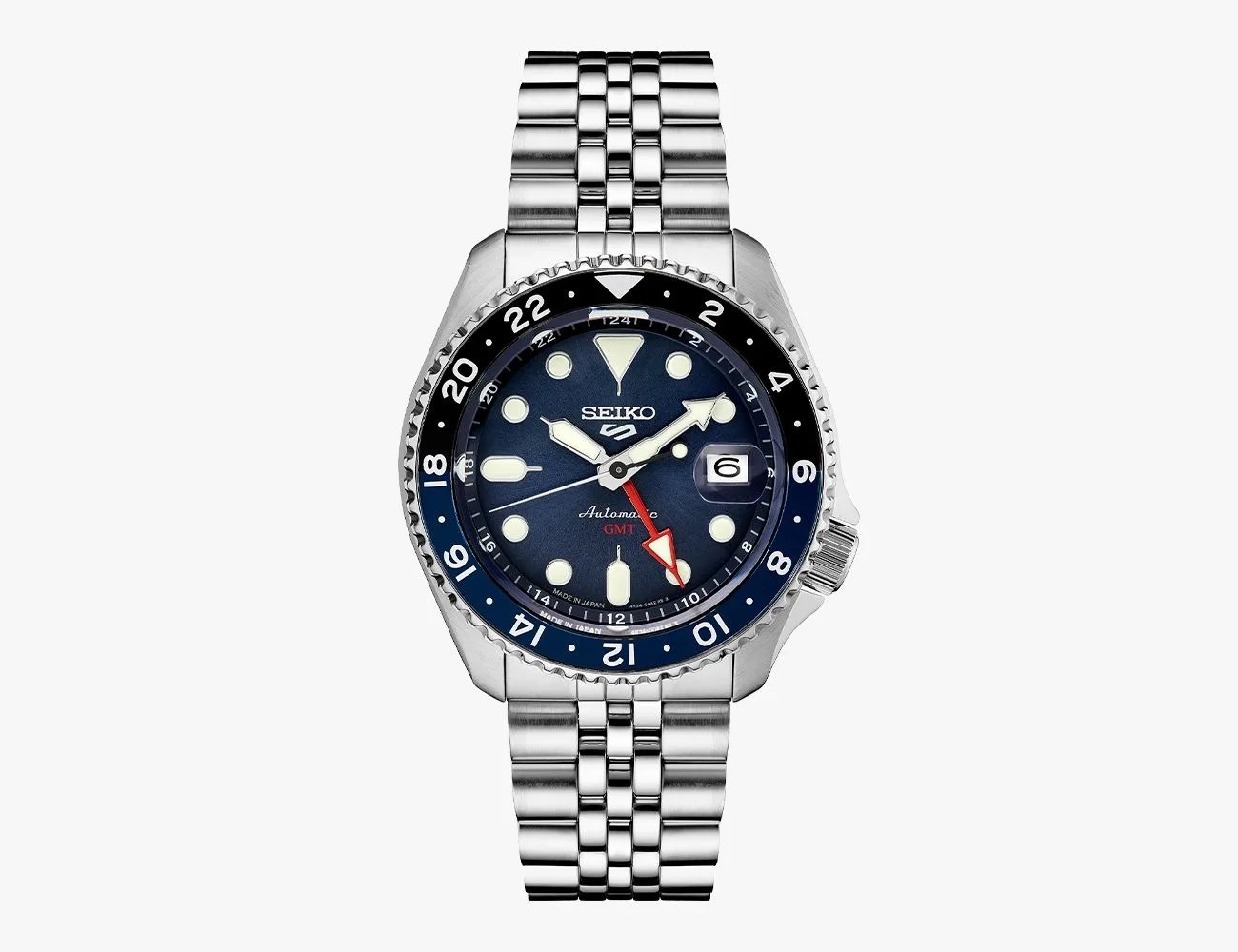
The best automatic GMT you can get for under $500 is available at Huckberry … and in the sleek “Batman” colorway too.

  • Size: 41mm
  • Movement: Automatic

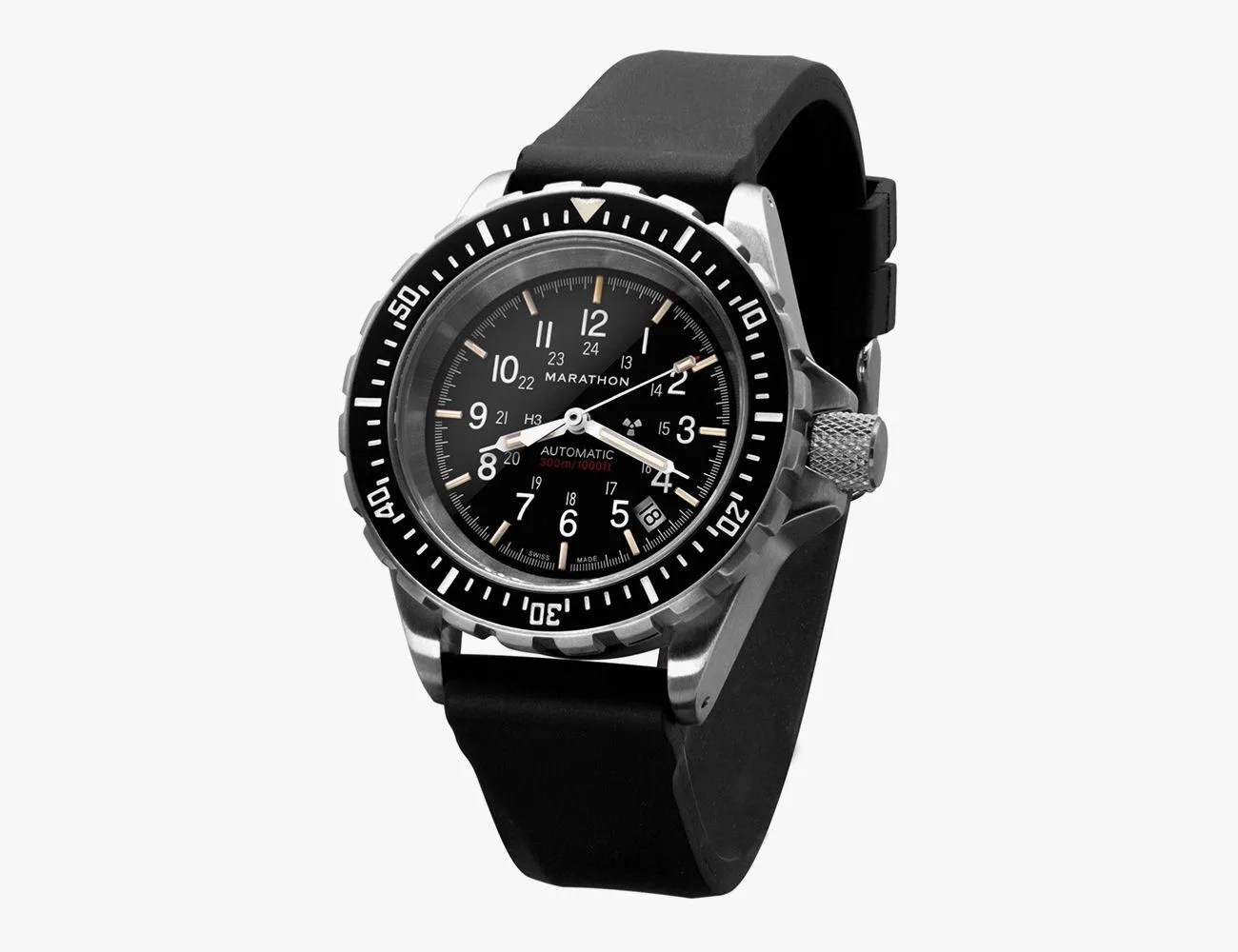
This beefed-up version of Marathon’s mil-spec diver is used by soldiers all around the world, and it comes with an additional metal bracelet that’s exclusive to Huckberry.

  • Size: 38mm
  • Movement: Hand-wound

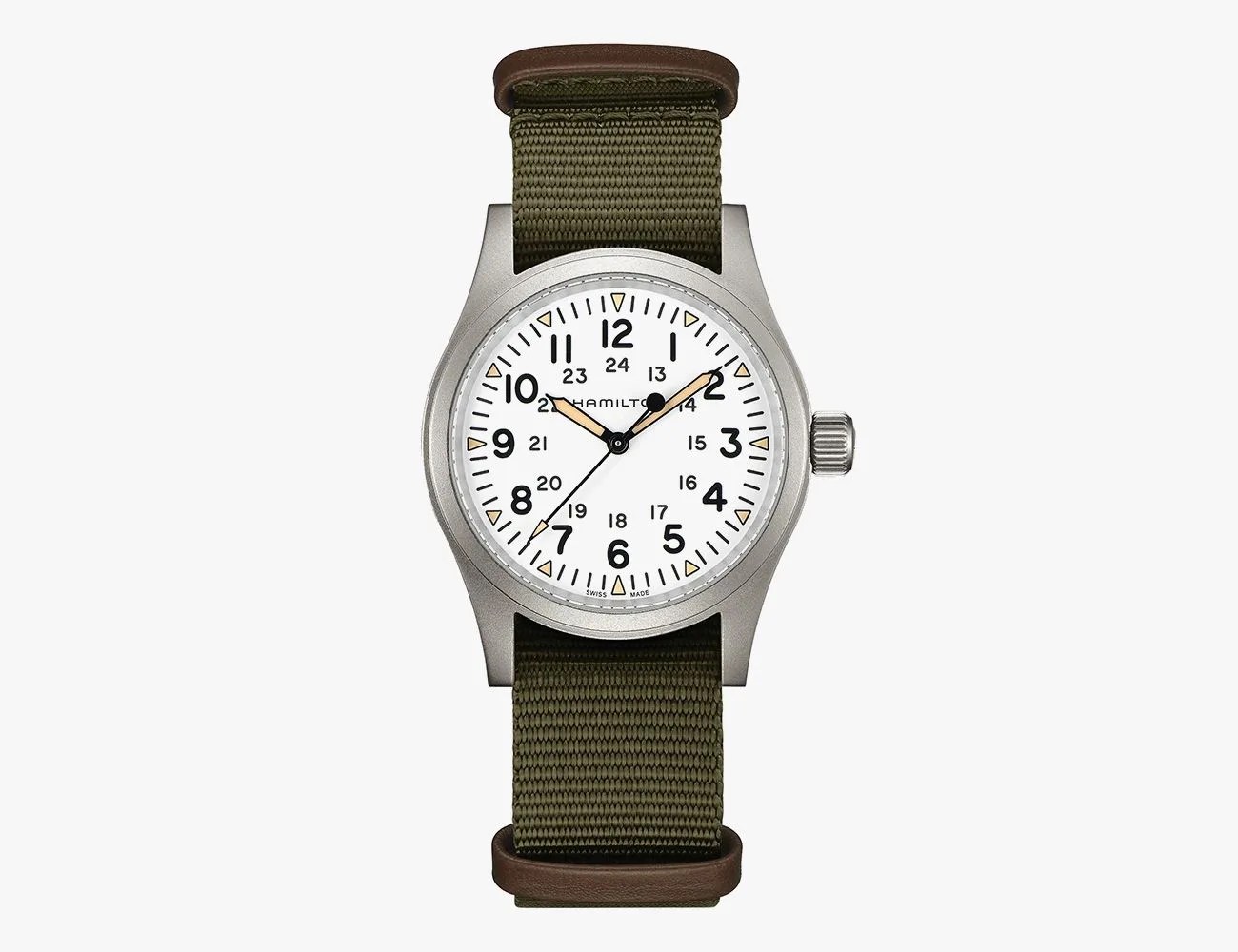
The definitive field watch from Hamilton evolved out of the trenches of WWII to become a modern-day icon.

  • Size: 38mm
  • Movement: Automatic

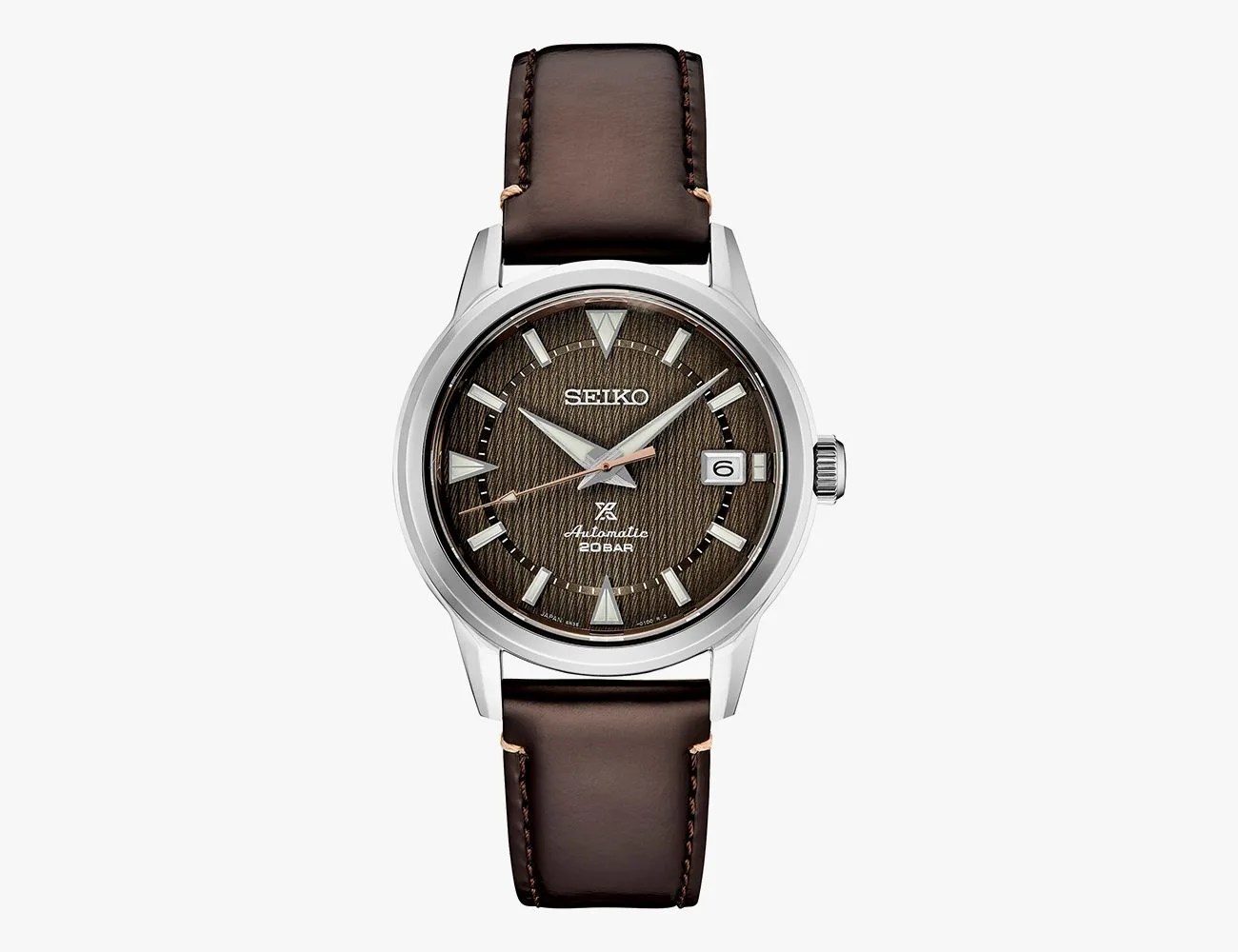
This handsome explorer’s watch is Seiko’s modern-day recreation of its very first sports watch from the 1950s, which was created for mountaineers.

  • Size: 40mm
  • Movement: Automatic

Minimalist Italian microbrand Unimatic is a bonafide phenomenon, and the Modello Uno diver is the original design that put the brand on the map.

  • Size: 49.8 × 44.4mm
  • Movement: Quartz

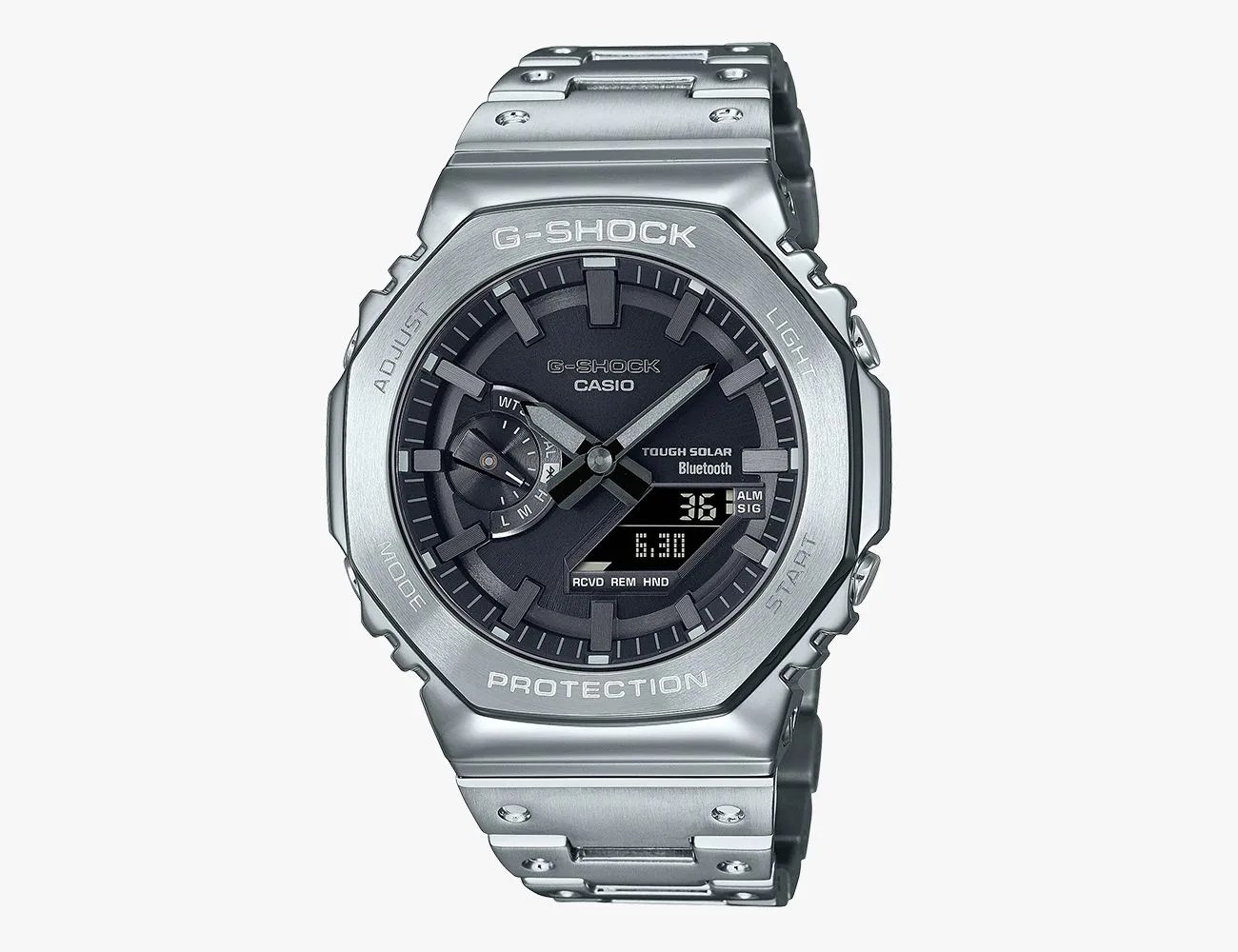
In just a few years, the “CasiOak” has become a modern classic. In full steel, it’s got an even more refined feel for anyone looking for that balling-on-a-budget look.

  • Size: 42mm
  • Movement: Automatic

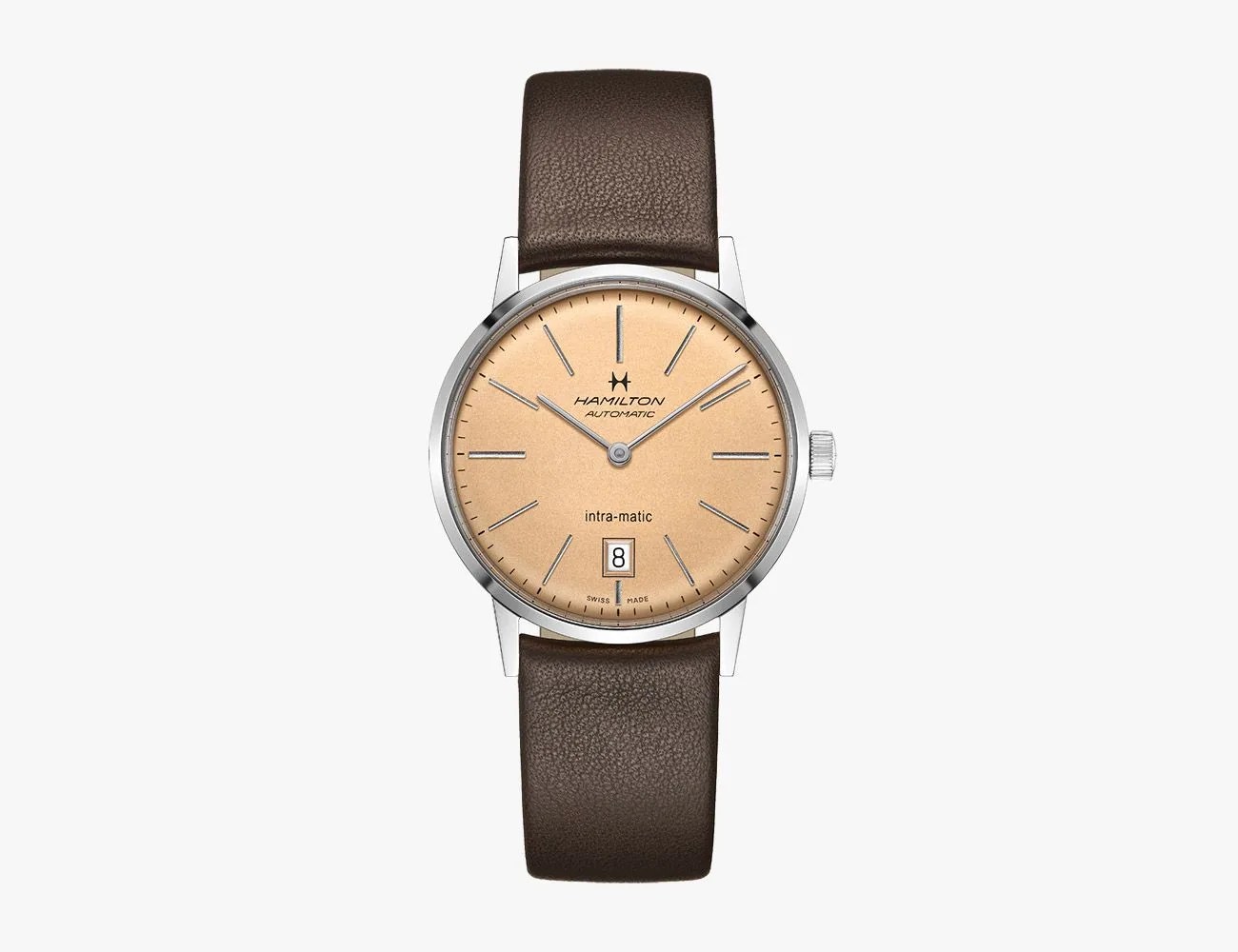
Another 1960s reissue from Hamilton, this Mad Men-esque stunner is the only dress watch you’ll need.

  • Size: 41mm
  • Movement: Quartz

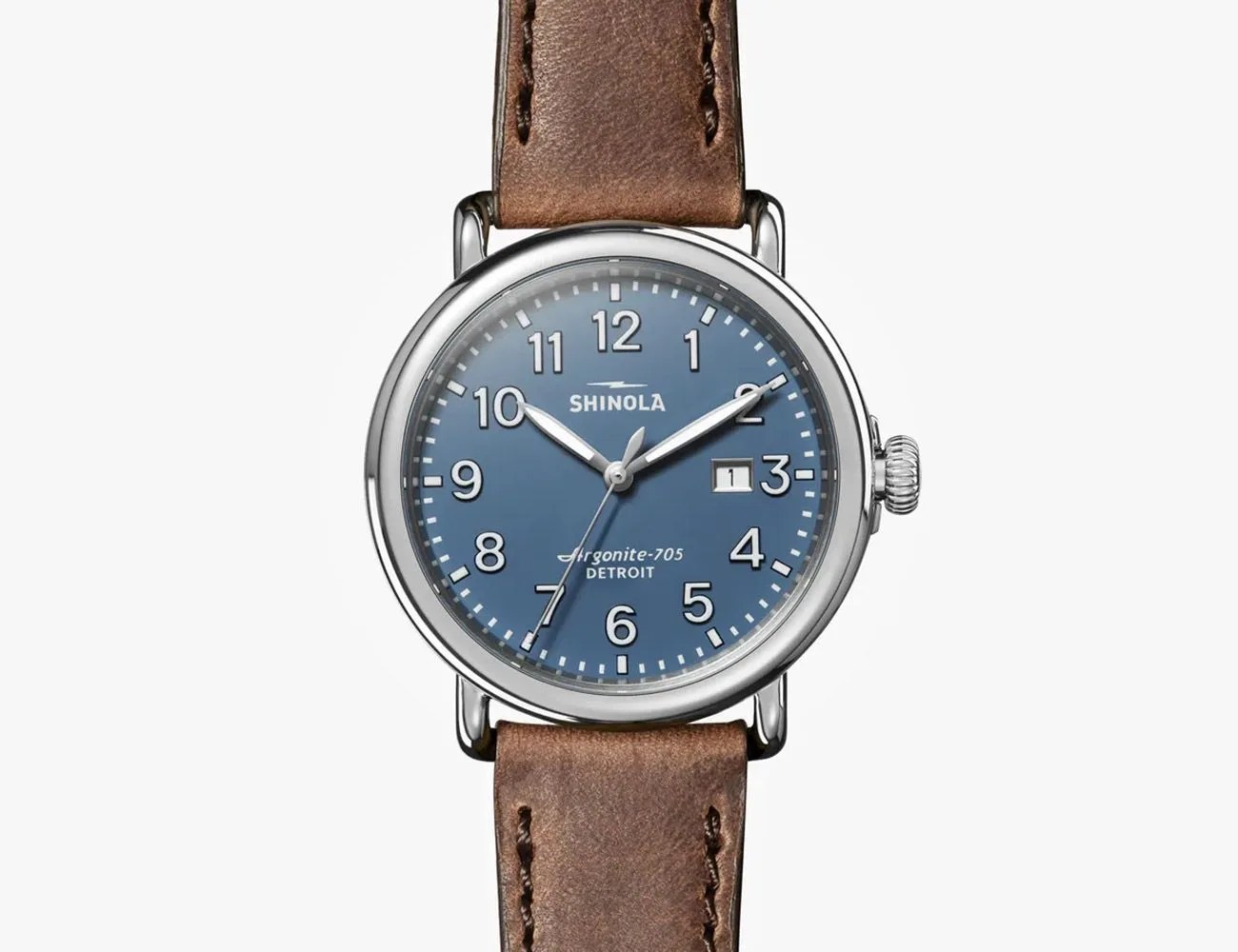
Sometimes, all you want is the ease and simplicity of a good-looking, well-made and accurate quartz watch. The fact that this one is built in Detroit doesn’t hurt, either.

  • Size: 41.4mm
  • Movement: Solar quartz chronograph

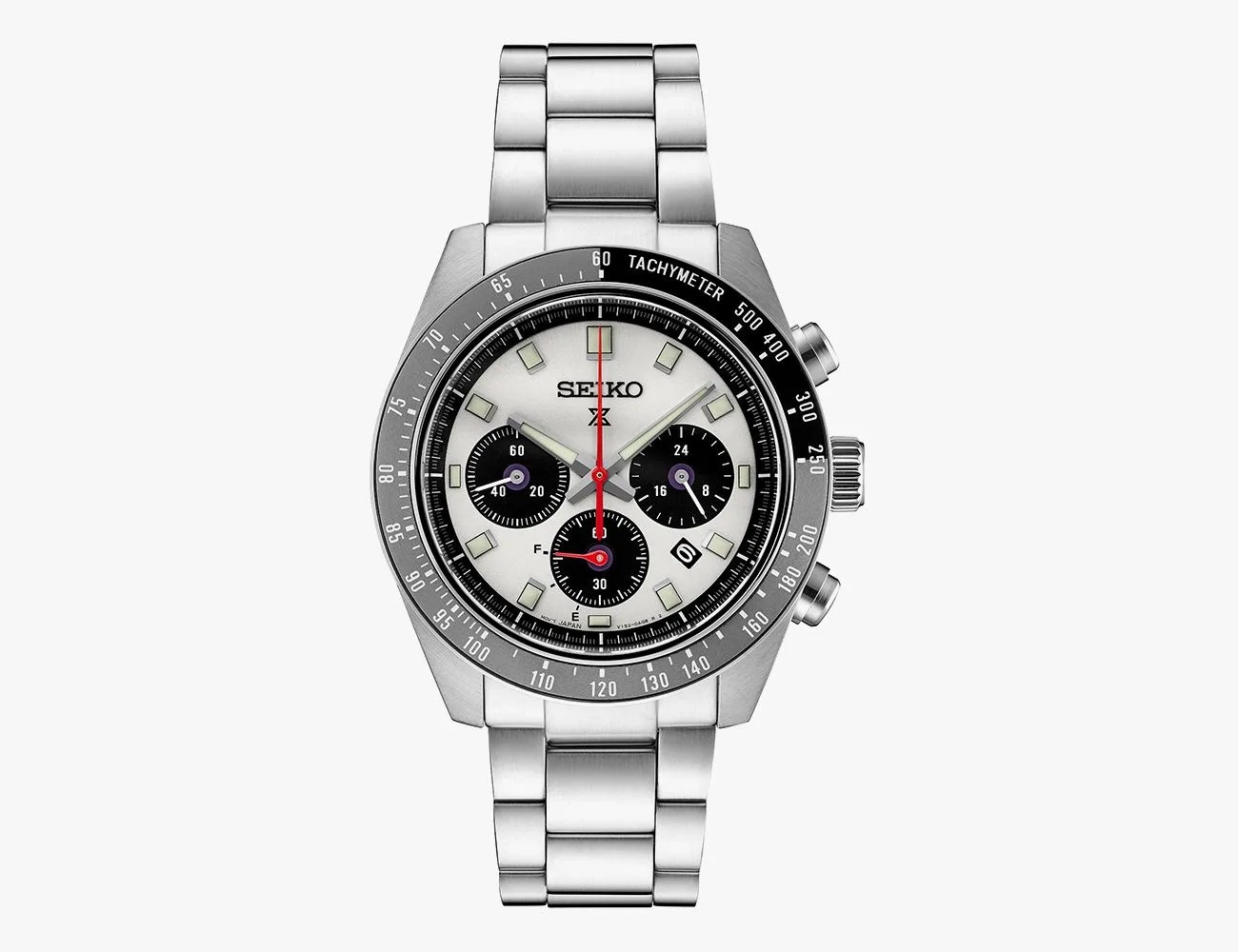
Lacking the 30 grand needed for a Rolex Daytona? Get a similar look and a convenient solar movement for 700 bucks with this Seiko instead.

  • Size: 44mm
  • Movement: Quartz

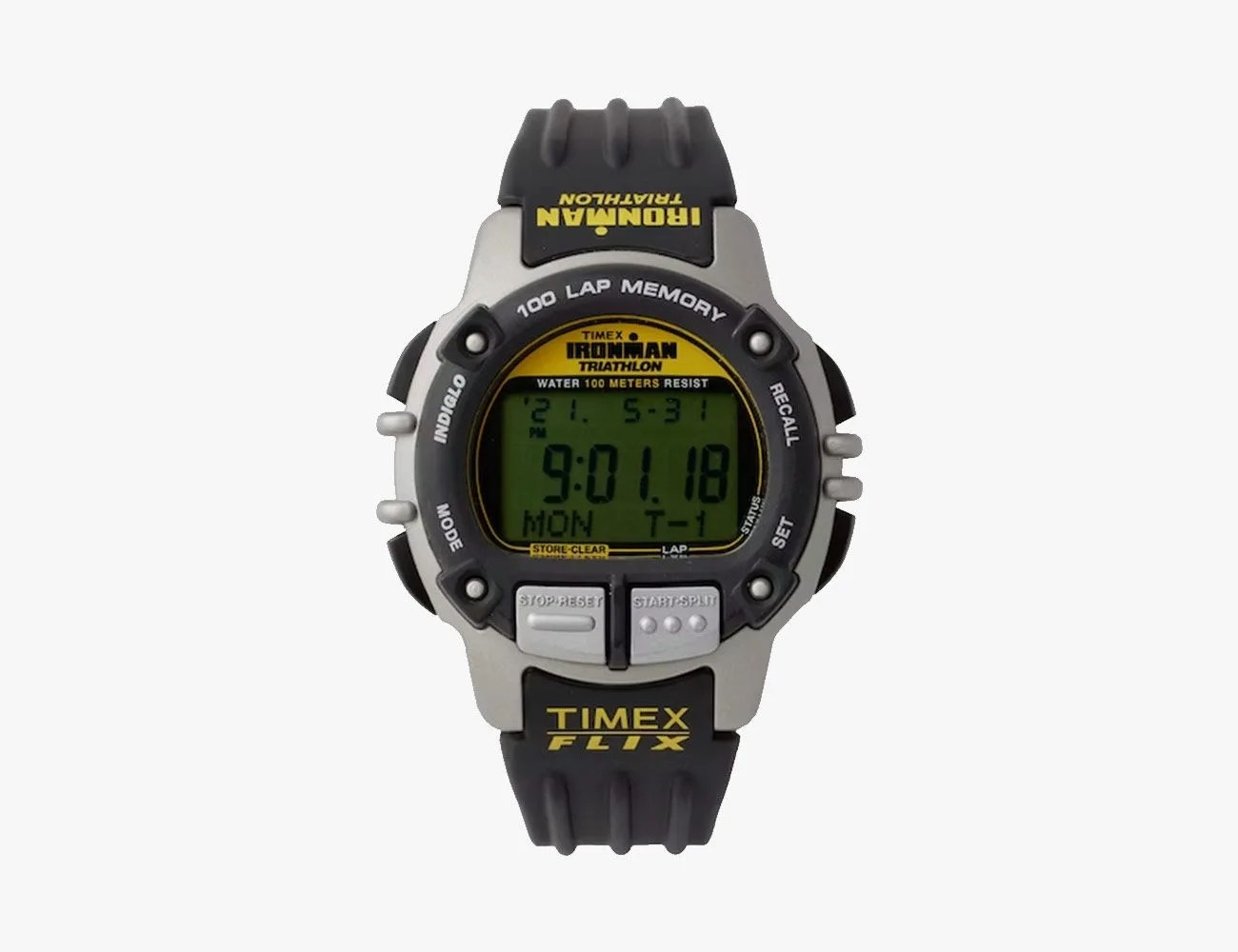
The dream of the ’90s is alive at Huckberry thanks to this collab with Timex that resurrects an iconic digital watch from three decades (seriously?!) ago.

  • Size: 39mm
  • Movement: Quartz

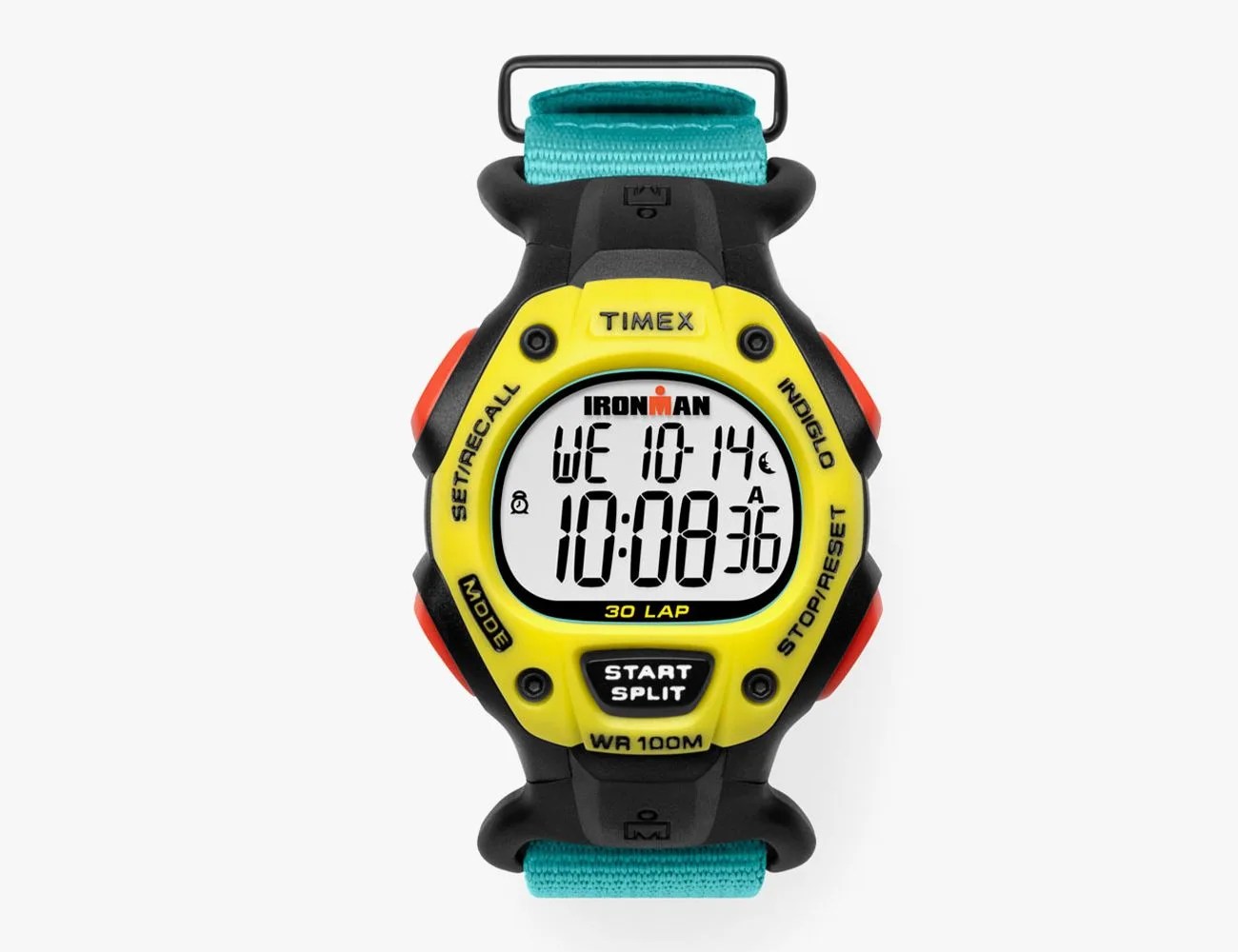
Another throwback Timex Ironman collab, this one has even more retro flavor thanks to an injection of funky color from EDC favorite The James Brand.

, , , ,
Home / Page 12

These Whiskey Glasses Could Win You a Rolex Explorer II Watch or $10,000

The giveaway coincides with the release of a limited-edition decanter and rocks glasses in collaboration with The Explorer’s Club.

whiskey glass setHuckberry

If you buy from a link, we may earn a commission. Learn more

What’s better for celebrating a great achievement (or two) than a well-earned glass of whiskey (or whisky, if you prefer)? How about a well-earned glass of whiskey that might also win you a free Rolex watch or $10,000? That’s exactly what’s on the table with the release of Huckberry’s latest Whiskey Peaks release in collaboration with The Explorer’s Club.

Products in the Guide

  • Whiskey Peaks Huckberry x The Explorers Club Decanter + Whiskey Glasses

    Read more
  • Whiskey Peaks Huckberry x The Explorers Club Decanter

    Read more
  • Whiskey Peaks Huckberry x The Explorers Club Tumbler Set

    Read more

A Celebration of Mankind’s Greatest Exploratory Achievements

Called the Land, Sea, and Space Edition Whiskey Peaks Glassware Box Set, this collaborative release honors a trio of incredible human achievements: the climbing of Mt. Everest (the highest peak on Earth), the deepest dive into the Mariana Trench (the deepest known point in the oceans) and the exploration of the Tycho Crater (the farthest from Earth any human has ever traveled). In fact, the special-edition whiskey glassware included in the set — split between two rocks glasses and a whiskey decanter — features topographic impressions of all three of those locales.
The full set will set you back $100, but it is a limited edition… so it won’t be around forever. Plus, you can buy just the decanter for $75 or the set of two glasses for $40. Maybe you know someone who deserves them this holiday season (and maybe that person is you). Whatever the case, it seems tough to think the price isn’t worth what you get out of it.

An Epic Giveaway to Coincide With This New Release

While the set itself is notable, there’s another bonus to be had: Huckberry is launching an incredible giveaway to go along with the release. All you have to do to enter is spend $75 or more on Whiskey Peaks glassware and you’ll automatically be entered. That means you don’t even have to buy the new box set — any Whiskey Peaks purchase will do.

a watch lying on a frame with a signed flag
You could own this Rolex and signed Buzz Aldrin flag … or walk away with $10,000.
Huckberry

One lucky winner will walk away with one of two prizes: either a Rolex Explorer II watch and signed Buzz Aldrin club flag (yes, the same Buzz Aldrin who walked on the moon), which is valued at $15000 or a straight-up cash prize of $10,000 — winner’s choice. However, you cannot claim both.

But here’s where it gets really spicy. You can actually enter more than once: each day you make a purchase of Whiskey Peaks glassware for $75 or more, you get another entry. But, as the giveaway only lasts from December 7 through December 10, you can only enter a total of four times.
Home / Page 12

The 2024 Fiat 500e: Everything You Need to Know

The tiny electric Fiat is back, and this time it’s about more than compliance.
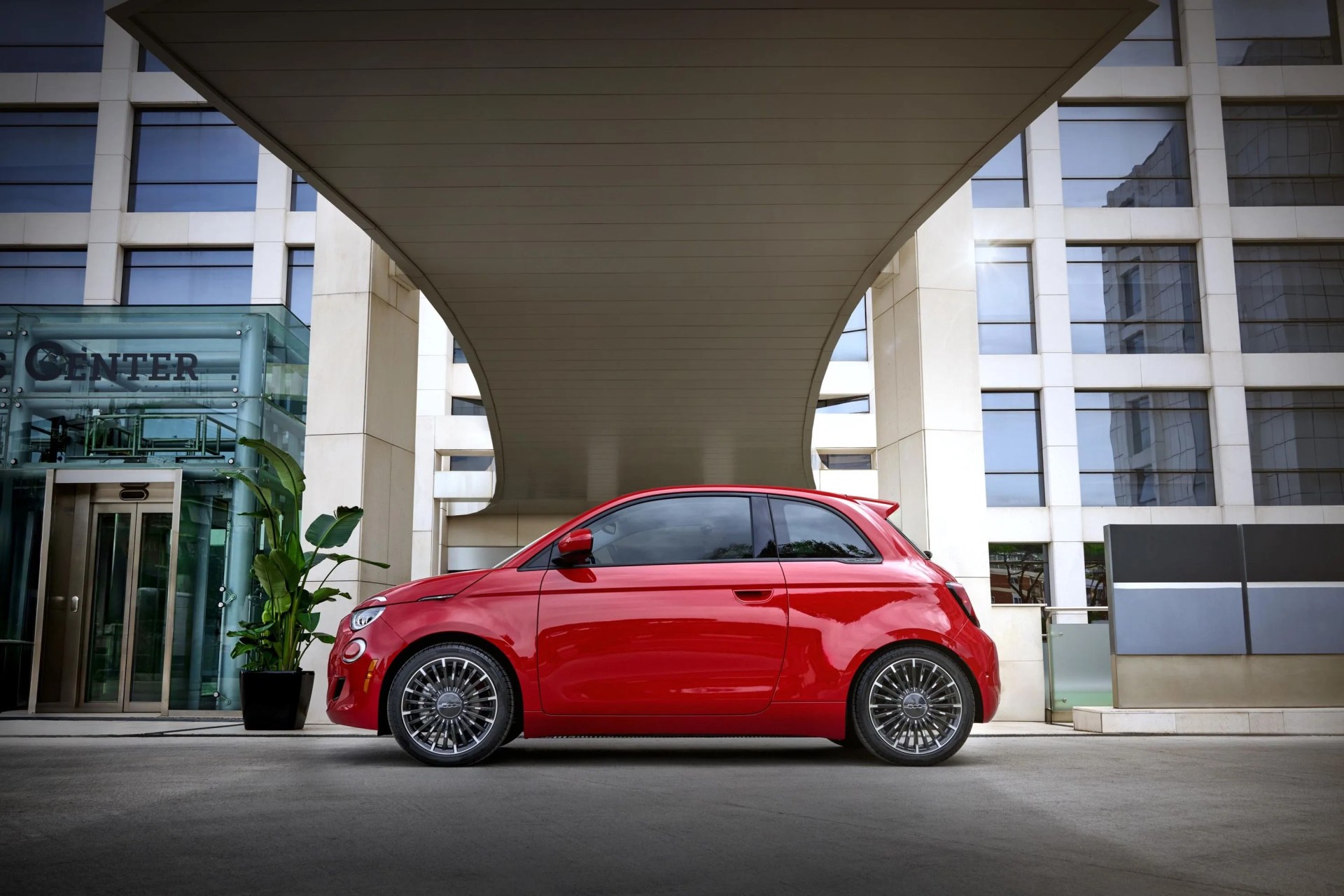
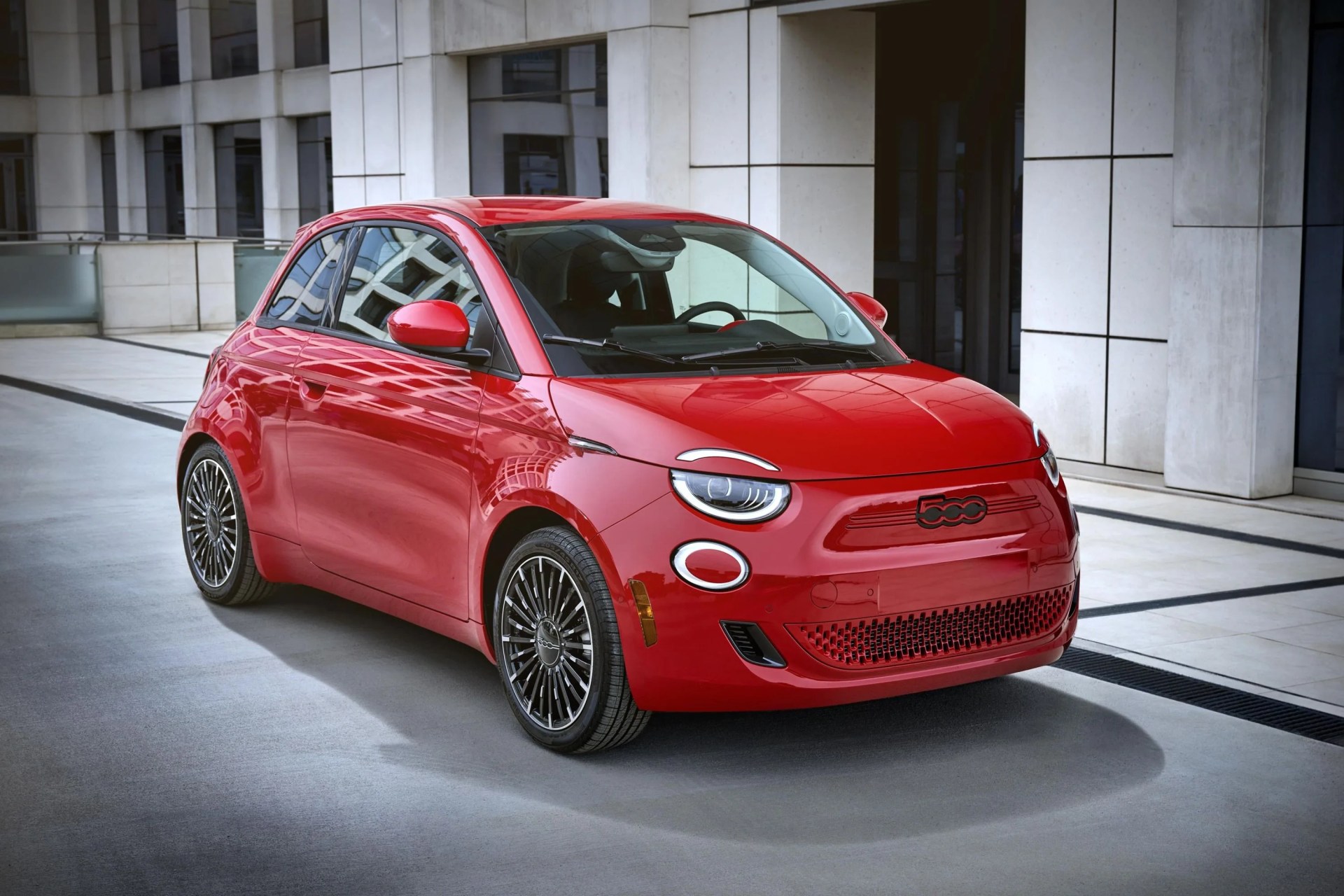
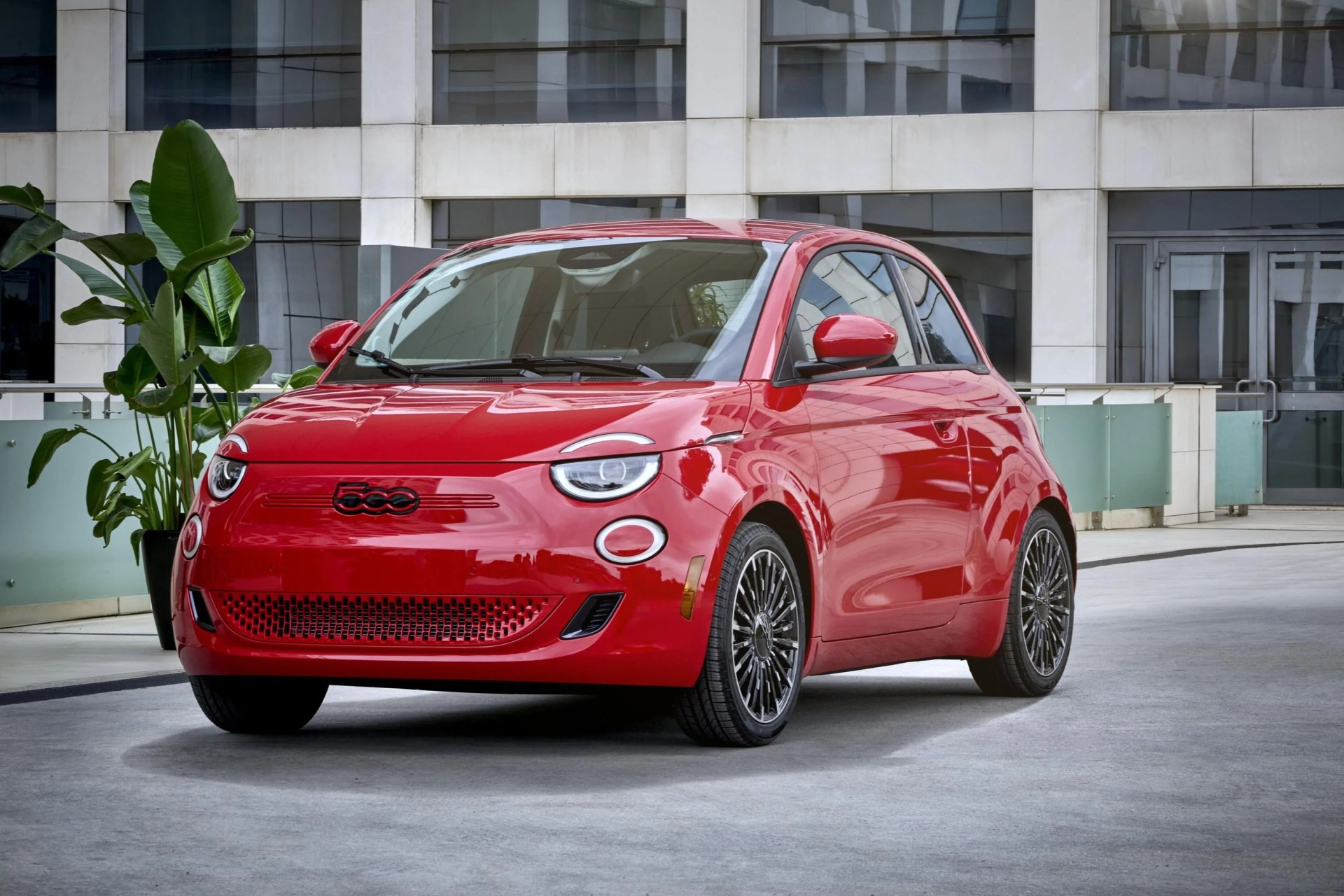
fiat 500e red 2024Fiat

Stellantis has been slower than most major automotive companies to embrace the arrival of electric vehicles. Ram has not one but two electric trucks coming; Jeep has big plans as well. But the first modern EV of the 202s for America from will come from a different brand … one you may not have realized was still selling cars in the United States. Fiat (yes, Fiat) just announced details of the all-new and all-electric 2024 Fiat 500e.

Here’s what you need to know about it.

How much range does the Fiat 500e have?

fiat 500e red 2024 Fiat

Fiat estimates the 500e will get 149 miles of EV range from its 42-kWh battery pack. That elevates it from a compliance car — the last generation only offered 84 miles — to “urban commuter” range.

The 500e can charge from 0-80 percent in 35 minutes with 85-kW fast charging or from 0-100 percent on a home Level 2 charger in four hours and 15 minutes.

How much power does the Fiat 500e have?

fiat 500e red 2024 Fiat

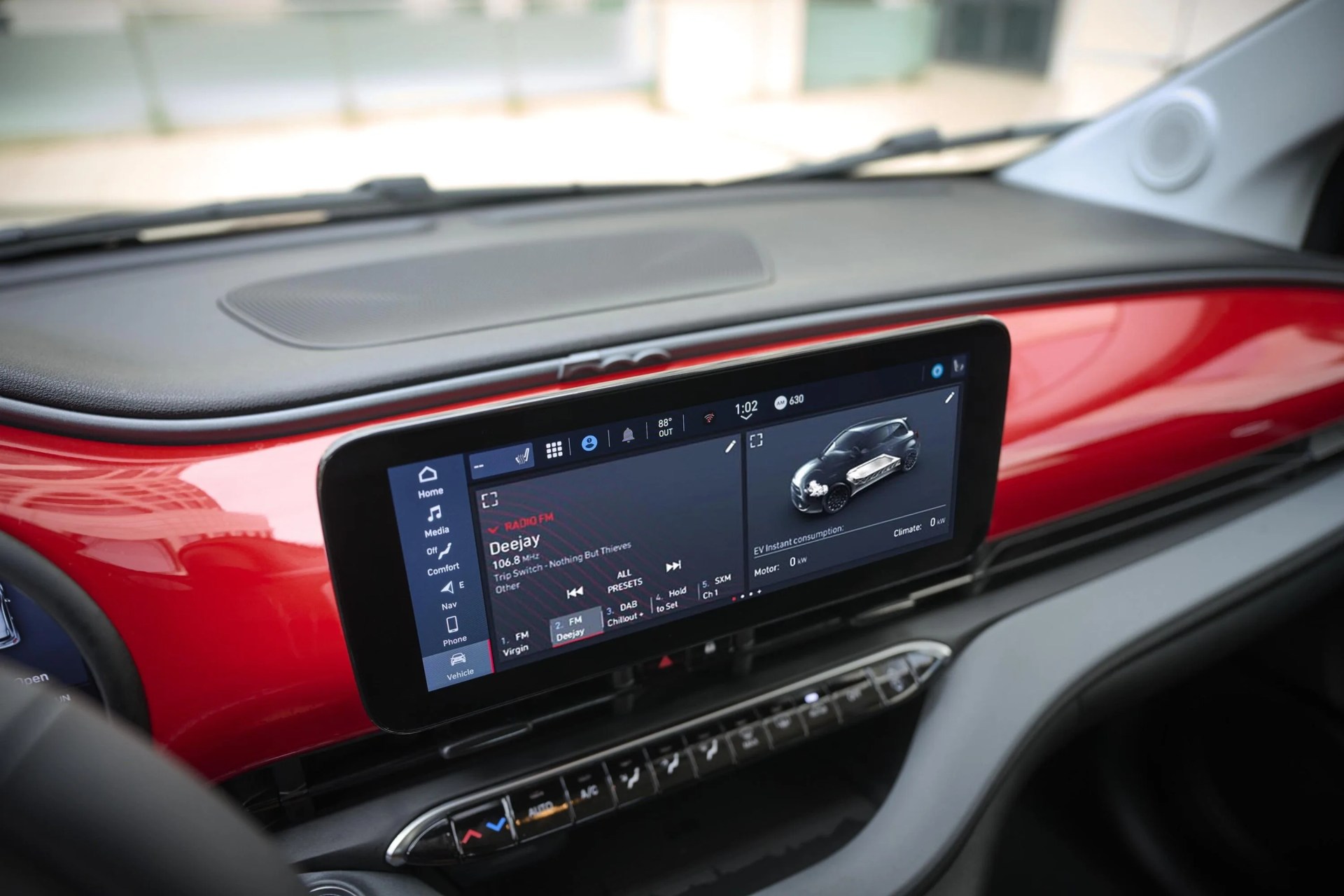
The Fiat 500e packs 117 horsepower and 162 lb-ft of torque. It can accelerate from 0-60 mph in 8.5 seconds. The 500e can be driven in Normal mode, Range mode with one-pedal driving and regenerative braking and Sherpa mode for maximum efficiency.

The Fiat 500e will sing to you

fiat 500e red 2024 Fiat

Fiat is leaning into the Italian flair. Instead of sounding like a spaceship, the 500e’s Acoustic Vehicle Alert System “sings” to pedestrians with a song called “the sound of 500” by Flavio Ibba-Marco Gualdi. The vehicle also welcomes passengers with a digital melody to provide “an immersive Italian experience.”

The Fiat 500e will have fashion-style product drops

fiat 500e red 2024 Fiat

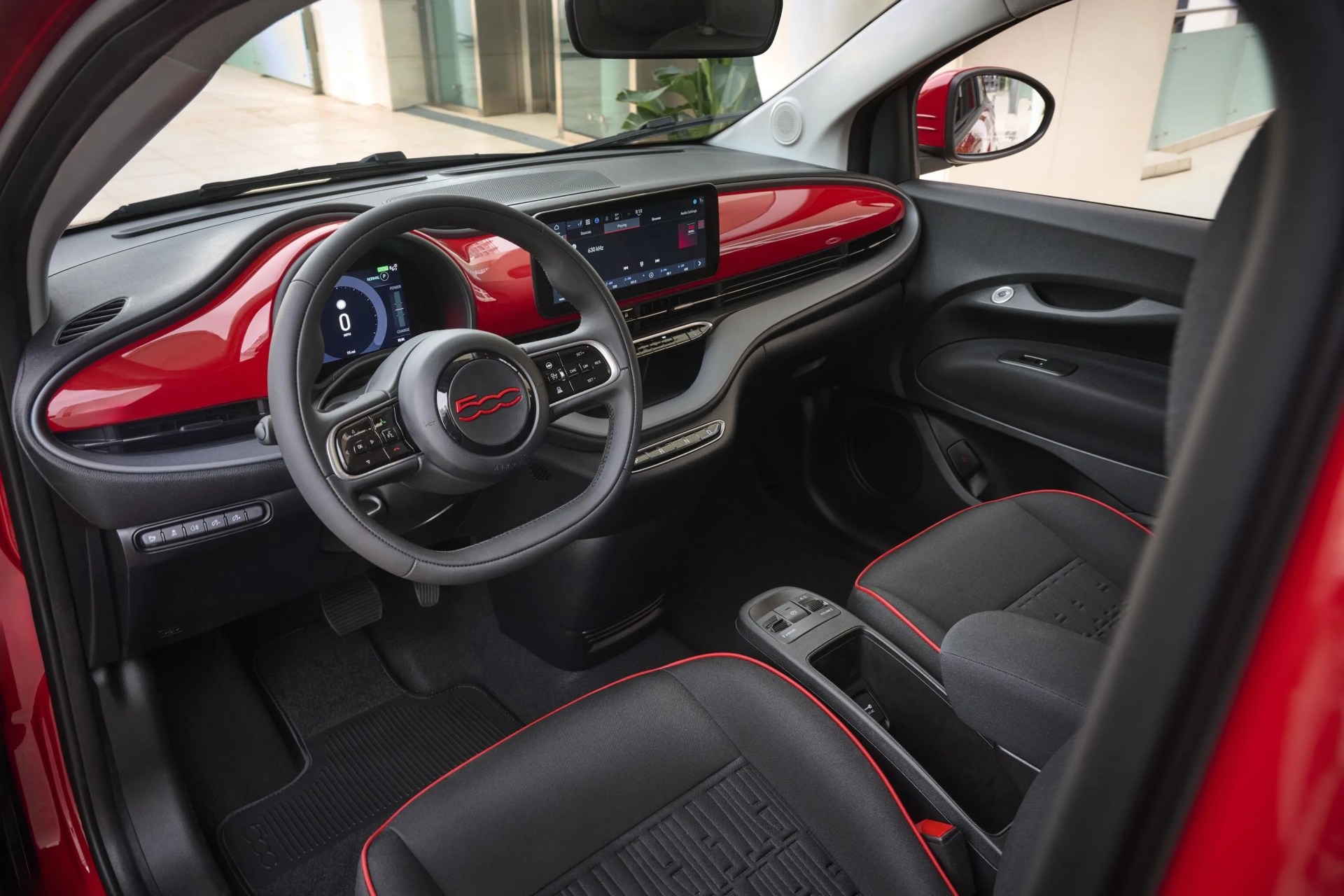
Taking a cue from the fashion industry, the Fiat 500e will do limited-run “product drops” of special edition vehicles. The first is the Fiat 500 RED pictured here.

When does the Fiat 500e arrive?

fiat 500e red 2024 Fiat

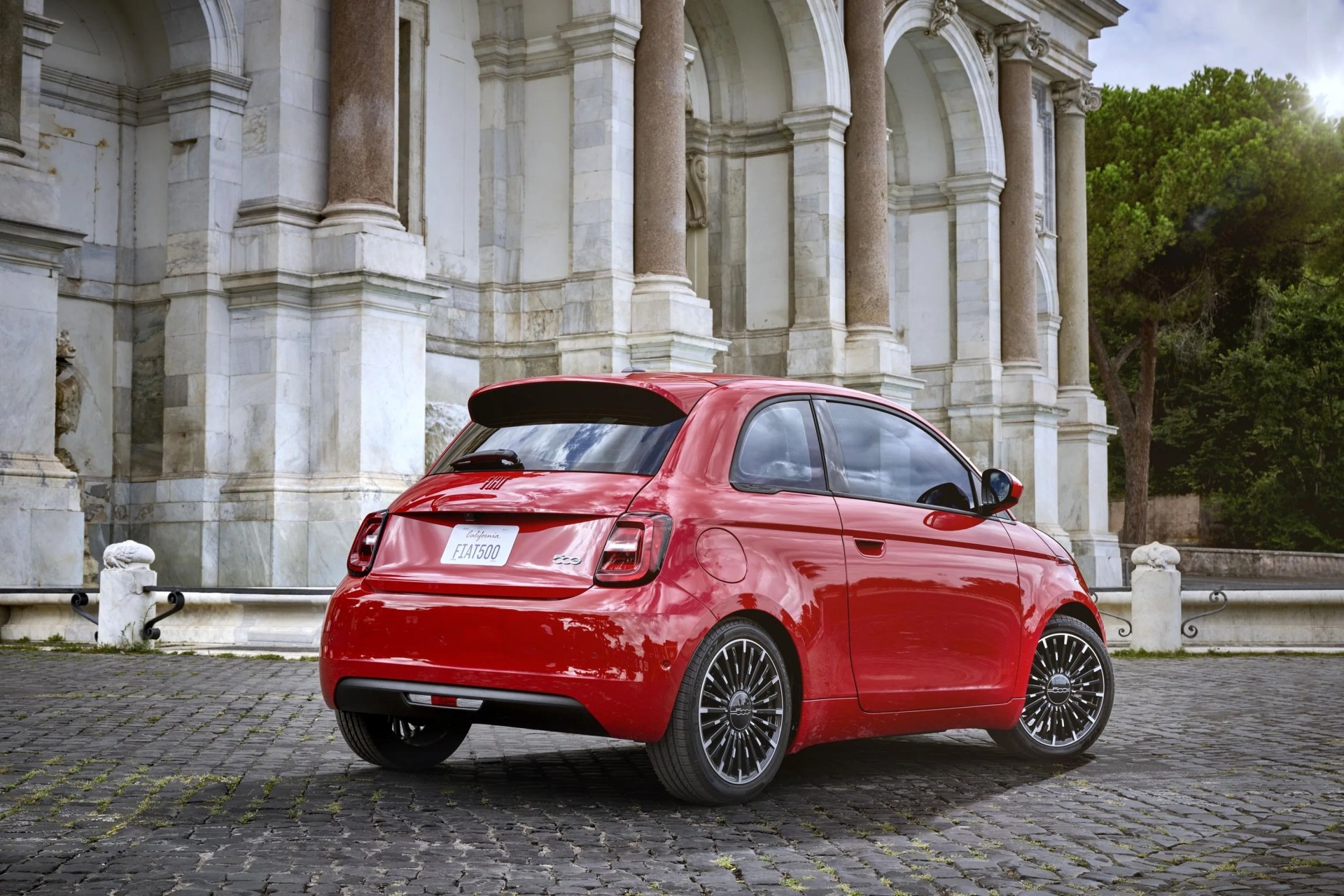
The Fiat 500e will hit North American dealers in early 2024. It will be assembled in Italy, making it ineligible for the federal tax credit.

How much will the Fiat 500e cost?

fiat 500e red 2024 Fiat

The starting MSRP for the Fiat 500e is $32,500 or $34,095 when you factor in the destination charge. That will make it one of the cheapest electric cars you can buy. To ease the buying process, Fiat also created a Fiat Live Store for online ordering that will have you consult live with a Fiat Genius.

Future Cars We Can’t Wait to Meet

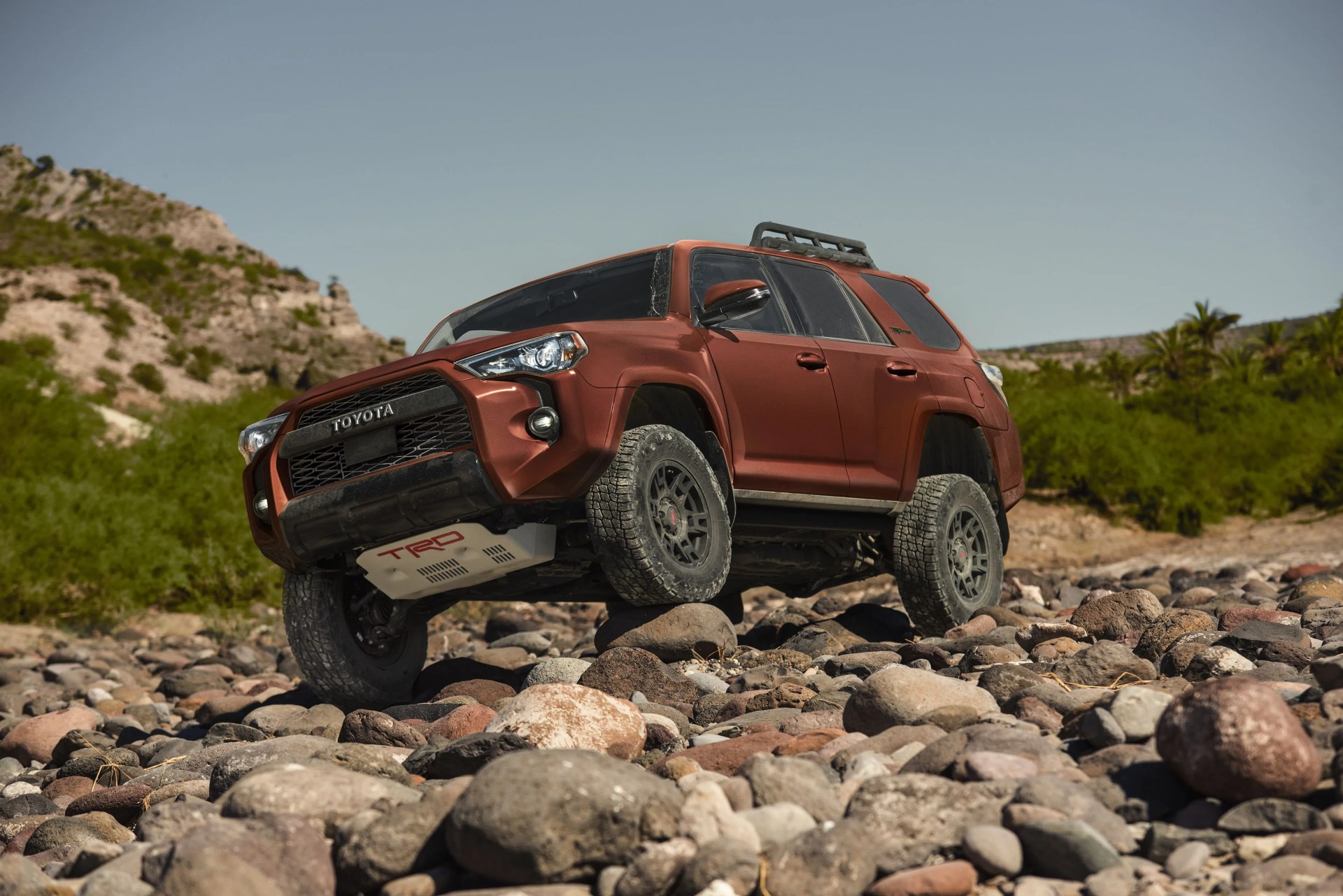
4runner trd pro on rocks Toyota
,
Home / Page 12

This Is the Smallest MagSafe Charger We’ve Seen Yet

The new Twelve South ButterFly is a pocket-ready 2-in-1 MagSafe charger for your iPhone and Apple Watch.

magsafe chargerButterFly

If you buy from a link, we may earn a commission. Learn more

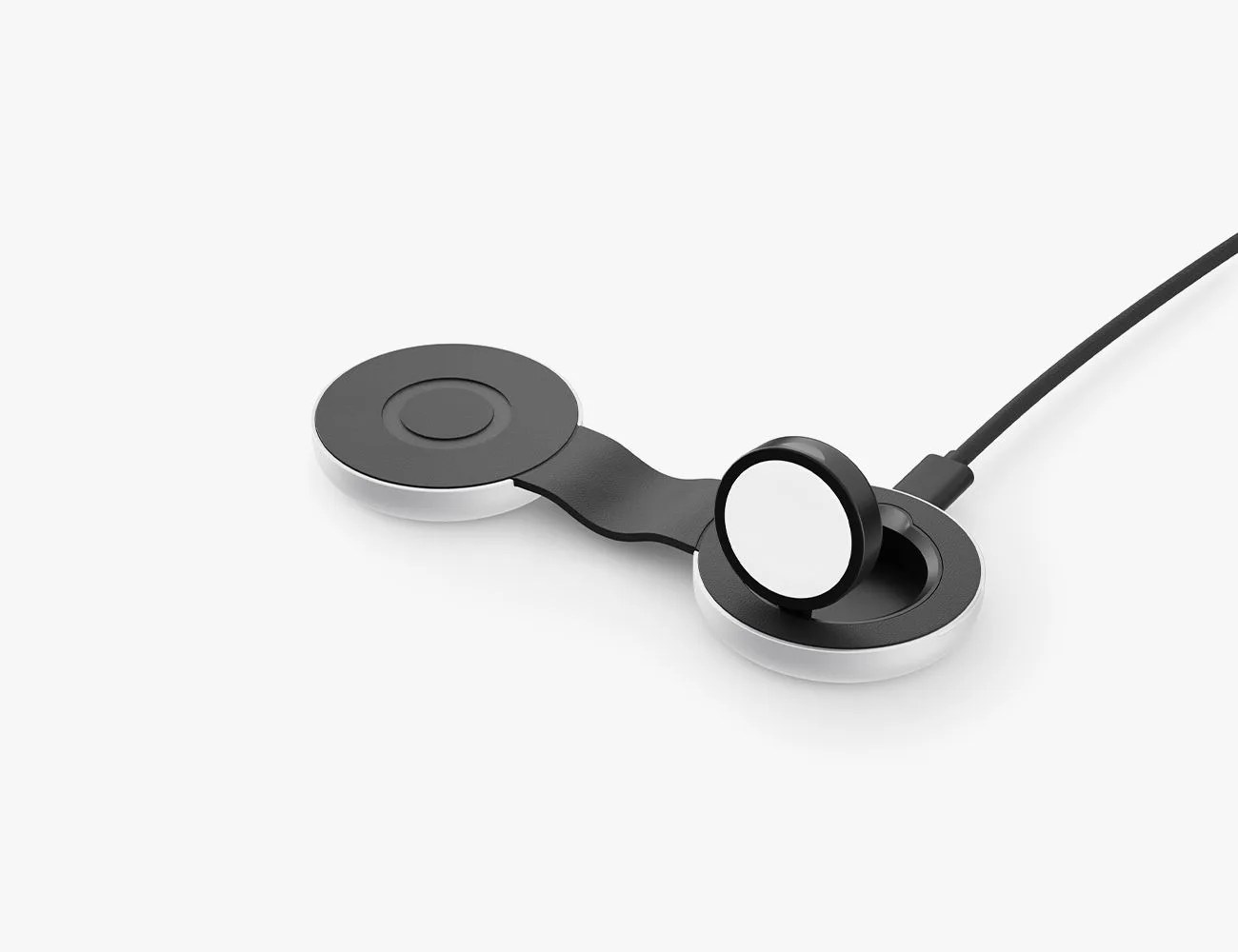
Twelve South just announced what it is calling the “world’s smallest 2-in-1 USB-C MagSafe charger.” Designed to charge an iPhone (or AirPods) and Apple Watch, the ButterFly folds up into a super compact puck. And considering it is no bigger than a tasty macaron, the brand isn’t lying.

Products in the Guide

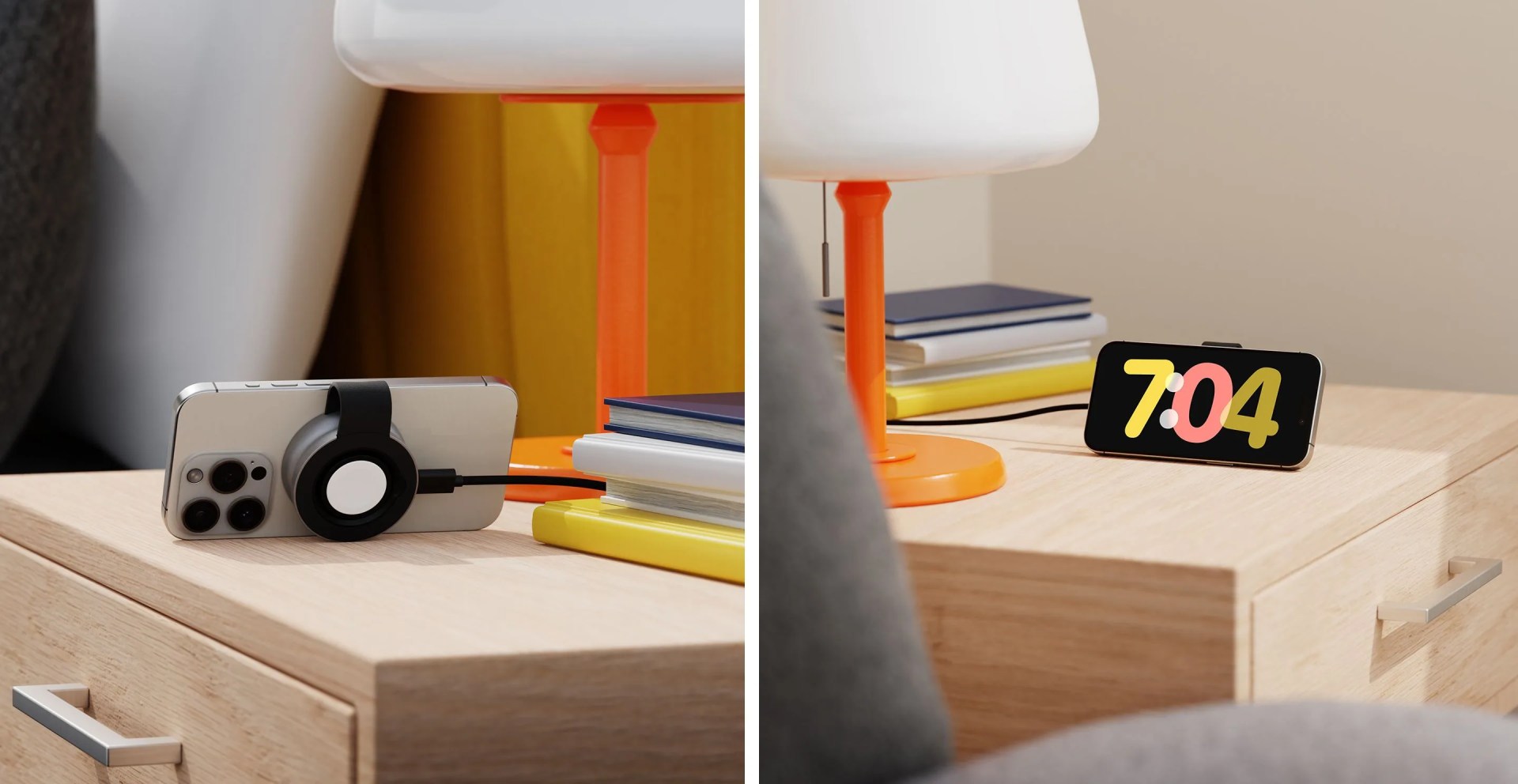
Obviously, size (and portability) is the main selling point for the ButterFly. You can easily fold it together and toss it into your pocket or bag. But it’s also a pretty versatile charger for those who might want to make it a more permanent fixture on a desk or nightstand. When folded, for example, it can hold your iPhone horizontally and thus act as a MagSafe stand that supports StandBy mode.

magsafe charger
When folded, the ButterFly can prop your iPhone up so that it works with StandBy mode.
ButterFly

The ButterFly isn’t a cheap MagSafe charger, however. It costs $130, which isn’t unheard of but still definitely puts it on the expensive side in the realm of 2-in-1 MagSafe chargers. For what it’s worth, it does have an anodized aluminum shell — which the company claims matches MacBooks that have a silver finish — and looks pretty nice.

magsafe charger
The ButterFly takes up minimal space on your desk or nightstand.
ButterFly

The other good thing about the ButterFly is that it comes with everything in the box to fast charge your iPhone, including a USB-C charging cable and a 20-watt USB-C power adapter. Additionally, it comes with a travel bag and four international plug adapters (US, UK, EU, AU), so it’ll work many other countries around the world.

The Twelve South ButterFly is available now. You can buy it directly from Apple or from Twelve South’s website.

Home / Page 12

Why Don’t Car Rear Windows Go Down All the Way?

You might have been told it was a safety feature. Well, not quite.

aspen, coloradoRobert Alexander

At some point prior to this moment in your life, you likely discovered the windows in the back doors of most cars don’t go down as far as the front ones. Most likely, this realization came at a young age; while your parents or older siblings sat up front, you were exiled to the aft row, forced to decide between staring at the back of the seat in front of you or risk car sickness by gazing out the side. In hopes of nipping the latter in the bud, you might well have tried to roll down your window and pop your arm on the sill, the way all those adults do…

…only to find the window only goes down part of the way.

Given a child’s inquisitive nature, you may well have asked those bigger, more experienced humans in the front seats why their windows open up so much more than yours do. Perhaps they offered up a simple “I don’t know,” or maybe they just pretended not to hear you. But there’s a fairly decent chance they offered up some sort of explanation along the lines of: “Well, that’s so you don’t fall out of the car.”

If so, well, I have some tough news for you: you were misinformed.

At face value, of course, the idea that a car’s rear windows are designed to only slide down so far in order to keep kids safe seems to make sense. Children, of course, are rambunctious creatures, second only to cats in their ability to create chaos out of order; the idea of one slipping out of their seat belt and accidentally falling out of an open window at 75 mph feels both horrifying and realistic. Why wouldn’t carmakers try and prevent such an occurrence with a simple fix?

Think about it for a moment, however, and that idea falls apart. After all, most rear windows still go down more than far enough to allow a child to squirt through. (They might be effective against adults, but if you have a problem with grown-ups trying to squeeze out of your car while it’s moving, the FBI might like to have a word with you.) And cars have other, even more effective means of keeping children from escaping the back seat: specifically, window lockout switches that give the driver complete control over the aft glass and child locks that disables back seat occupants’ door handles, much like in a cop car.

So why then do those rear windows only go down part way in most cars? Well, it’s actually due to the design of the rear doors. Simply put, there’s no place for the glass to go when the window rolls down.

While the bottoms of a car’s front doors stretch just about all the way to the vehicle’s belly along their entire length, the lower edge of the rear door of most cars tends to curve upwards along the back axle’s wheel well. A car’s windows are larger than you probably think — and unlike, say, a convertible top, there’s no compacting them when they stow away. They need as much vertical space in the door as possible to hide away…

…which, in turn, generally means a window can only go down so far as the tallest point of the bottom of the door.

Carmakers have found some ways to get around this, to an extent. Some new vehicles (i.e. the Mercedes-Benz A-Class) have bisected their back-door glass into two parts: a squared-off forward section that rolls up and down, and a rear part that’s fixed in place. In this scenario, the section that rises and falls is only as wide as the lowest part of the door, enabling it to completely open the way the windows in front do.

mercedes benz explained gear patrol a classMercedes-Benz

So there you have it. Rear windows don’t go down only part of the way as a safety measure; they do it simply because they physically can’t go down any further.

,
Home / Page 12

The 2025 Subaru Forester: Everything You Need to Know

It’s new. It arrives early next year. And it’s very much exactly what you’d expect from a Subaru.

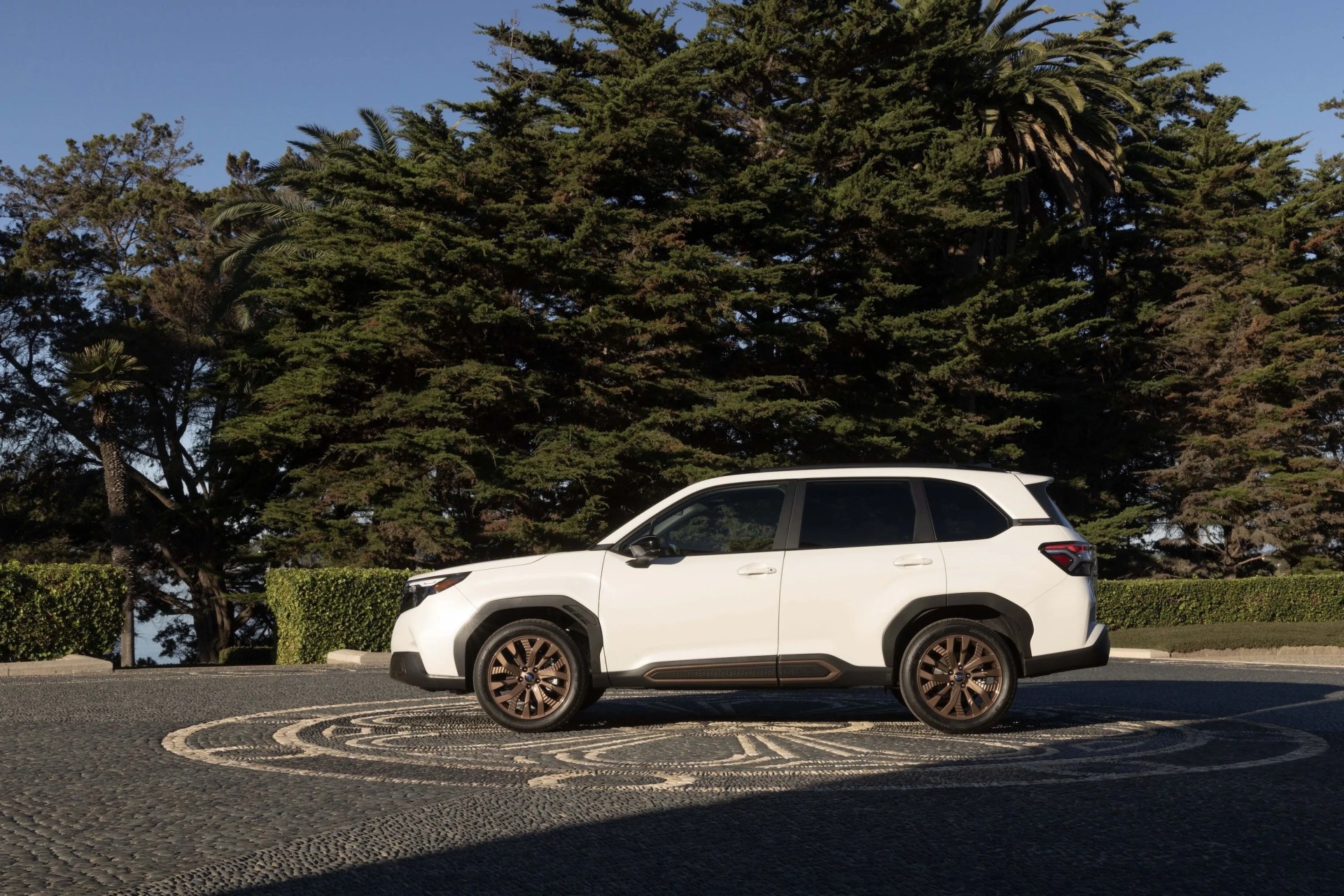
a white car parked on a dirt road with trees and grassSubaru

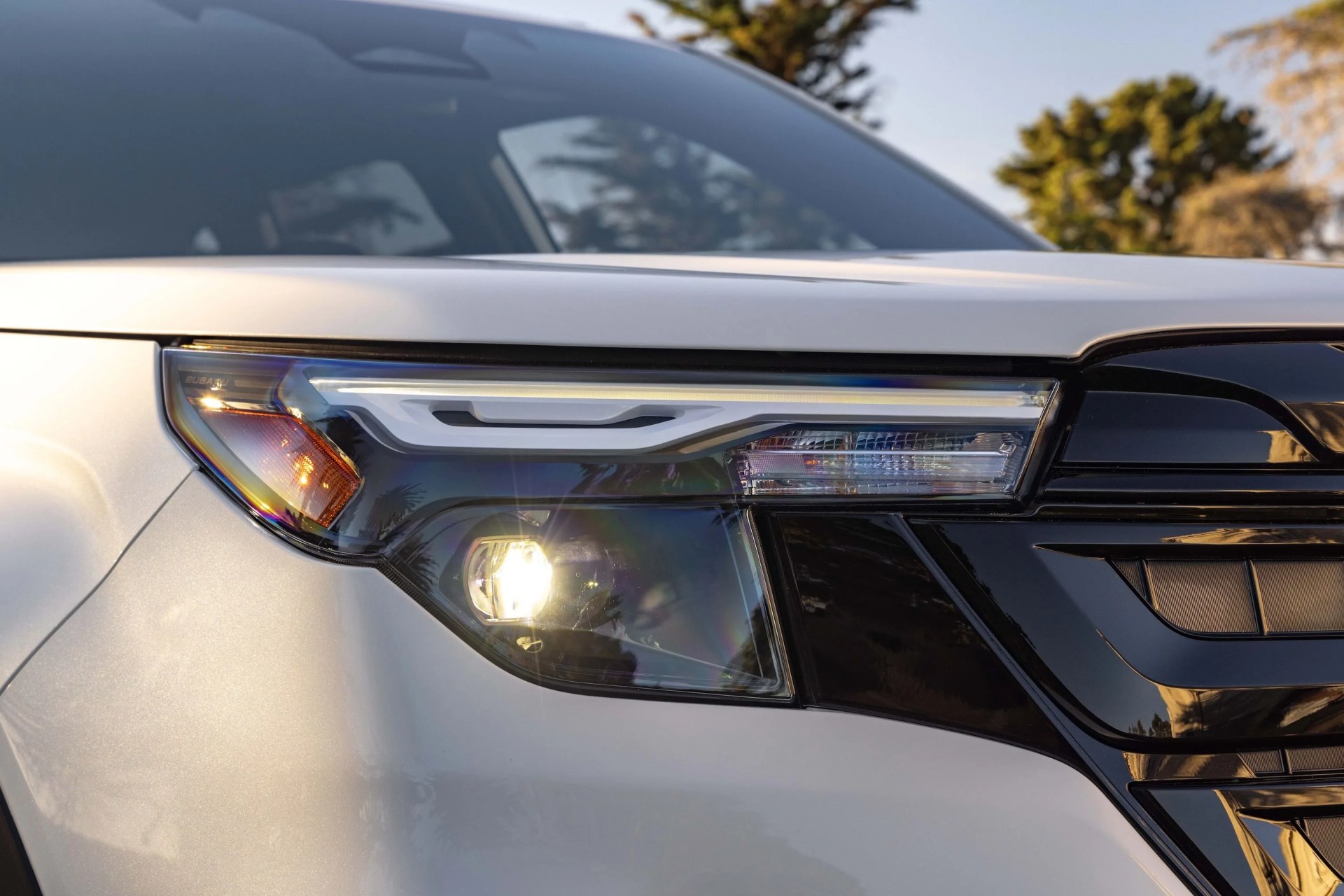
Subaru has already unveiled the new Crosstrek and Impreza vehicles. Next up in line for the model updates: the Forester. On November 16th, Subaru unveiled the all-new sixth-generation 2025 Forester model. It’s staying on the same Subaru Global Platform for the new model year, though — and overall, it should feel quite familiar to current and prospective Subaru buyers.

Here’s what we know about the new 2025 Subaru Forester.

Is the Subaru Forester getting a new engine?

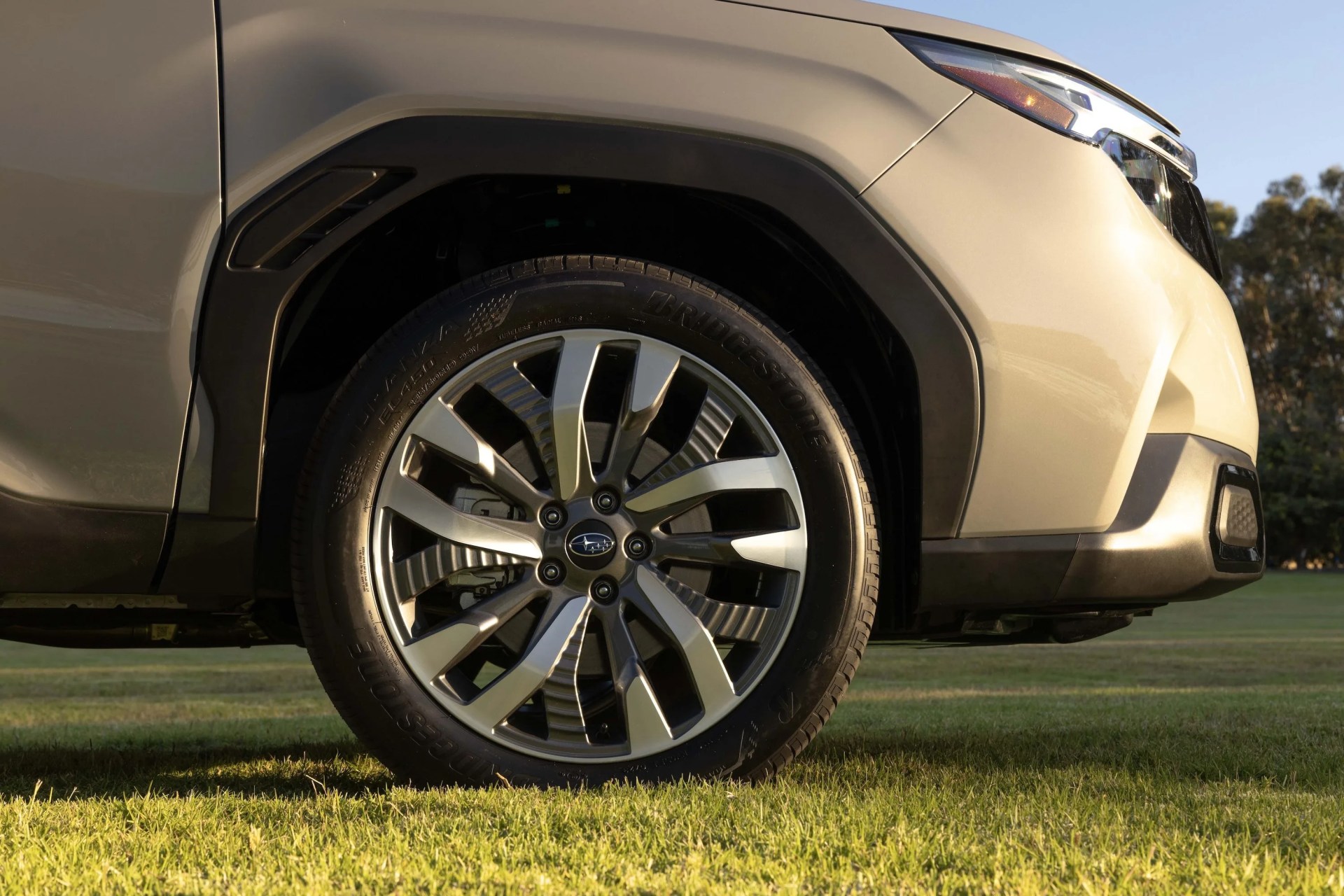
subaru forester Subaru

Not yet. Subaru is sticking with internal combustion for now. The Forester retains the 2.5-liter boxer four engine from the previous generation, with 180 horsepower and 178 lb-ft of torque. That engine still pairs with a CVT. And as you’d probably guess, the Forester will pack Subaru’s symmetrical all-wheel-drive system and offer 8.7 inches of ground clearance.

But there is a hybrid coming, eventually

a white car parked on a road Subaru

Subaru has confirmed plans to offer a hybrid engine on the sixth-generation Forester, but it won’t be available until a year after the combustion model launches. Subaru has not provided information about what that will look like yet; however, an Australian report suggested the Forester could get the engine from the Toyota RAV4 Hybrid.

The 2025 Forester should be nicer to drive

a white car parked on a road Subaru

Subaru says the chassis for the 2025 Forester is 10 percent stiffer, which should help improve ride quality. The Forester also gets a version of the electric power steering system in the WRX which should feel more responsive and direct. Subaru also says it put considerable effort to improve the sound deadening this time around.

And the 2025 Forester does score a bigger touchscreen

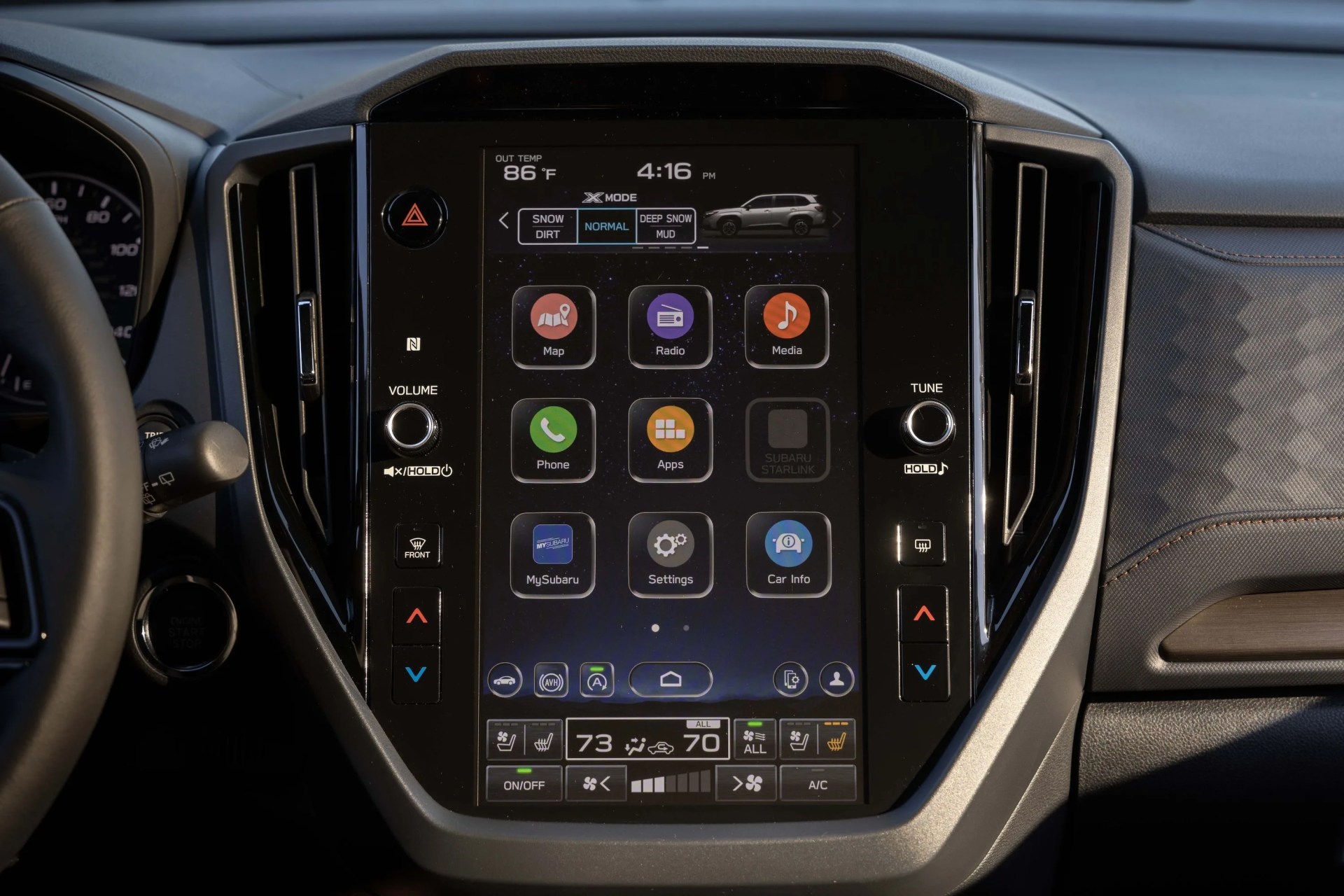
graphical user interface of subaru forester Subaru

As expected, the 2025 Forester is tracking with the interior upgrades other recent Subarus have received, including an available 11.6 vertically oriented touchscreen with big, easy-to-press buttons (including a fixed front one to remove the auto stop/start).

Does the 2025 Forester have a Wilderness model?

subaru forester Subaru

Subaru had a major hit with the more off-road-focused wilderness edition of the Forester. There isn’t a Wilderness trim yet; Subaru is launching the Forester with Base, Premium, Sport, Limited and Touring trim levels. But we would be shocked if the Forester didn’t offer one in the next couple of years.

Will the Subaru Forester go electric?

subaru forester Subaru

Eventually … maybe. Subaru has not confirmed plans for the Forester to go electric. But the brand has announced that three new electric SUVs will join the Solterra in the lineup by 2026. And we’d be surprised if Subaru didn’t employ the Forester and Outback branding on them.

When will the 2025 Subaru Forester arrive?

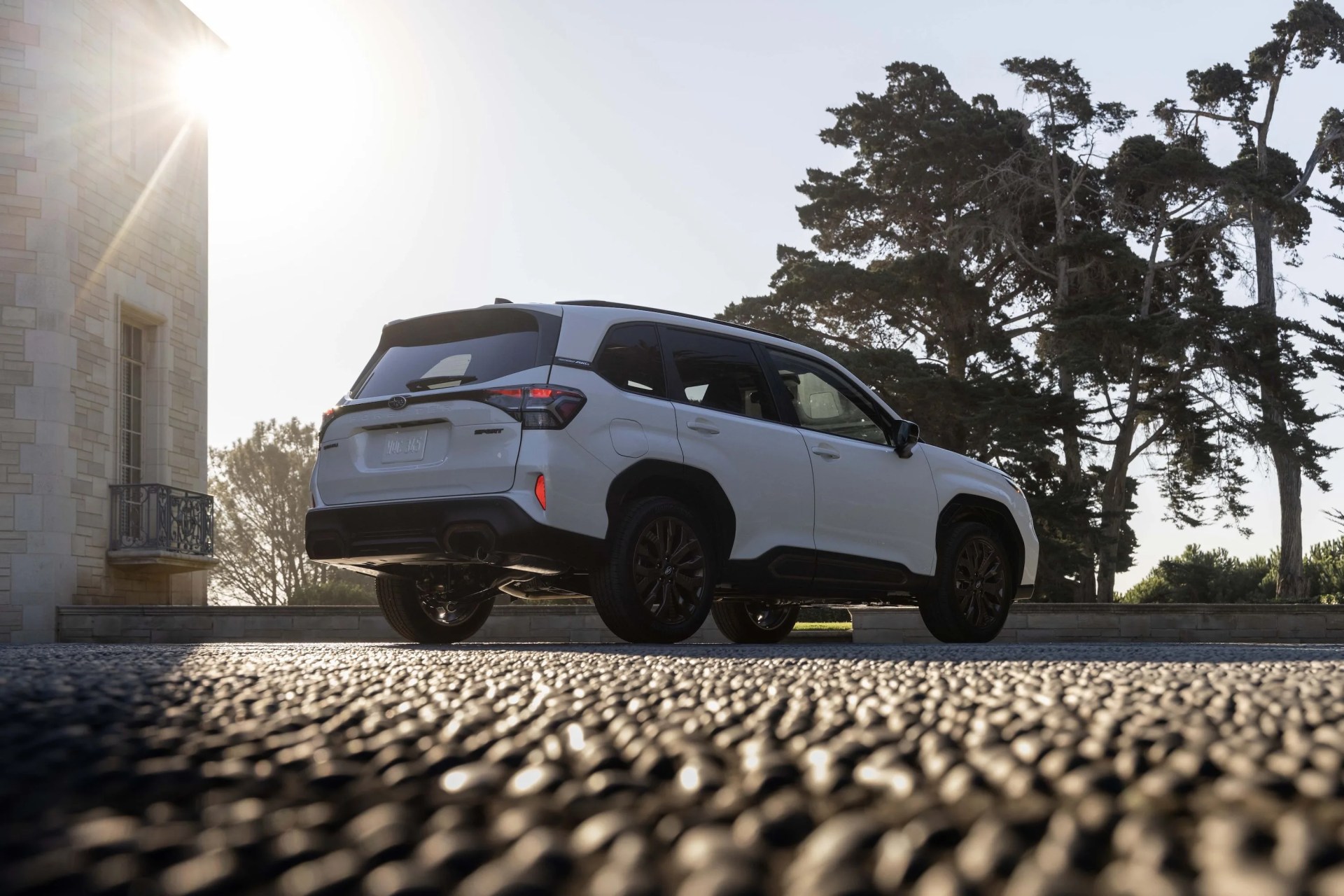
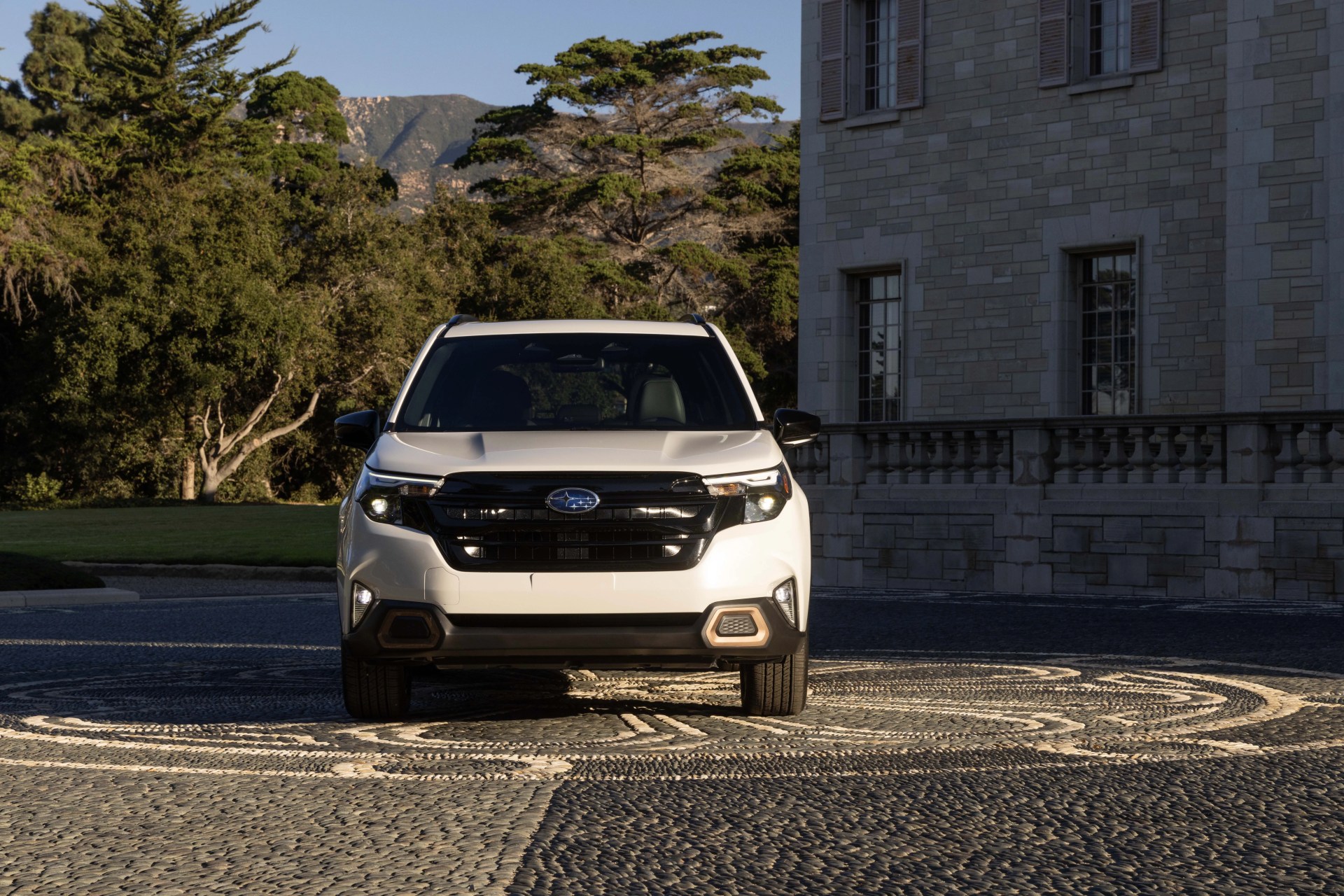
a car parked in front of a building Subaru

Soon. Subaru says the 2025 Forester will hit dealers nationwide in spring 2024.

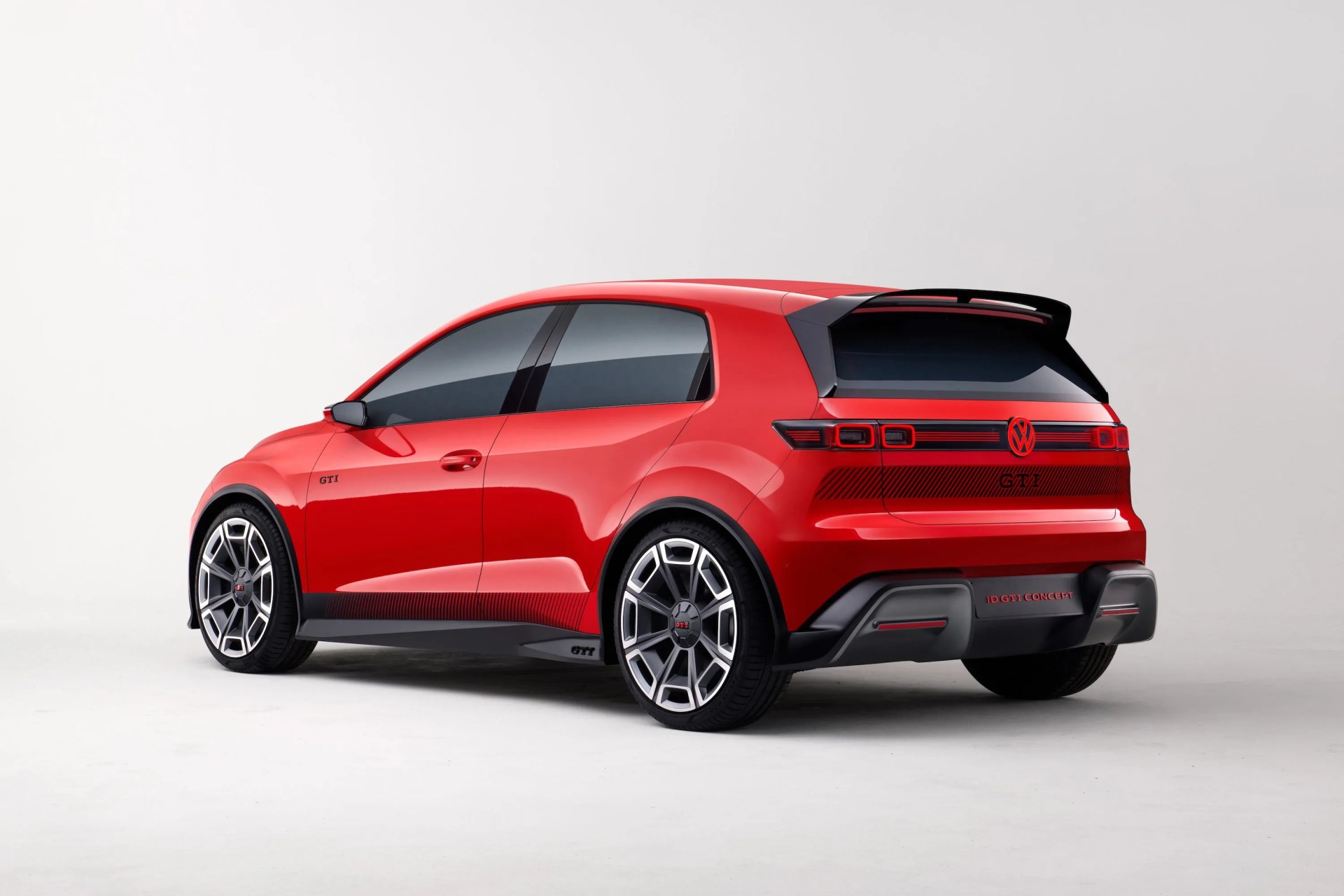
More Future Cars We’re Excited About

volkswagen id gti concept Volkswagen
, ,
Home / Page 12

Does the $400 Omnilux LED Mask Actually Work? We Found Out

Right light therapy is no new concept, and it actually works. But is this wearable session worth it?

a man looking in a mirror holding a omnilux face maskOmnilux

If you buy from a link, we may earn a commission. Learn more

Collectively, we’ll do just about anything for a better complexion: apply expensive creams and serums, get botox, experiment with beef tallow and so on and so forth. Brands know this, and, as such, are cranking out high-end products targeted toward the dedicated, perfect-skin-obsessed subset searching for a skincare silver bullet, if you will.

Is the Omnilux LED Mask it? It’s hard to say, especially since you’ll need to clock at least four weeks of constant use to see even the slightest results. But there is evidence that red light therapy works to treat myriad issues, from acne and wrinkles to lessening scar tissue and aiding in muscle recovery.

To see whether the $400 mask was worth it, two staffers put two models to the test.

Products in the Guide

Omnilux LED Mask: What We Think

Folks who are already head-first into an extensive skincare routine will value the high-tech capabilities of the Omnilux LED mask, but those who’ve otherwise avoided expensive creams, serums and even oils won’t notice a huge difference with this product unless they commit to constant — and we mean constant — use.

We felt it was easy to integrate into even a short routine — it only takes 10 minutes, and you can wear it while you do other things — but it wasn’t as fast-acting as many made it out to be. Sure, we felt it bettered our skin — definitely didn’t make it worse — but the near-$400 price tag is quite the pill to swallow for questionable results.

Omnilux Men

Pros

  • Comfortable on, which makes it easy to wear while doing other things
  • Bigger design is meant to fit larger faces
  • Higher intensity for thicker male skin

Cons

  • Light reflects off your under eyes, creating a kind of blinding sensation
  • Not the easiest to store given its shape — and your need to keep the skin-side clean

Omnilux Contour Face

Pros

  • Easy to incorporate into your daily routine

Cons

  • Results are not nearly immediate as one might imagine
  • Easy to forget to charge

Omnilux LED Mask: Testing Notes

The Ominlux was easy to integrate into my daily routine.

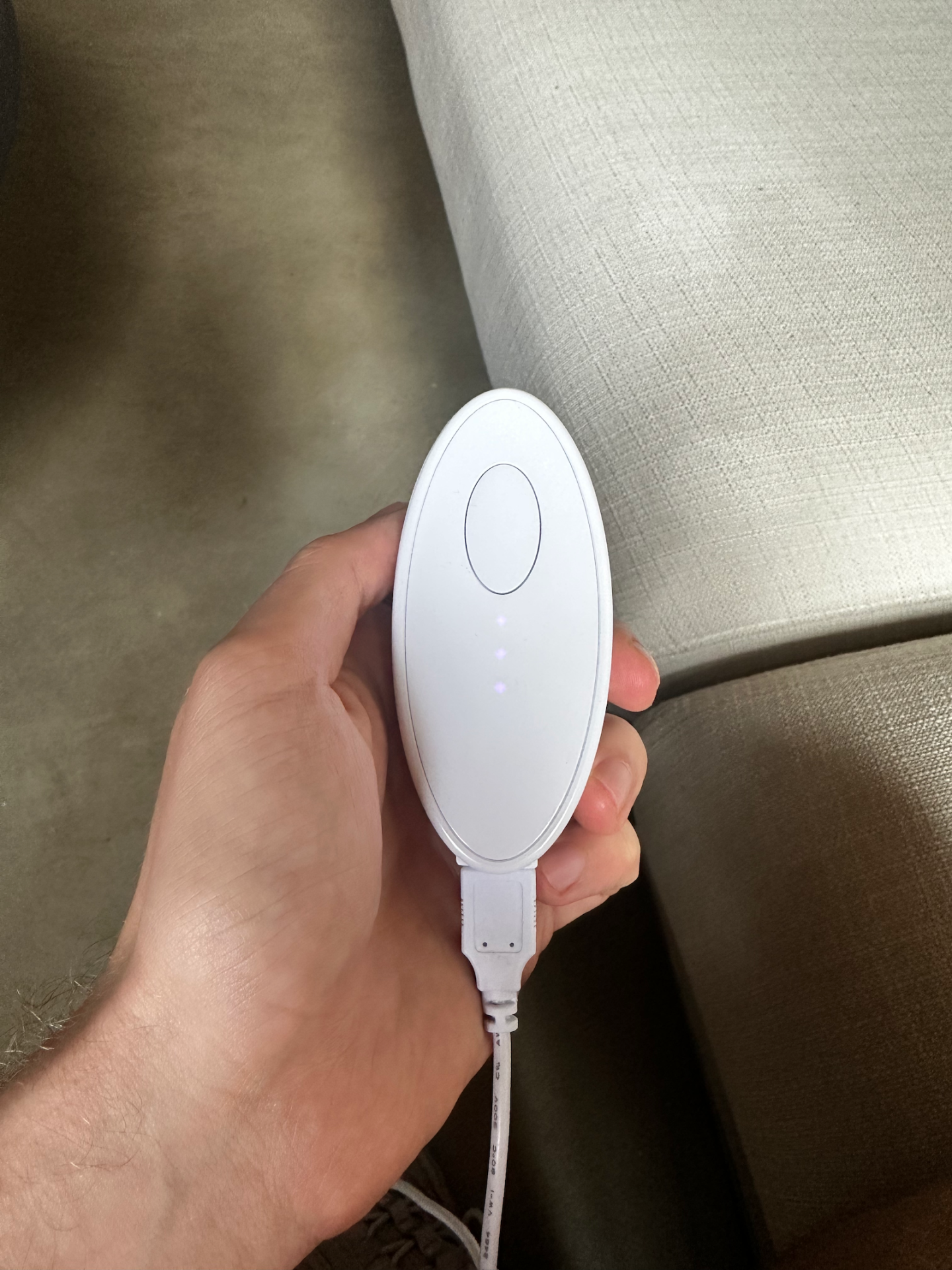
Once it’s fully charged, the Omnilux is portable — I liked to put mine on, tuck the rechargeable battery controller into my pocket and either do a quick chore, a meditation or catch up on email. The mask is silicone and upon first touch may not seem like the most comfortable material to strap to your face for 10 minutes at a time, but it really is comfortable. There are some beauty rituals that I don’t look forward to doing but putting the Omnilux on every other day is not one of them.

omnilux
There are two primary versions of the Omnilux LED Mask: the Omnilux Contour Face (for women) and the Omnilux Men (for men).
Hayley Helms

It’s slightly warming, plenty relaxing, but also pretty bright, and there were times I was unsure I had it on right. Sometimes, I felt the light was shining too directly into my eyes — or simply reflecting off my under-eyes and into my literal eye line. That took some adjusting to avoid, but otherwise, I felt nothing in this thing, which is a good sign.

LED red light addresses a multitude of skin issues.

Red light therapy is a process that employs red light at varying wavelengths to trigger cellular regeneration. The energy from light-emitting devices — like this one — energizes tired cells, triggering self-repair. In terms of skincare, this can help eliminate fine lines, wrinkles and redness, soothe irritation, lessen dark circles and de-puff under-eye bags.

The Men’s version is stronger.

The primary difference between the Omnilux Men and the Omnilux Contour Face is the intensity of the LED light. It emits at three wavelengths: red 633nm, near-infrared 830nm, and near-infrared 1072nm. The Omnilux Contour Face emits at two wavelengths: red 633nm and near-infrared 830nm. Because men have thicker skin — it’s true, not just some sexist joke — they can handle the 1072nm near-infrared light. It helps penetrate deeper, offering the same results women see with the lesser device.

I didn’t see results as quickly as I’d hoped.

The Contour Face is enjoyable to use, and I’ll admit I initially had higher hopes than maybe were realistic — I was hoping the mask, over time, would essentially erase my fine lines (and not-so-fine lines) but that wasn’t the result I got. My skin felt tauter and I certainly thought it had more luminosity to it, but my fine lines are still around 6 weeks later. I’m going to up my treatments and continue the habit, but if you’re hoping for an overnight miracle, you may not get what you’re after.

Home / Page 12

Stop Buying Whiskey Stones, They Suck

Whiskey stones have always been, and continue to be, terrible.

wiskey on the rocks in carpentry studio

If you buy from a link, we may earn a commission. Learn more

Whether it’s Christmas, Father’s Day or a wedding gift, at men’s magazine offices around the nation, one question proliferates the office: Is that gift guide truly complete without including at least one set of whiskey stones?

On the surface, they seem to be the perfect gift: they let your bourbon-drinking friends and family members chill their drink without diluting it, an apparent sin in the drinking world, and they strike a perfect balance — a touch too ridiculous to buy for yourself, but welcome when disguised with wrapping paper and a bow. And thus spreads the myth of the whiskey stone.

But the simple fact is, no one needs, wants or actually uses whiskey stones. They are almost entirely useless. Whiskey stones are intended to do two things: cool your drink down and prevent dilution. In each of these pursuits, the whiskey stone fails.

Whiskey stones are worse at cooling than ice

In regards to the claim that whiskey stones cool your drink: In this arena, the stones, typically made of soapstone to help protect your highball because for some reason you decided to put an actual rock in it, are up against a world-class cooler. Ice is — and has — been the predominant way to cool beverages for centuries, so much so that it seems odd to have to explain why.

Water, and ice to a lesser extent, has extremely high specific heat, which can be thought of as the amount of heat required to raise the temperature of something. (Or in this case, how much heat that something can absorb from a room-temperature drink.) Ice also benefits from the phase change. Melting ice into water takes a (relatively) incredible amount of heat. In fact, the process of melting ice absorbs the vast majority of heat in your drink. This phase change doesn’t occur with stones. They just warm up.

You want to be diluting your whiskey anyway

The second claim is that stones prevent dilution. This is true. (And is also true of reusable ice cubes, which are loads more effective than stones, provided you can bear to watch them float around at the top of your drink like a bad drink umbrella.) This is also sometimes a bad thing.

“Arguably one of the most pointless, ephemeral gimmicks to ever curse the world of spirits.”

If you are a true whiskey snob, you drink your whiskey at room temperature (chilled drinks lessen the effectiveness of your taste buds and olfactory senses) and you drink it with a water dropper. You sip, you take notes, you add a drop of water, you repeat. It takes the fun out of drinking, but it illustrates a point: even experts dilute their drink as it “opens up” the whiskey.

Half the fun of throwing an ice cube into a drink is to taste the drink change as the ice melts (the other half is that you can throw a cube in your drink without shattering the glass, because it isn’t a whiskey stone). The recent trend of high-ABV bourbons hitting the market comes from bartenders demanding higher proofs that they can dilute with mixers while still maintaining high alcohol content. So dilution is sometimes good.

What experts say about whiskey stones

“Whiskey Stones? Arguably one of the most pointless, ephemeral gimmicks to ever curse the world of spirits,” says Ewan Morgan, Head of Whisky Outreach at Diageo. “The ones made of stone scratch your glassware, the metal ones clank around your glass like a robot falling down stairs and they just don’t stay cold! Using them is also counterintuitive as whiskey tastes and smells better at room temperature. They would have been comfortably at home in the original SkyMall (RIP) along with the life-size ‘Garden Sasquatch’ and other pointless gifts that are destined for the landfill.”

What to use instead of whiskey stones

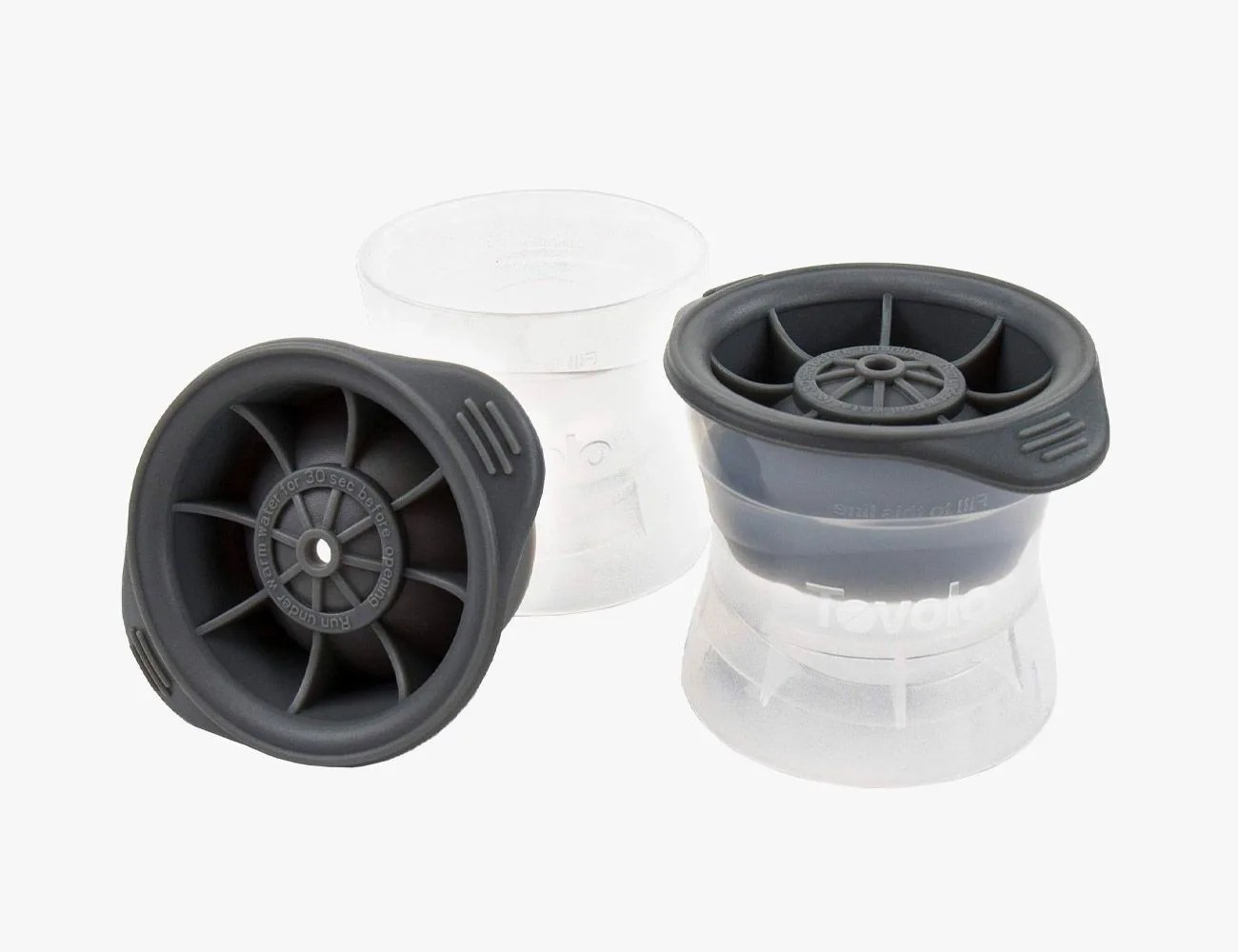
If you’ve given or received whiskey stones, don’t sweat it. We’ve all had them clanking around at the bottom of our drink at one point in the past. We’ve probably still got some sitting politely in our freezer; maybe enough time has passed for them to be “misplaced.” Just throw them in the garden, replace all your scratched-up tumblers and get on with your life. And if you really hate dilution but really want cold drinks, your best bet is an ice sphere. A sphere delivers the greatest cooling with the least dilution, and a press makes it denser and more efficient.

,
Home / Page 12

This Free App Made Me Fall in Love with Running Again

Sometimes, all it takes is some good (virtual) coaching.

techNike

I used to be a runner. At least, that’s how I viewed myself — back then, as a runner, and then more recently, as a former one. For the better part of the twenty-teens, I’d strap on my running shoes at least three times a week and knock out anywhere from three to eight miles. It wasn’t just the need to stay healthy that drove me; it was the bliss of speed, the charge of power, the breeze lapping at my face and the warm ache that settled through my legs. I loved running enough to do stupid things like, say, run a marathon without training — fueled only by enthusiasm and overconfidence.

But life moves on, times change, and old habits wind up being supplanted by new ones. After a move from Brooklyn to a part of Manhattan distinctly lacking in sizable parks (especially now since the East River Park long used and beloved by runners has been hacked up for renovationsthanks, de Blasio), I found myself hitting the gym’s cardio machines on a regular basis all year long instead of pounding the pavement in the warmer months.

But after years of being stuck in the gym, toggling between channels on the elliptical for my regularly scheduled workout … I’ve started to rediscover the joy of running. I’m thinking of myself as a runner again. And to be quite frank, it’s almost entirely thanks to the Nike Run Club app.

Nike Run Club: What We Think

Nike’s Run Club might seem like a gimmick at first — who needs an app to run? But after testing it out, I’m pleased (and a little surprised, even) to say that it’s an excellent exercise companion — one that truly can unlock (or re-open) an enthusiasm for the sport. And since it’s free, well, there’s zero reason not to at least give it a try if you have any interest in running.

nike run club embedWill Sabel Courtney

Nike Run Club’s killer app: Coaches like Coach Bennett

Nike’s running app offers a variety of guided runs, ranging from the easiest sort of pace imaginable to heavy-duty hauling of ass. But in my case, the magic in the sauce comes down not just to the program, but the person behind the guidance: Nike Running head coach Chris Bennett.

nike run club app
You’ll quickly grow to like this man.
Will Sabel Courtney

I first encountered Coach Bennett during a Camp Nike event in upstate New York, where he revealed himself to be a man with both the perpetually upbeat attitude and the mustache of Ted Lasso. Years of school sports had left me cynical about what a coach could actually do for me as an athlete; I’d never responded well to the barking of orders, quasi-bullying or attempts to motivate through demeaning and anger. It took working with Coach B, as he’s affectionately called at Nike, to realize that it wasn’t coaching I didn’t respond well to — it was bad coaching.

camp nike coach bennett
Coach Bennett (in green hat) warms up Camp Nike attendees before a run.
Will Sabel Courtney

Coach Bennett, as you might be catching on to by now, is very much not a bad coach. He dispenses inspiration concisely and motivates politely, remarkably without falling into platitudes or bromides. His coaching is always upbeat. “What’s the difference between running and walking? It’s flight. Little bits of flight,” he says to me. (Even when he’s speaking to a group, Coach Bennett has a way of making you feel as though he’s speaking directly to you.)

On matters of speed and effort, he’s kind and smart in equal doses. “Easy is an effort, it’s not a pace,” he says. He stresses taking one’s time, not letting one’s running reach exceed their grasp. “The cowardly thing to do is to beat yourself up,” he says. There’s always a next run to come: “Every finish line is a starting line in disguise.”

Coach Bennett’s app-based trainings bring the exact same sort of wisdom, positivity and motivation that the man himself delivers in person. Using his guided runs, I’ve already started pushing myself a bit harder than I normally would have, in ways that I hadn’t done in the past — working interval training into the mix, for example. I never felt inspired to try such methods before, but the app-based training’s gentle nudge and Coach B’s genial style pushed me to give it a try.

Of course, if Coach Bennett somehow isn’t your cup of tea, the app also offers plenty of guided runs virtually led by other Nike coaches with their own styles — each of which can also lead you on any number of fitness journeys. Think of it as a variety of choose-your-own-adventure books…but, y’know, for running.

nike run club coach bennett ted lasso believe
In case you doubted me about the Ted Lasso thing, here’s Coach Bennett literally talking about the word “BELIEVE” while holding it up on a sign.
Will Sabel Courtney

The app is well-designed and easy to use

No matter what metrics it tracks or features it offers, any fitness app — really, any app at all — is ultimately only worth a damn if you like using it. Luckily, Nike didn’t cheap out on development; the Nike Run Club app works like a charm.

The app boasts a streamlined, intuitive user interface that makes kicking off runs fairly easy, breaking your options down in a variety of ways — by coach, by type, by length, and so forth. The app also offers the ability to set up training plans for a wide variety of cardio challenges, from simply getting started running over the course of a month to training for a full-blown marathon. You can add friends to a virtual crew, enabling you to virtually train together. And, of course, it tracks your runs, so you can keep track of the routes you’ve taken, the miles logged and the paces set.

nike run club app
Starting a run is as easy as tapping the big yellow button — well, tapping it twice. The first tap downloads the file, the second starts the run.
Will Sabel Courtney

Nike Run Plus plays well with other platforms and devices, too. It syncs seamlessly up with your Spotify or Apple Music accounts, so you can keep listening to whatever tunes you like as the running coaches guide you through your exercises; the music’s volume fades up and down seamlessly depending on whether you’re being coached at any given moment. (That said, I did find the app forces me to re-sync it with my Spotify account every time I start a run, creating a momentary pain point.) It also works very well with your Apple Watch, should you happen to be rocking such a device on your wrist, displaying key metrics without extraneous information to help you concentrate.

Nike Run Club is free

There are plenty of apps out there that are aimed at tracking health and helping improve fitness; some are free, some are cheap, and some are surprisingly pricey. Nike’s app falls into the first category — no cost to buy, no subscription fee — making the barrier to entry extremely low.

Of course, a cynic might argue that by getting you more into running, you’ll burn through sneakers and other running gear more quickly — and by creating a positive association with the Swoosh, it makes you more likely to choose their running shoes and other jogging / fitness gear over competitors when it comes time to replace those worn-out pieces. Consider the app offers, among its many features, the ability to tag your shoes, track their wear and tear and tell you when to replace them — and considering my personal predilection for wearing shoes until you can see through the soles — I’ll admit that rings a little true. Still — at the end of the day, any product that helps you perform better and enjoy life more is a worthwhile thing, and the Nike Run Club app certainly checks that box.

,
Home / Page 12

Look Fly and Feel Warm this Winter

Stay warm on the water and beyond with these picks from Orvis

people walking on a snowy mountain with orvis fishing gearOrvis

If you’re properly prepared, winter can be one of the best seasons for getting outdoors. When it comes to the being prepared part, top-quality outdoors brand Orvis is a natural choice — its expertise in keeping you warm and comfortable in variable conditions also translates exceptionally well to everyday essentials. Check out these insulated essentials from Orvis that will keep you warm on the water and beyond.

See something you like? Act fast. The brand is offering 25% off site-wide, along with free shipping, December 8 – 11. (Some exclusions apply.)

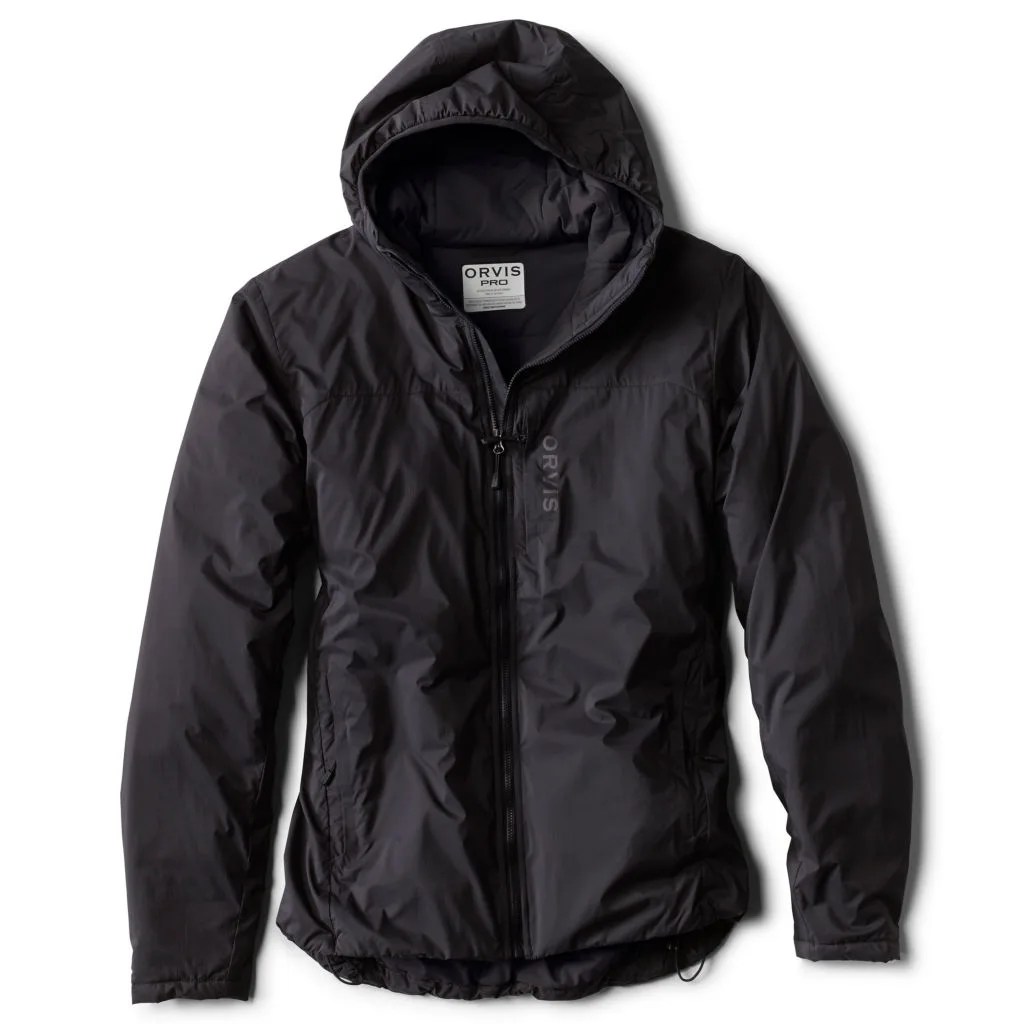
Orvis’s PRO line encapsulates the brand’s most technically advanced outerwear, and this insulated hoodie is no exception. The stretchy, body-mapped PrimaLoft Gold Active insulation will keep you comfortable no matter what the elements throw your way, whether you’re standing in a stream or taking a neighborhood stroll.

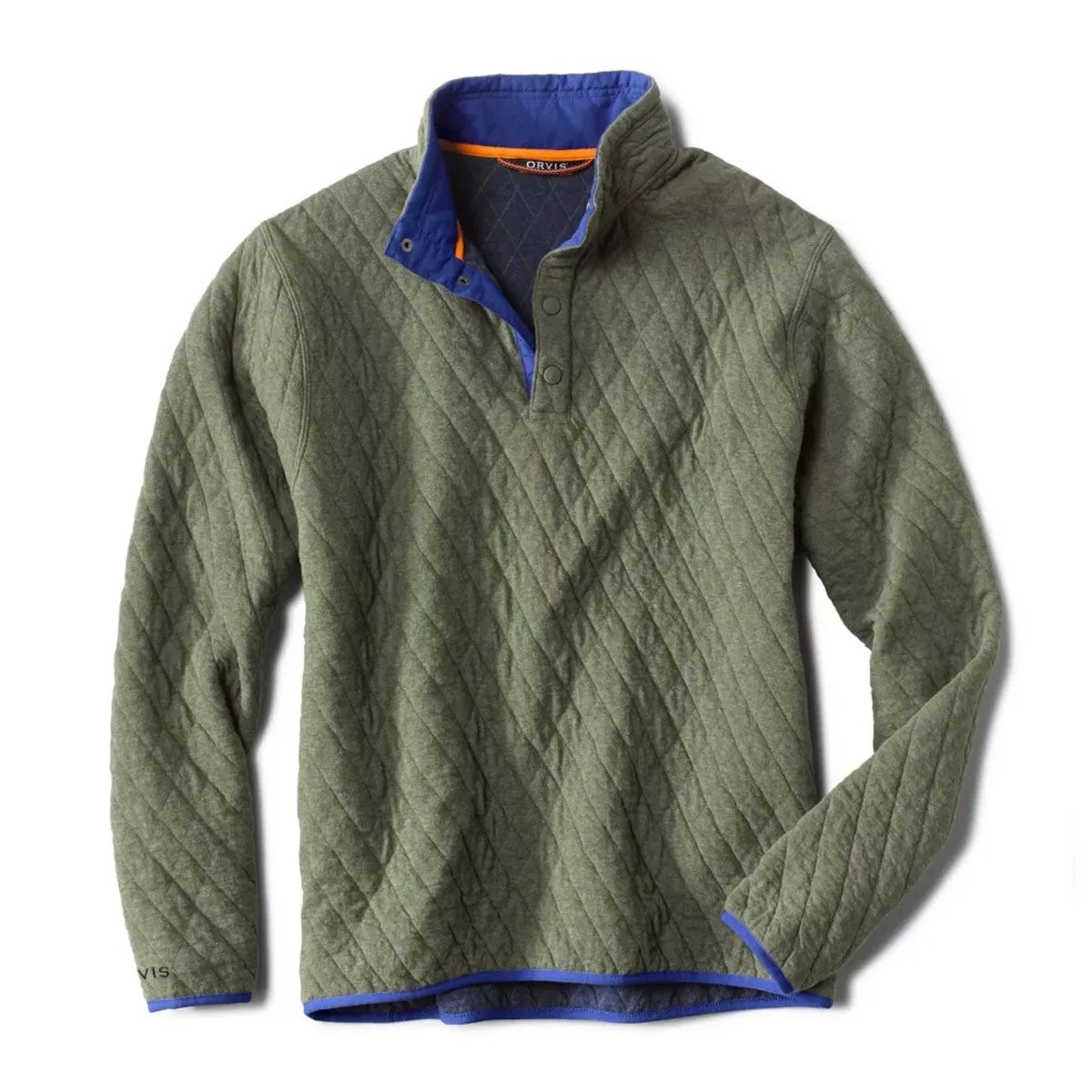
Soft comfort and casual style come together in this sweatshirt. Two layers of cozy cotton jersey fabric are quilted together with just enough insulation to keep the fall breeze at bay, and contrasting stretch trim cuffs add a subtle pop of color.

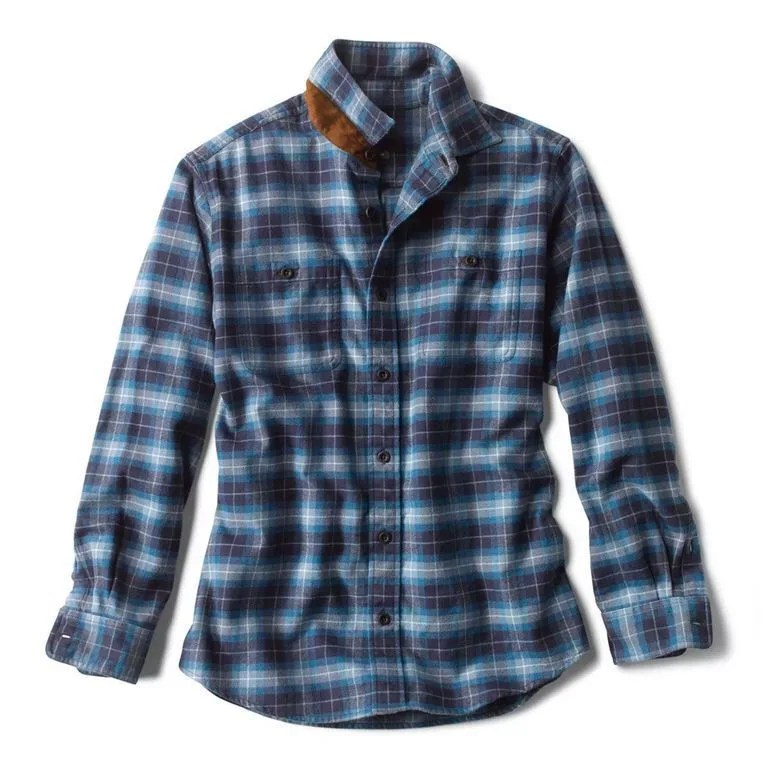
To Orvis, “perfect” means the softest flannel you can find, paired with meticulous details like a washable faux-suede neckband, two-button adjustable cuffs and a hem designed to stay tucked in. It’s available in a wide array of plaids and camos, which means there’s a print here for everyone.

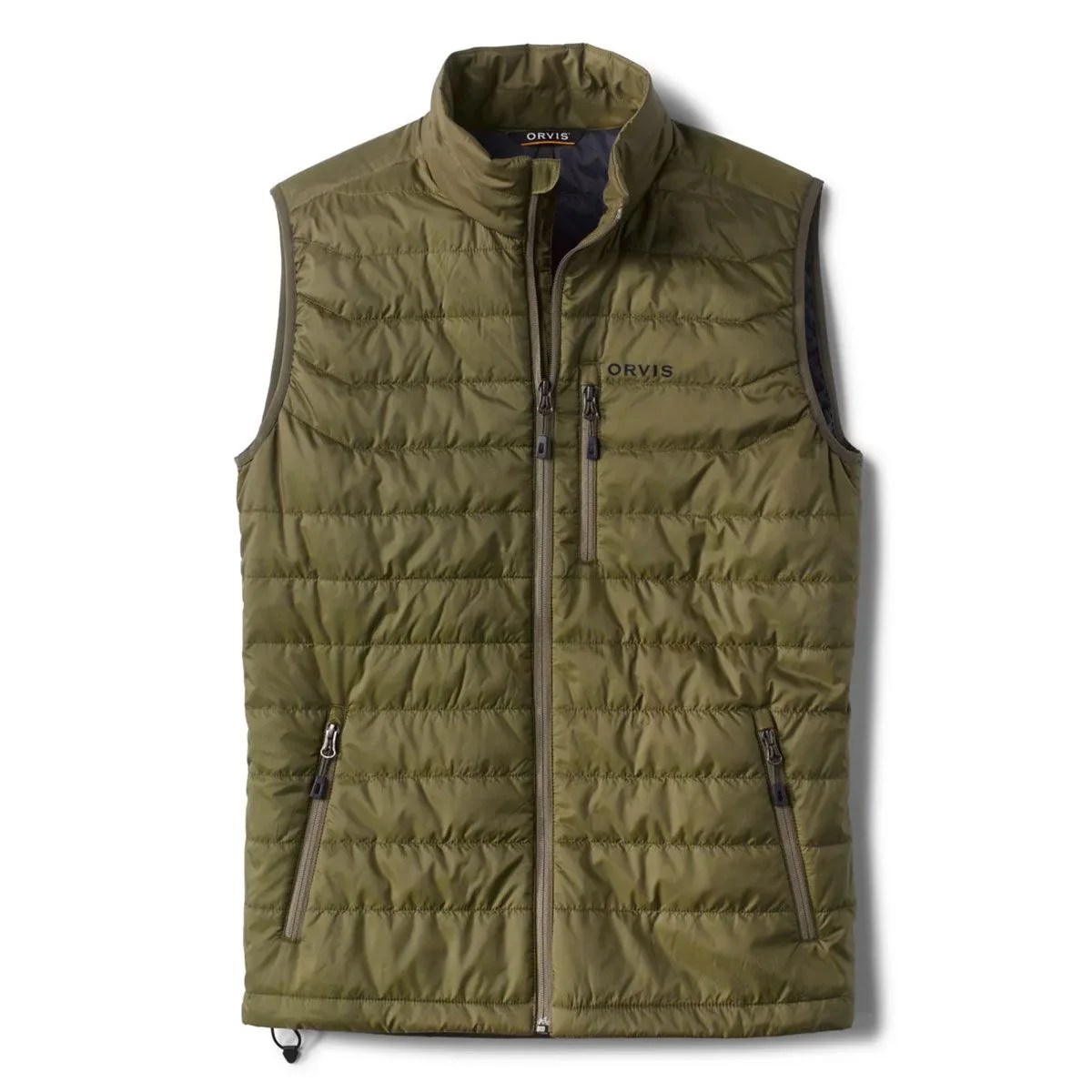
The shell and insulation of this lightweight puffy vest are 100 percent recycled synthetic, making it a layer you can depend on and feel good about buying. It has soft, lined hand pockets, a cinch at the bottom hem to keep warmth in and a zippered chest pocket so you can stow this layer when not in use.

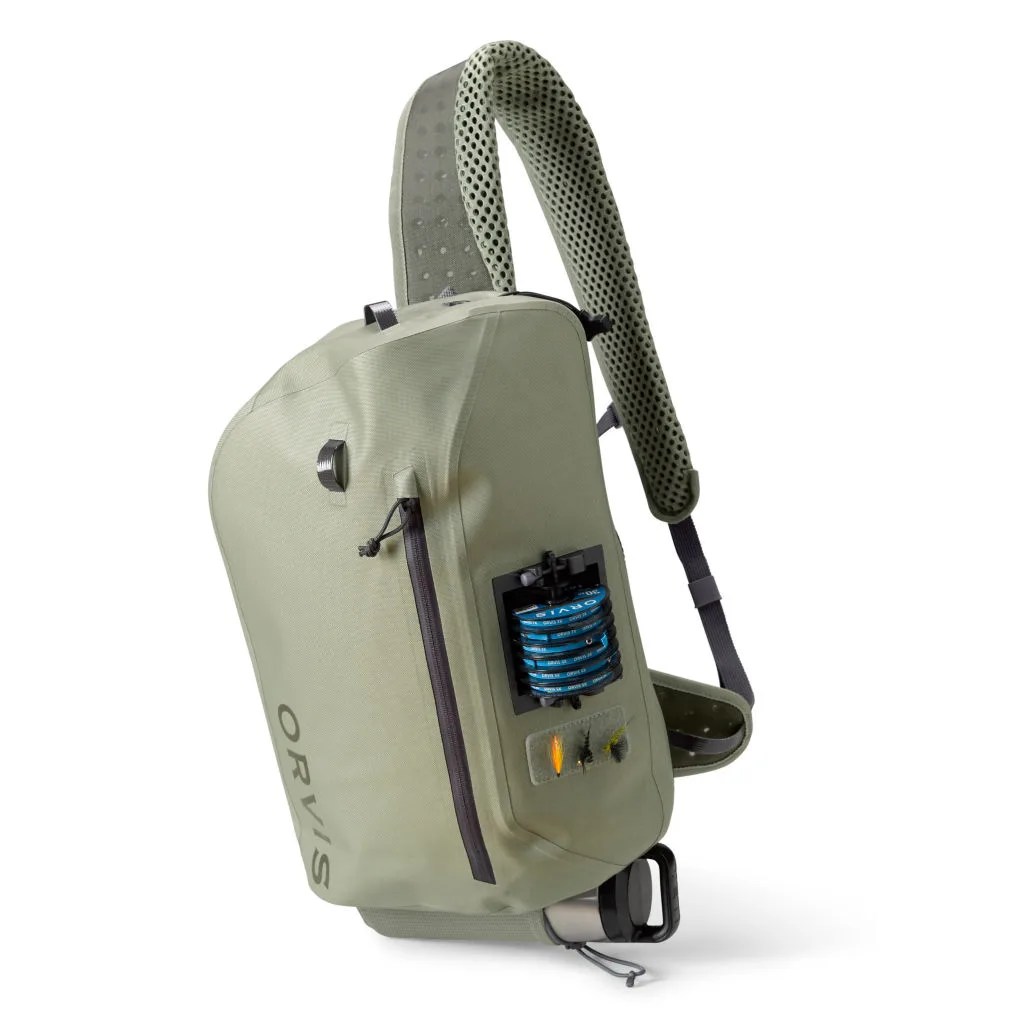
Orvis has made a name for its fishing slings over the years, and now it’s setting the standard for the next generation of on-the-water carry-alls. Intuitive organizational details, including the fan-favorite Tippet Whippet docking system, put all your tools and accessories exactly where you need them, and 840-denier waterproof, abrasion- and puncture-resistant ballistic nylon keeps your gear secure and bone-dry in the wettest conditions.

, ,
Home / Page 12

A Modern Update on the Original Dive Watch

What makes DOXA’s SUB 300β worth talking about — by Gear Patrol Studios

a couple of watchesDoxa

Welcome to Talking Points, a series that looks at what makes certain products worth talking about, brought to you by Gear Patrol Studios.


For more than 50 years, DOXA has been leading the way in widely available yet professional-grade diving watches. The brand’s first model, the iconic SUB, revolutionized the industry and was a favorite of Captain Jacques-Yves Cousteau, the father of SCUBA diving himself. Throughout the years, the brand has continued to innovate, arriving in the modern era with stunning timepieces that are built to help you dive into whatever life throws your way — from the office to the oceanfront and beyond.

a watchDoxa

The Backstory

DOXA: A Watchmaker with Depth

In 1967, DOXA introduced the very first mainstream diving watch, the 300-meter capable SUB. Its groundbreaking rotating bezel incorporated the U.S. Navy’s no-decompression dive tables in a patented design that helped divers reduce the risk of decompression sickness and whose distinctive orange dial quickly became iconic.

Just two years later, the brand innovated again with a helium-release valve that was created for those who go beyond what traditional SCUBA gear can accomplish — saturation divers. Having plumbed the deepest depths, DOXA has also brought its astounding technical capabilities to the surface with beautiful designs that are just as at home in boardrooms as they are on deck.

The Gist

What Does the SUB 300β Add to DOXA’s Legacy?

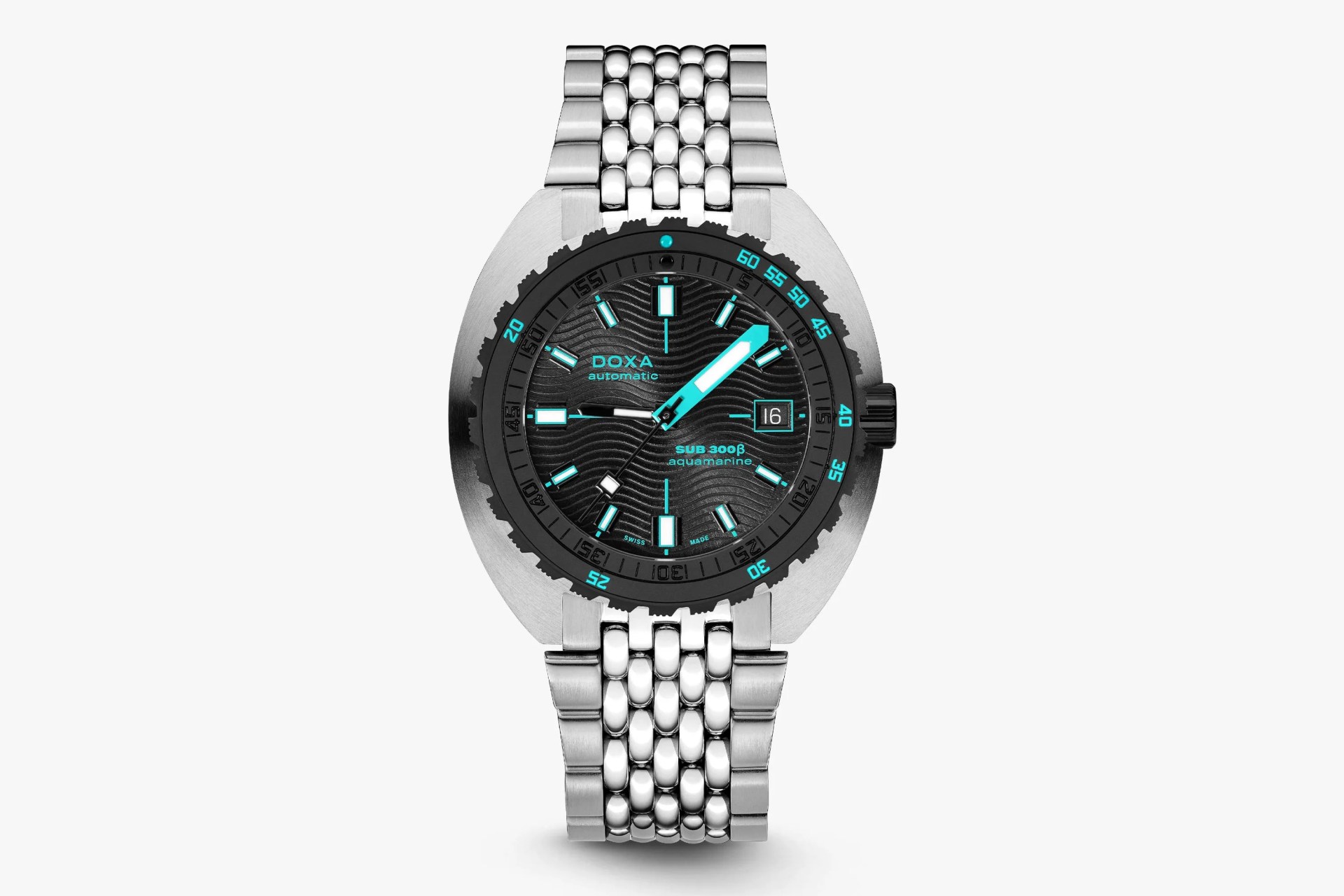
The latest dive watch in DOXA’s line retains all the laudable functionality and features that have made the SUB series timeless, while making design adjustments that firmly bring this timepiece into the modern era. The bezel and case profile are slimmed down for an even more elegant feel, and the dial’s subtle sunburst finish and wave motif evoke sunlight shining down to watery depths, recalling DOXA’s deep-sea adventure origins even when you’re on dry land.

Our POV

The SUB 300β Is the Modern Adventurer’s Timepiece

A modern, versatile watch, the SUB 300β is up to any adventure its wearer decides to embark on, from the city to the sea and everywhere in between. It’s both a highly engineered all-purpose sport watch and a piece of meticulously designed wearable art worthy of DOXA’s estimable legacy. Keep the spirit of adventure always at hand with the DOXA SUB 300β.

Price: from $2,150

, ,
Home / Page 12

Rowing Blazers and Zodiac Bring an Iconic Movie Watch to Life

It tells time simultaneously in Monte Carlo, Beverly Hills, London, Paris, Rome and Gstaad.

watchesJim Wright

If you buy from a link, we may earn a commission. Learn more

Quick, what was the sports watch of the ’80s? Breitling Chronomat? Rolex GMT-Master II? Hublot Classic Fusion? Wrong, wrong and wrong. The only correct answer is the Rochefoucauld. In 1983, it was the thinnest water-resistant watch in the world, singularly unique, sculptured in design, handcrafted in Switzerland and water-resistant to three atmospheres. It told time simultaneously in Monte Carlo, Beverly Hills, London, Paris, Rome and Gstaad. And, most notable of all, it was entirely fictional.

By now, you’re either completely lost or entirely in on the joke. If you fall into the former camp, here’s the scoop: The Rochefoucauld is the watch that Dan Aykroyd’s down-on-his-luck snobby stockbroker tries to pawn in the 1983 comedy Trading Places, and the description in the previous paragraph is how he pitches the watch to Bo Diddley’s skeptical pawn broker. The watch, which never existed, has long been a bit of a grail for watch enthusiasts and movie buffs who’ve always wondered, “What if?” Well, now the Rochefoucauld is finally a reality (sort of) thanks to a new collab between Rowing Blazers and Zodiac.

The Zodiac x Rowing Blazers Super Sea Wolf GMT World Time

Rowing Blazers has become sort of a watch collab kingmaker over the past two years. It started with the preppy brand’s acclaimed makeover of the Seiko 5, which has since been followed up by tasteful takes on watches from increasingly more upscale models from Zodiac, Tudor and TAG Heuer. Now, the brand has once again partnered with Zodiac — a company that has shown its own willingness not to take itself too seriously — on a tongue-in-cheek version of the Super Sea Wolf GMT World Time.

This version of Zodiac’s travel watch adds the Rowing Blazers logo above six o’clock on the black dial and incorporates the style brand’s trademark shade of blue for the bezel. The watch also includes a #tide ocean plastic fabric strap executed in Rowing Blazers’ famous zig zag pattern in addition to the standard stainless steel jubilee bracelet from Zodiac. But the best change, and the only one that ties this watch to the Rochefoucauld, is the inclusion of all the cities named from the movie scene on the world time bezel.

watch dial
Monte Carlo, Paris, Rome and Gstaad all appear on the bezel … despite sharing the same time zone.
Jim Wright

That means Beverly Hills stands in for Los Angeles, London makes an appearance (which it normally would anyway) and Paris is joined by Rome, Monte Carlo and Gstaad. All four of those European cities are in the same time zone (I’ve always assumed that was part of the joke from the film’s writers), which means the watch had to find a clever solution to squeeze them all onto the dial. Finally, the watch swaps out New York for Philadelphia, which is where Trading Places takes place, and where the $6,955 Rochefoucauld is worth only $50 (per the film).

An actual sports watch

actor adam scott holds a watch
Actor Adam Scott, a fan of Trading Places, fills in for Dan Aykroyd in the watch’s marketing campaign.
Zodiac x Rowing Blazers

Of course, anyone who knows watches can tell that the Rochefoucauld is as much a sports watch as a G-Shock is a dress watch. The watch from the movie is small, thin, gold and on a leather strap. It has a world time complication (albeit a strange one) and is only water resistant to three atmospheres, which is essentially splashproof. The Zodiac x Rowing Blazers effort, by contrast, is much more robust and sporty, with 200m water resistance, Super-LumiN0va on the hands and indices and is powered by the STP 7-20 automatic GMT movement.

The Zodiac x Rowing Blazers Super Sea GMT Wolf World Time is limited to just 282 pieces and is on sale now through both Zodiac and Rowing Blazers.

,
Home / Page 12

Specialized Diverge STR Expert Review: Is the Innovative Suspension Worth the Hype?

We put the base-level Diverge STR to the test.

specialize gravel bike in front of redwoodsTomás Galguera

If you buy from a link, we may earn a commission. Learn more

The San Francisco Bay Area offers a dizzying array of terrain for cyclists. Paved roads through rolling hills lead to gravel fire roads and coastal trails. Mountain paths with 30 percent grades wind through groves of redwoods, eucalyptus and oak. So it’s no surprise that Morgan Hill-based Specialized, located a half hour south of San Jose, has led the charge in creating new technologies to traverse all that ground.

The brand’s flagship gravel bike series — the Diverge STR — was first released in 2017 and now includes three models: the Expert, the Pro and the S-Works. While the style and ride is similar, the models have increasingly better components from Expert to S-Works. The Diverge STR is a head-turner, though, and its Future Shock technology (offering tunable 20mm front/30mm rear suspension) is both novel and functional.

During the spring and early summer, I tested the Expert model on the roads, in the hills and in the mountains of the Bay Area to see if the innovative technology and curated build is worth the $6,700 price tag.

Specialized Diverge STR Expert: What We Think

Like any gravel bike, the Diverge STR Expert is a hybrid, blending elements of road and mountain bikes to find the intersection of comfort, performance and efficiency. That said, it is a Swiss Army knife of a bicycle, able to traverse a wide range of terrain on a single ride without seeming out of place anywhere. Sure, it excels on fire roads and compact dirt and gravel paths, but it holds its own on paved hill climbs.

The suspension makes for an — at times — alarming smooth ride, unlike any other bike offers. Of course, there are drawbacks for those coming from road or mountain riding … but in terms of pure versatility, this Specialized is hard to fault for a stock bike.

Pros

  • Smooth ride but still efficient
  • Great range with 12-speed, 11-50t cassette
  • Tracer Pro 2BR tires can handle a wide range of terrain
  • Lightweight
  • Eye-catching design

Cons

  • Brakes are underwhelming
  • Saddle shape is not for everyone
  • Can't completely lock out suspension
  • Bottle cage is designed for bumps, not ease of access

This bike delivers an addictingly smooth ride

STR stands for “Suspend the Rider,” and the Future Shock 2.0 front and rear suspension, paired with the lightweight Diverge FACT 11r carbon frameset, does just that. The technology — initially designed for smooth rides on cobblestones — features 20mm of travel above the head tube in the front and 30mm of travel in the rear. The adjustable, damped front travel helps protect your hands and arms on uneven, washboard trails, but is easy to modify on the go if you desire less travel on smooth or paved surfaces. Fully opened up on a hard surface, you’ll feel the bars bob in a sprint; thankfully, it’s fast and easy to reduce (but not eliminate) this with a clockwise twist of the adjustment knob.

The Future Shock Rear suspension offers a small hydraulic damping lever to fine-tune its travel. Unlike traditional mountain bike rear suspension, the Future Shock technology allows the seat post to travel horizontally allowing the rider to float over uneven surfaces without losing pedaling power or sacrificing frame fit. You can’t completely lock out the suspension, but the damping does allow the rider to nearly eliminate bobbing in strenuous sections of rides. Just like the front suspension, this is quickly tunable, and you can go tweak the travel to your liking.

Many rides took me from pavement to compact gravel to uneven dirt and back to pavement in the first 20 miles. The ability to quickly adjust the suspension on the go made the rides smoother, faster — and, at the end of the day, more fun.

It’s incredibly versatile

The Tracer Pro 2Bliss Ready tires mounted on a Roval Terra C wheelset aren’t overly aggressive on-road and offer a surprising amount of stability off-road. To get another perspective, I asked avid Bay Area cyclist Tomás Galguera his opinion of the bike. After riding the Diverge STR Expert on trails near Los Gatos, he, too, had a favorable take on the tires.

specialized diverge str tire tread
Tread on the Tracer Pro 2Bliss Ready tire.
John Zientek

“I was a bit skeptical, initially, because the tread doesn’t look particularly aggressive. And yet, when I came across the first sand trap and the bike remained planted, I soon was able to relax my grip on the hoods,” Galguera said. “Never did I have to unclip or worry about losing the front end around a turn. True, I wasn’t riding particularly fast, but the sand was deep enough to slow me down while crossing it. Memories of sand-encrusted elbows and burning embarrassment from past sandy failures soon left. Rather than tensing up, I began to look for sand traps to attack.”

bike near fence
Galguera tested the bike on a range of terrain near Los Gatos.
Tomás Galguera

Along with the tires, the 12-speed, 11-50t SRAM NX Eagle PG-1230 cassette gave me all the range I needed for the most intense 25–30 percent hills in Berkeley (Marin Ave is the ultimate testing ground for gearing and brakes). The SRAM ED RIV ETAP shifters were fun, fast and smooth.

bike components
The 12-speed, 11-50t SRAM NX Eagle PG-1230 cassette, SRAM GX Eagle AXS rear derailleur and SRAM GX Eagle chain.
John Zientek

Though Galguera spent the majority of his life as a road cyclist, the transition to a 1x setup from his typical road bike was easier than expected. “It didn’t take long to remember that the side of the levers coincided with the direction of the shift,” he said.”I didn’t miss having to contort my wrist when having to drop a bunch of gears suddenly because of a steep hill ambush. And speaking of hills, the gearing on the bike turned climbs with ridiculous slopes enticingly possible. Yes, these were narrow paved roads in a camp among redwood trees, which reduced the challenge of traction. Still, the gearing and overall setup of the bike allowed me to climb the steepest slopes I’ve ever climbed on a bike.”

bike in california hills
The Diverge STR Expert excels off-road on compact trails like those found in Richmond’s Wildcat Canyon Regional Park.
John Zientek

That said, if you’re considering transitioning to the Diverge STR Elite from a road bike, there are some notable differences in geometry. “My position in the bike was considerably different than the one that I assume while riding my USPS livery 2003 Trek OCLV — the same frame that Lance [Armstrong] rode to victory in the 2002 Tour,” Galguera said. “I suppose I could’ve adjusted the saddle to be farther away from the handlebars, but my road bias made me wish the bars were lower. This was especially true while battling a headwind riding up Highway 1. This was a two-mile, all-out effort while catching up with friends and family who were ahead. I was only glad when I veered off the highway into a bike trail where trees offered some protection from the cold gusts coming from the ocean. It was even better when pavement gave way to gravel, washboard, and even sand. It wasn’t till after the ride when I noticed that the bike felt well-planted and confidence-inspiring regardless of surface.”

That said, on steep paved descents, the bike can exhibit some heavy steering and has a tendency to fall into turns. The Diverge STR Expert shines off-road but on pavement, riders need to make some mental adjustments to get the most out of the setup.

During testing, I used three sets of Shimano Pedals: the GRX PD-ME700, the EH500 and the XTR M9100. The XTR SPD was the lightest at 310 grams per pair, but the ME700 (540 grams per pair) offered more stability during technical rides when not clipped in thanks to an integrated cage. The EH500 — the least streamlined of the trio — weighs in at 383 per pair and offers a flat platform side for rides where hiking in and out may be necessary.

shimano pedals
Compare the sizes of the GRX PD-ME700 and XTR M9100 — different pedals for different riders.
John Zientek

Some components could be upgraded

The Diverge FACT 11r carbon frameset and Future Shock 2.0 suspension are the heart and brains of the Elite, and they’re a solid core. But to get the most out of those elements, the limbs could be upgraded. Not faulting the SRAM Rival and GX Eagle components, but for the price, it would be nice to utilize a higher-end groupset from SRAM. For those looking to do just that, the Diverge STR Pro and S-Works Diverge STR do use top-tier components.

diverge str expert handlebars in tree grove
The Expert’s handlebars could be upgraded to carbon to reduce weight. At full lock they also hit the top tube.
John Zientek

“A final thought concerns the options and ways in which one can customize the bike,” noted Galguera. “From adjusting the plushness of the high-tech suspension to fine-tuning the air pressure in the tires to other changes that would require more effort, such as adding a drop seat post, or changing the stem height—which might eliminate the bars hitting the top tube at full lock — there are multiple ways to not only adjust the bike to highly individualized preferences but also tune to meet terrain demands. And yet, I wonder whether I would end up taking advantage of so much versatility. Or perhaps I would set up things a certain way and leave them there, similar to how we treat computer software, which we seldom use to its full potential.”

Specialized Diverge STR Expert: Alternatives

If you’re looking to experience the STR technology, Specialized’s Diverge STR Pro ($8,700) and S-Works Diverge STR ($13,000) are upgrades to the Elite. Both feature carbon handlebars, upgraded drivetrains and better brakes, among other things.

If you’re not interested in the Diverge STR series, Cannondale’s Topstone Carbon Lefty 3 offers its own take on front and rear suspension for $4,250 or you can forego suspension and choose from a range of speed-focused bikes like the Pinarello Grevil F Ekar ($6,500) or the Scott Addict Gravel 30 ($4,000).

But, if you know exactly what you need in a bike and have a DIY mentality, consider building your own — something Galguera suggests. “I’d rather invest less than half of what I’d have to pay to own this bike to build a bike to meet my preferences, needs and limitations,” he said. “I would end up with a truly unique and individualized bike for much less. True, the build would lack the Wow! power of the Diverge, but perhaps that isn’t too bad. I hear way too many cases of bikejacks in the hills around here.”

Pros

  • Smooth ride but still efficient
  • Great range with 12-speed, 11-50t cassette
  • Tracer Pro 2BR tires can handle a wide range of terrain
  • Lightweight
  • Eye-catching design

Cons

  • Brakes are underwhelming
  • Saddle shape is not for everyone
  • Can't completely lock out suspension
  • Bottle cage is designed for bumps, not ease of access
,