Electronics

Man’s love of electronics knows no bounds - behold the best.

Entertainment

Our book, movie, music, game, and website recommendations.

gear girls

Women. Impossibly beautiful women. Need we say more?

Guides & Resources

How-to’s, techniques, and insider tips straight from the gear gurus.

Health & Fitness

Gear to be healthier. Gear to be fit. Tips too.

Home

A man’s home is his kingdom. It should be well-equipped.

Lifestyle

Food, drink, and travel: three pillars of better living for men.

Sports & Outdoors

Gear for courts, trails, slopes, and courses.

Style & Grooming

Men’s fashion, grooming, watches, and accessories.

Vehicles

Whether by land, sea, or air, a man must get from point A to B.

Home » Accessories, Bags & Luggage, Style & Grooming

Billykirk and the Fascinating Story Behind The Brand

For These Leather Heads, It All Started with a Watch Strap

By Jon Gaffney on Wed, Apr 29, 2009 Feature
| Email To A Friend | Stumble It! | 7 Comments
(18)

Jon: Well I would say that’s more than a sufficient answer. One of the things I find great about your product line is the way it seems to mix vintage and utilitarian influences, yet it resists feeling either dated or too contemporary. I feel cliche asking, but where do you draw your inspiration from to keep coming up with new ideas?

Chris Bray: We are constantly looking for new trims, attachments, unique closures, etc. So sometimes a simple brass snap hook, buckle, or handle will inspire an entire bag design. We go to a lot of swap meets and flea markets to find ideas. I bought a very old English rifle sling recently that has a number of exceptionally well crafted brass fittings. The leather was shot but the fittings will be reworked and cast again at some point. Historic websites, military surplus shops, old movies, E-bay… all provide ideas and inspiration to build from.

Jon: See that’s really interesting, you almost work backwards from how I would’ve expected. Building the product around unique details, as opposed to building the product then figuring out the details. Obviously, much of this stuff is no longer in production and oftentimes the companies that made them no longer exist. How hard is it getting this stuff reverse engineered and produced? And as a guy who loves researching things a little too much, I’d imagine it takes some serious digging at times to source these pieces of hardware.

Chris Bray: This is true. Companies that make hardware for the leather industry in the US are becoming nearly non existent. So digging around can get frustrating. The cost to make the goods here, trying to compete with China, fighting with the EPA and their taxes makes it very tough. One of our metal guys had the EPA out to his manufacturing plant and they told him he had to retro-fit his roof because of air quality issues. The bill was 200k. The EPA isn’t running around China, if you get my drift. A bunch of leather tanneries have had EPA issues and, again, there are a lot of Chinese based tanneries fighting for US based companies business. I know a few West Coast tanneries whose land was worth much more than what they made each year. So these 100+ year old tanneries closed their doors.

…after you have been designing in any given field or discipline, keeping it fresh and always finding a way to make it more interesting will only keep the fire burning. Much like a relationship…

So, in designing, I would say it goes both ways. Sometimes we will sketch a shape and then find the parts to make it function and be unique. Other times we will find a cache of buckles and buy them all up and build the item around that buckle. Since we do not buy from China and US-made hardware is becoming obsolete, we are casting more and more items out of bronze. More expensive initially, but in the long run (if the item sells well) it works out pretty good, plus we get a unique, one of kind piece.

I would also say that since we have been at this for ten years (in June), we like to mix up the design processes a bit. Go through the back door instead of the front, take a different way home sort of mentality. I think after you have been designing in any given field or discipline, keeping it fresh and always finding a way to make it more interesting will only keep the fire burning. Much like a relationship…

Jon: Excellent analogy for keeping things interesting. You kind of veered into what my next question was going to be talking about the Chinese competition. All your production is done in the US, surprisingly by the Amish in Pennsylvania. American business to me is fascinating, it seems we’ve obviously moved away from being mass producers and towards smaller niche businesses and doing things exceptionally well. At the same time, you’re often dealing with a public that is desensitized to the cost of true quality after being spoiled by cheap imports. Was domestic production something you guys intended to do or something you kind of became dedicated to over time? And how did you get hooked up with the Amish?

Chris Bray: All made in the USA and about 85% by the Amish. We have a couple of California based manufacturers we still use. The good stores we sell to really try and get the customer to understand what we are all about and our philosophies. When the sales staff is educated and excited about our product, then the customer is too. In my opinion, it is hard to get excited about anything mass produced, no matter where it is produced.

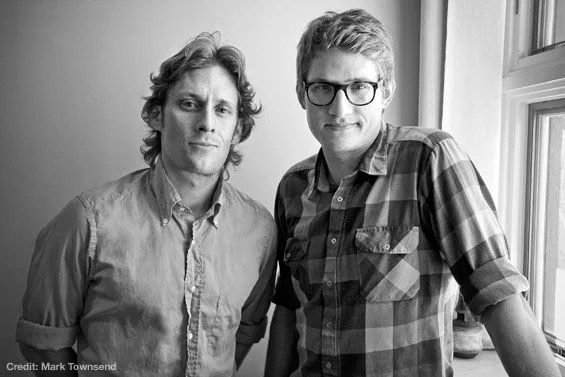
billykirk-chris-billy-bray1When we were in downtown Los Angeles, we had a 2000 square ft. studio at around $1/ft. Cheap as chips. We usually had 4-6 workers making our product under one roof, with a few smaller LA based manufactures doing some select items for us. It was nice having all that control, etc. When we decided to move out East we knew that the rent was not going to be good, so I did some serious brain storming. Luckily, I had been dealing with a guy that dealt directly with a number of Amish leather workers and when I explained our situation he simply suggested it. I didn’t hesitate. He had the name of the neighbor who kept a phone there for Amish to use. It’s a crazy roundabout way of getting in touch with people but it worked and gave us that introduction. It wasn’t long before I was navigating dirt roads in rural, PA and shaking hands with some of the hardest working folks on earth.

Jon: Sometimes the simplicity of the life they lead seems like it would be a welcome trade for the insanity of the modern world. Anyway, I was curious about the collaborations you guys have done. From what I’ve seen, they’ve run the gamut from a tote bag made of colorful art to toe clips for bicycles. I’m interested to know how you end up doing these and the specific products that come out of it. Do potential collaborators tell you what they’re looking for or give you free rein to come up with a product(s) that fit their M.O.?

Chris Bray: We get calls to do collaborations quite a bit. For most of these we just don’t have the time or interest to invest into them. If it feels right, we have the time, and all the brands involved have a connection, then we usually try and pursue. It all depends; most of the time we are given a concept or some sort of sample to go off of.

For example, for the Freeman’s Sporting Goods bank bag and suspenders collaboration, Taavo, the owner, had collected an old bank bag and some turn of the century suspenders and wanted us to essentially re-create them. We then had to get to work sketching ideas and sourcing materials. The bank bag was a challenge because the US based company that manufacturers those bank bag locks had to be convinced that we were not going to try and steal bank business away from him. I had to sign an agreement to get the exclusive rights to just buy their locks. They had never done that before so they created a sku # just for us.

The suspenders also provided a few pitfalls. When I got on the phone, I was quickly reminded about our dying manufacturing sector. I heard time after time from grizzled, old elastic dealers that ¾” elastic hadn’t been made in the states in 40+ years! The old East Coast guys, in particular, are great and will laugh at you if you ask them dumb questions and apparently inquiring about ¾” suspender elastic gave them great pleasure. And forget about ¾” suspender hardware. You would have more luck stumbling into Roman Polanski in the West Village.

So, that was a dead-end, and I was not going to deal with China, so I looked to our smartly dressed friends over in England. It did not take long until I found the correct source. They could even dye the elastic any color I wanted and also had the old-style suspender hardware that was still being produced. After the cutting dies were prepared and my US based manufacturer was clued in, it all fell into place.

Jon: That Freeman’s bank bag is great. Ok, from a perspective of entrepreneurship, any advice for our readers inclined to start their own ventures?

Chris Bray: This is a tough question and scores of business execs will have differing opinions, but I suspect near the top of each list would be to ‘keep your day job’ so you have some income rolling in. I think we kept our day jobs for around 3 and a half years before we went solo with Billykirk.

  1. Do not get into a long term lease situation early on if it is not necessary. I think most designers/business owners in our profession probably started out off in their houses/garages. We were no different and spent about a year in our tight quarters. Not only did it save us money, but if you can continue doing something in a tight work environment that is not suitable for your endeavor than you must really enjoy doing it. Obviously, not everyone can do this but if possible save that rent money. Once we outgrew the house/garage, we were luckily enough to, at no cost, use a few shelves at our mentors factory. We would go there nearly every day and work on our designs and orders. He charged us a piece price, so it was extremely fair. It wasn’t until 3 years in or so that we actually began renting a space in a large factory with two other designers. Finally, around 4 years after we started Billykirk, we rented our very own space which was designated as a live/work space in DT LA. We had 2000 square feet and Kirk could live there, pluss it was only $1 a square foot. Finding this type of live/work situation is ideal if you don’t mind sharing your living quarters with work.
  2. Ask questions of the right people. It is imperative that you have some knowledgeable, trustworthy people you can turn to when you have questions regarding the business structure, legal issues, financing, accounting, etc. We had some success early on dealing with the volunteers at SCORE “Counselors to America’s Small Business.” Especially when registering a business entity with state you reside in and the appropriate business structure for your business. (See: score.org)
  3. Write a business plan. This doesn’t have to look like a Harvard MBA wrote it, just get something down and continue to update it. There are numerous business plan templates out there that will assist you in this.
  4. Learn Quickbooks and basic bookkeeping skills early on.
  5. Know your business, the market, and know your competitors. Obviously, before you invest too much time and money make sure your product or service is viable, relevant, and customers will want it.
  6. Guerilla marketing - look into it.

These were just a few ideas off the top of my head……..

Jon: The keeping your day job advice is something I have heard from a few sources and is probably even more relevant right now with the economy. Alright, last question because I could pick your brain for another 5,000 words easily. What’s next for Billykirk? Can you give us any preview? I know I saw some hats featured on selectism.com recently.

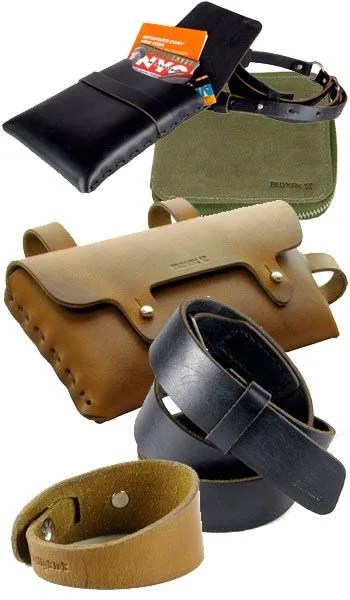
Chris Bray: The felt hats are new and are being produced by the oldest hat manufacturer in the US. The leather hat bands are made by the Amish and we added a sterling silver Hammer & Maul logo hat pin. New flight bag in vintage mattress ticking canvas and a game bag messenger in waxed cotton/leather. We have a couple of new collaborations in the works which are under wraps and we will continue our collaborative efforts with the guys over at Freeman’s Sporting Club.

Jon: I’m digging the game bag, very cool. Alright Chris, on that note we’ll wrap this up. Thanks a ton for your time and keep up the good work.

Blog Widget by LinkWithin
Page: Previous page


This website uses IntenseDebate comments, but they are not currently loaded because either your browser doesn't support JavaScript, or they didn't load fast enough.

7 Comments »

Leave a comment!

Add your comment below, or trackback from your own site. You can also subscribe to these comments via RSS.

Be nice. Keep it clean. Stay on topic. No spam.

You can use these tags:
<a href="" title=""> <abbr title=""> <acronym title=""> <b> <blockquote cite=""> <cite> <code> <del datetime=""> <em> <i> <q cite=""> <strike> <strong>

This is a Gravatar-enabled weblog. To get your own globally-recognized-avatar, please register at Gravatar.